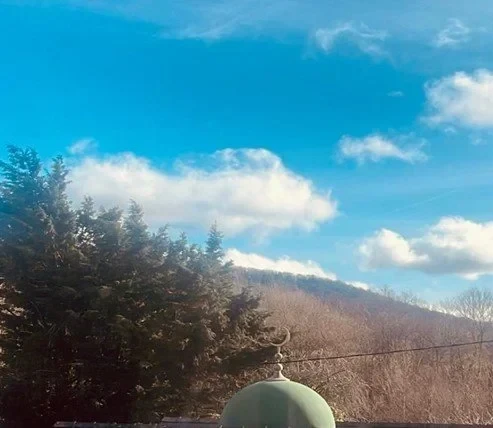
The floral fragrance of Rooh Afza and the sight of the luminous pink beverage poured into rows of glasses on the floor sit alongside plates filled with Arabian Ajwa, Palestinian Medjoul, and North African Khudri dates. This sensory tapestry is accompanied by the sound of the Adhaan being recited through the speaker, meeting the ears of the mothers, fathers, and children hurrying to the Masjid to break their fast. They pause only to remove their shoes and order them neatly on the patterned hallway floor, a space reminiscent of the intricate tiles adorning the Alhambra.
They join their elders already congregated in the Masjid, whose hands, while holding tasbeehs, are raised in prayer as they listen to the Imam making dua. They ask Allah, the Most Merciful, for His blessings during the holy month of Ramadan. You would be forgiven for thinking that the scene described is one of a mosque in Birmingham, Bradford, or Blackburn. Of course, it could easily be; however, this is a scene typical of a small, rural mosque nestled in idyllic landscapes of the Shropshire hills, a stone’s throw away from the Welsh border. Here, each night during the blessed month of Ramadan, a different host family from the Muslim community invites their brothers and sisters in Islam to come together to break their fast and engage in Tarawih prayer, taking turns to host iftar on a different day throughout the month.
When we picture Muslims in Britain, the tendency has historically been to think of them as residing in metropolitan centres or major cities, living their lives against the backdrop of ongoing public debates concerning multiculturalism and Islamophobia. Coming from Birmingham, I am all too familiar with these urban resonances and the bustling pace of city life. But it was not long ago that I found myself residing and building a life vastly different from the one I left behind in the United Kingdom’s second city.
Despite the sprawling Islamic infrastructure that Birmingham is fast becoming known for, here in Shropshire, I felt a deeper and more meaningful connection to my local community. Ramadan serves as a salient moment each year where I have found an exceptionally close connection to the Muslim community, one that even surpasses the bonds I felt while living in the city. It was right here in Shropshire that I prayed my first Tarawih in congregation. It was also here that I met like-minded mothers facing similar challenges in our daily lives, realizing similar aspirations for our children, and wanting them to embody the very best of both their Muslim faith and their British identity.
When it comes to community interaction and civic engagement, I found it easier to get lost among the masses in the city, operating under the assumption that someone else is already doing the heavy lifting so that you can take more of a back seat. In contrast, here I have found myself playing a much more active part in my local community, assuming the role of an ambassador for my faith as a minority resident in a small, conservative English town. In doing so, I have cultivated many warm, lasting friendships with both Muslims and non-Muslims alike. I have been consciously careful not to allow the contributions and expressions of my position as a Muslim to be limited by a shallow multiculturalism that talks primarily about "saris, steel bands, and samosas"—where the Muslim community might only be recognized for our provision of foods on a fundraising stall, a local takeaway tantalizing the tastebuds, or bright clothes adorned with dazzling jewels. I feel there is ample room to be much more than just a spectacle for the senses.
The importance of representing my faith authentically has never felt more significant to me than it does now. I have been invited to speak at small schools tucked away in tiny English villages where it is a relative rarity for anyone to have seen a Muslim woman outside of a television screen. I have spoken to audiences at the Women’s Institute, an engagement I chose to undertake alongside a Jewish friend who, much like myself, moved away from the city to settle over the border in a small Welsh town. Together, we share the personal stories of our interfaith friendship and discuss the critical importance of coming to know one another, shifting the focus towards our many commonalities far away from the simplified images of conflict we are so often presented with in the media.
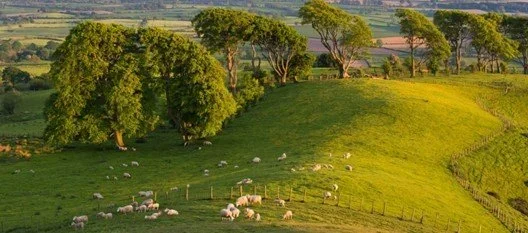
As one of the most rural mosques in the United Kingdom, the Craven Arms Islamic Centre in this sleepy part of Shropshire plays an active and vital role in local interfaith work, drawing interested visitors from across the entire county. It has opened its doors and welcomed visitors with open arms on the annual Visit My Mosque open day, year after year, welcoming those curious about the presence of Islam in a muted town of the English countryside. Drawing in crowds from near and far, the success of events like these can be attributed directly to the vision held by the small team managing the mosque, who consider the responsibility of their roles as representatives of Islam to be a very serious one.
With a native, English-speaking Imam whose brief it is not only to lead the congregation for daily prayers, but also to undertake extensive interfaith activities, host school visits, distribute charity such as annual Qurbani meat locally, and teach the Quran to the Muslim youngsters, the mosque effectively caters to and serves a purpose for all segments of the population. It holds classes that are carefully curated to meet the needs of the small but expanding group of Muslim youngsters who attend after-school sessions to learn the basics of Islam. Furthermore, it has hosted open iftar events inviting people of all faiths—similar to those held across the country—and even welcomed a delegation of Palestinian youngsters who traveled to share their personal experiences of living under occupation.
When I think of Ramadan, I now immediately think of this overwhelming feeling of a strong sense of community and kinship with my fellow Muslims, something I simply did not experience in the same profound way before moving to these rural pastures. I think of the genuine joy it brings to each and every one of us, and most importantly to my young children, who are made to feel deeply welcome in the mosque—their mosque.
I think of the palpable sense of belonging I feel when, during the day, we help the designated host family prepare an iftar for the entire Muslim congregation: cutting crisp salad, making fresh bread, cooking the meat to flavour the rice, preparing the sweet Rooh Afza, and helping with the afternoon school run. Each evening we come together to repeat this cycle, breaking our fasts as one, praying side by side, and encouraging our children to do the same. We wash and clear up together, and these small, shared domestic tasks go a long way toward building and strengthening the foundational bonds of this small and humble community.
The generosity of the hosts each evening never ceases to amaze me. Tarawih prayers are recited beautifully each night, on occasions being led by renowned reciters such as Sheikh Abu Bakr Al Shatri, with young mothers like myself praying beside their children who eventually fall asleep in the corner. Meanwhile, the elders, whose warm presence, unconditional love, and collective wisdom serve as a constant reminder to us, encourage us to remain steadfast in our devotion to our faith through the active cultivation of togetherness.