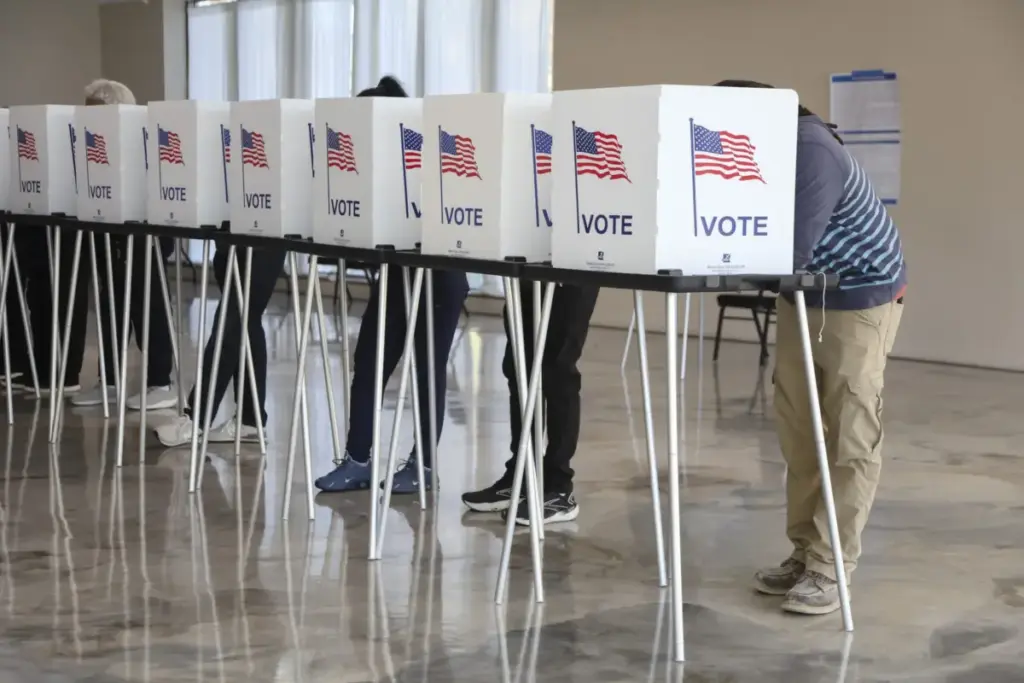
Voting has concluded across the first wave of polling stations in the United States, marking the beginning of what is expected to be a tense and consequential evening of election returns. With control of the entire US Congress on the line, the results from Tuesday’s races will carry profound implications for the legislative agenda, the administration in Washington, and the political trajectory of the country for the remainder of the presidential term.
After a full day of high turnout and intense civic engagement, the earliest polls have officially closed, setting off a cascading series of results that will trickle in from the Eastern Seaboard and move steadily westward over the course of the evening. At stake in these midterm elections is the distribution of power in Washington, where every single seat in the US House of Representatives—all 435 of them—along with 35 seats out of the 100-member US Senate, are currently up for grabs.
The political stakes could hardly be higher for either major party. Democrats, who have utilized the campaign trail to rally voters around pressing domestic and international concerns, enter election night hoping to orchestrate a return to power in the US House. Throughout months of campaigning, Democratic candidates have heavily emphasized promises to combat the country’s persistently rising cost of living, addressing economic anxieties felt by working-class families across the nation. Additionally, foreign policy has played a prominent role in Democratic messaging, with many in the party calling for an end to the ongoing US-Israel war on Iran. Beyond their ambitions in the House, Democrats have also expressed cautious optimism that they could recapture control of the US Senate from Republicans once every ballot is meticulously counted and verified.
Conversely, Republicans are fighting fiercely to defend their legislative footholds and expand their influence, framing the midterms as a referendum on the current administration and a crucial test of their own conservative platform. The political landscape heading into election day has been defined by fierce competition, heavy campaign spending, and intense voter mobilization efforts by both parties in battleground districts nationwide.
Early Indicators Point to Kentucky for First Clues
The first definitive clues regarding how these consequential midterms may ultimately affect each political party are set to emerge from the bellwether US state of Kentucky. Specifically, attention has focused intensely on the state’s highly competitive sixth congressional district, where the initial polls closed at 6:00 PM Eastern Time (23:00 GMT).
The sixth district of Kentucky represents a fascinating battleground that has captured national attention as an early barometer for the broader evening. Set within a generally conservative region, the district encompasses Lexington, which holds the distinction of being the state’s second-largest city. Recognizing the strategic importance of the district, Democrats have invested heavily of both time and financial resources into the campaign of Zach Dembo, a US Navy veteran whose background has formed a cornerstone of his pitch to local voters.
Dembo faces a formidable challenge from Ralph Alvarado, a Trump-backed physician and former state lawmaker whose ties to prominent conservative figures have energized the Republican base in the district. Because of the district’s unique demographic blend of urban centers and more conservative outlying areas, political analysts have long viewed it as a crucial testing ground. If Republicans manage to successfully hold the seat against the strong Democratic challenge, it could serve as an early, powerful signal regarding how the party may perform in competitive races across the rest of the country. Conversely, a Democratic upset in Kentucky’s sixth district would instantly supercharge Democratic hopes for a wave election night and point toward significant vulnerabilities for the GOP in suburban and semi-urban districts nationwide.
A Long Night—and Potentially Days—of Counting Ahead
While the closing of polls in Kentucky and neighboring early-reporting jurisdictions marks the official start of election night, the path to a final tally is expected to be protracted. Results from the myriad congressional and senatorial races will continue to roll in throughout Tuesday evening, keeping voters, pundits, and campaign staffers glued to their screens.
However, because of the complex mechanics of American elections—including varying state laws regarding mail-in ballots, early voting processing, and provisional ballots—the outcomes of several key races may not be known until Wednesday, or potentially even later in the week. Election officials in numerous states must still finish processing high volumes of votes, a meticulous procedure that prioritizes accuracy and security above speed. As more states complete their voting windows and local election boards begin releasing their official vote counts, the true balance of power in the incoming US Congress will slowly come into sharper focus.