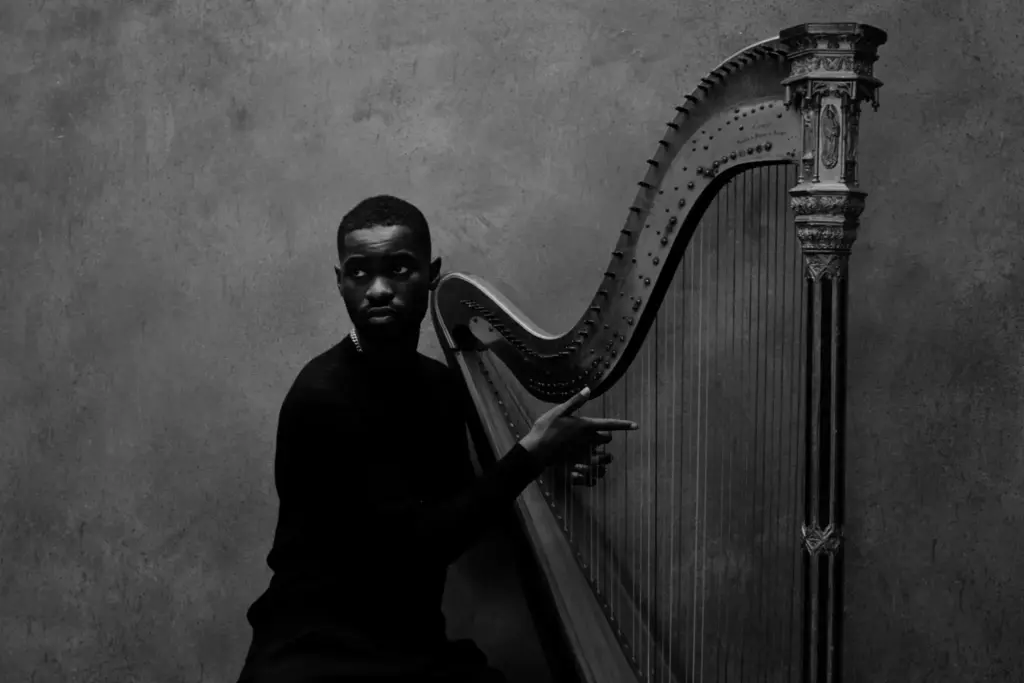
Last month, acclaimed filmmaker, director, and photographer Gabriel Moses sat down at the V&A East Museum for a special event titled A Life in the Work of Others. The ongoing series invites prominent artists to offer intimate insights into the people, places, and life experiences that have fundamentally shaped their creative practices. During the evening, Moses reflected on his rapid ascent in the contemporary art and commercial directing worlds, breaking down the milestones that carried him from a South London upbringing to global campaigns with brands like Nike and collaborations with late visionary Virgil Abloh.
Speaking to an engaged audience, Moses traced the roots of his artistic sensibilities back to his formative years, highlighting five core pillars of inspiration. From the domestic environment created by his mother and sister to the local legends of South London sports and the profound humility of modern design giants, Moses offered a masterclass in how personal history and creative instinct can merge to forge an uncompromising professional path.
The Foundation of Family, Color, and Documentation
Long before he ever picked up a professional camera or helmed a major commercial campaign, Moses was immersed in an environment rich with visual references and creative experimentation. Growing up, his immediate domestic space inadvertently served as his first gallery. Because the family television was kept in his sister’s bedroom, Moses spent countless hours playing video games surrounded by the physical artifacts of her fashion studies—pages torn from publications like Vogue and Dazed pinned systematically to the walls.

Equally influential was his mother, whose deep appreciation for art, fashion, and photography permeated everyday life. Moses credits her with styling him and his siblings from a young age, noting that her bold, often outrageous approach to color continues to inform his photographic framing and cinematic palettes to this day. Alongside fashion and color theory, documentation was a constant family practice. Archives of photobooks chronicled the lives of his grandparents in Nigeria, his mother’s upbringing, and his siblings’ early years, instilling in him an early and enduring fascination with visual storytelling.
Crucially, his mother provided a bedrock of psychological support that sustained him through high-stakes career pivots. Having arrived in London at the age of 18, she possessed a broad view of the city’s potential and the diverse ways people could find success. When Moses decided to drop out of university after completing his first commercial project with Nike, followed by a quiet five-month stretch of uncertainty, her reaction was entirely measured. Recognizing his innate drive, she gave him the space to figure out his next move. Moses often advises younger creatives facing skepticism from their surrounding networks to communicate openly and transparently, noting that even if it requires crafting a formal presentation to explain a non-traditional career trajectory, clarity and openness are vital.
South London Roots and Early Sporting Culture
Growing up in South London placed Moses at the intersection of a uniquely fertile cultural landscape. The region has long served as a breeding ground for figures who have achieved global prominence in sport and entertainment. For a young Moses, encountering future sports stars casually at local landmarks—such as seeing Rio Ferdinand and his brother at a neighborhood petrol station—provided a tangible sense of possibility, proving that world-class achievement was not an abstract concept, but something happening right on the street corner.

Another foundational local figure was Andy Ansah, a South London native who transitioned from a professional football career into choreography for major advertising campaigns. To the youth in the area, Ansah was a local celebrity who had worked alongside football icons like Ronaldo and Ronaldinho. More importantly, Ansah actively integrated the local community by casting neighborhood kids as extras in commercial spots. These early, minor experiences on set offered Moses a behind-the-scenes glimpse into the machinery of commercial production, demystifying the industry and planting the seeds for his own future behind the camera.
Despite these early exposures, photography and filmmaking were not his initial career aspirations. Like many of his peers, Moses originally wanted to pursue professional football. However, the trajectory of his life shifted dramatically during his first year at university when his mother fell ill. Driven by a desire to make her proud, he audited his own potential skills and decided to explore visual media, treating the transition with the same rigorous, pragmatic mindset he had applied to sports. Recognizing that excellence in sport brooks no shortcuts, he approached the creative industries with an identical philosophy: if you consistently produce compelling, high-quality work, tangible opportunities will follow.
Taking the Leap: From YouTube Projects to Global Nike Campaigns
Moses’ entry into directing was remarkably direct and self-propelled. Fuelled by the energy of iconic television commercials from his childhood—specifically Nike’s legendary Joga Bonito campaign—he decided to take matters into his own hands rather than waiting for permission or traditional industry entry points.

He reached out to Fikayo Tomori, a professional footballer originally from Woolwich who was then playing for Chelsea and is now with AC Milan, proposing a short documentary about his personal journey and background. Over the course of six hours, Moses and his friends shot the project in their familiar environments. Uploading the finished piece to YouTube provided an immediate psychological milestone. Although he now looks back on the project self-critically, the act of conceiving, executing, and publishing a creative work offered a profound sense of accomplishment.
A subsequent project focusing on Liverpool defender Joe Gomez further cemented his footing in the sports world. Gomez, who grew up in Catford and recognized the ambition of a young creative trying to carve out a path, helped finance one of Moses’ early films when the director was just 18 years old.
The momentum generated by these independent works quickly caught the attention of Nike, which commissioned the teenage director to helm a series of commercials promoting their new Tiempo football boots. Despite being only 18, Moses adopted a posture of absolute professional confidence, leveraging his own demographic status as part of the target audience to dictate the creative direction. By relying on an authentic understanding of what he and his peers genuinely wanted to see on screen, he bypassed the traditional industry anxieties of youth, relying entirely on the strength of his visual output.

The Mentorship and Humility of Virgil Abloh
As his portfolio expanded, Moses crossed paths with established image-makers, leading to a pivotal introduction to Virgil Abloh and the Off-White studio through photographer Fabien Montique. Although Moses was initially unfamiliar with the full breadth of Abloh’s cultural footprint, he was well aware of his landmark design work with Nike.
Thrust into high-fashion environments as a 19-year-old, Moses was tasked with capturing fitting photographs ahead of runway shows and filming backstage documentation featuring prominent figures like Bella Hadid. Rather than treating him as an outsider, the environment at Off-White offered him a space to simply exist, learn, and grow organically.
What left the most lasting impression on Moses, however, was Abloh’s extraordinary accessibility and humility. He recalled that sending a message to Abloh would almost invariably result in a prompt, encouraging reply, often punctuated by a simple rocket emoji. For a young artist navigating the upper echelons of the global fashion industry, those minor gestures of validation were transformative. Witnessing a creative giant operate with such openness dismantled any lingering feelings of imposter syndrome, reinforcing Moses’ belief that boundaries between subcultures and elite design spaces were entirely porous.
Everyday People as the Ultimate Muse
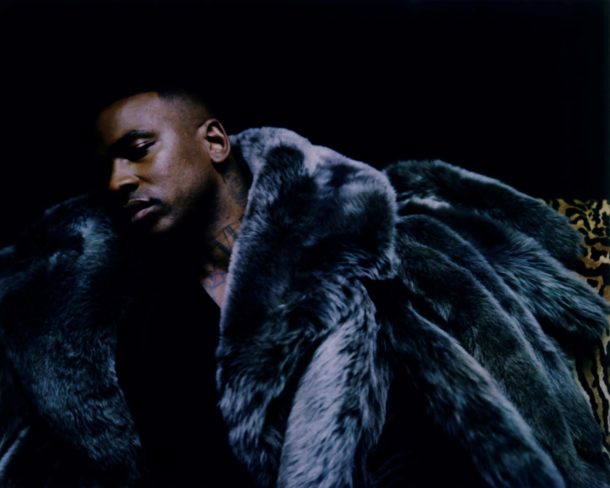
Throughout the conversation at the V&A East Museum, Moses emphasized that his primary source of inspiration remains the unvarnished creativity of everyday people. Whether observing internet culture, where ordinary individuals build massive audiences through spontaneous skits and digital content, or casting non-traditional faces for high-end commercial brands, his work consistently champions authentic representation.
Reflecting on his early days with representation, Moses was notoriously selective, frequently turning down lucrative opportunities or negotiating reduced budgets in exchange for complete creative autonomy. For him, setting the conceptual tempo and retaining editorial control over the final image has always taken precedence over commercial ubiquity or billboard presence.
Concluding his advice to the room of aspiring young creatives, Moses distilled his philosophy into a call for absolute authenticity. By pursuing genuine interests, reading personal inspirations, and documenting creative concepts daily—not out of immediate necessity, but as a way of building an internal currency of ideas—creatives can train their minds to recognize and execute their distinct vision. As Moses demonstrated throughout the evening, normalizing ambition and trusting one’s individual perspective remains the most reliable blueprint for sustained artistic longevity.