
Last month at the V&A East Museum, acclaimed filmmaker, director, and photographer Gabriel Moses sat down for a deeply personal discussion as part of the ongoing A Life in the Work of Others series. The program invites prominent artists to pull back the curtain on their creative processes, detailing the people, places, and foundational experiences that have shaped their trajectory. For Moses, whose striking visual style has made him one of the most sought-after young creators in the global fashion and entertainment industries, the evening offered a rare retrospective on a career that started at an astonishingly young age.
Throughout the night, Moses shared five of the most profound inspirations behind his work, tracing his journey from a creative household in south London to high-profile collaborations with major global brands, elite athletes, and cultural icons like the late Virgil Abloh.
The Women Who Shaped a Creative Vision
Long before he was directing campaigns for Nike or shooting editorial covers, Moses’s creative education began at home, heavily influenced by the women in his family. Because the household television was kept in his sister’s bedroom, Moses spent countless hours immersed in that space while she pursued her studies in fashion. Her walls were plastered with torn-out pages from publications like Vogue and Dazed, serving as an accidental mood board that subtly trained his eye from early childhood.

Equally influential was his mother, whose lifelong passion for art, fashion, and photography permeated daily life. "We had good baby fits, because of my mum," Moses recalled, noting her keen appreciation for colour and bold aesthetic choices. Her primary hobby, flower arranging, instilled in him a fearless approach to color combinations that still informs his image-making today. Documenting family history was also a constant practice; photograph books filled the house, showcasing his grandmother and grandfather in Nigeria, his mother’s early life there, and his siblings growing up.
Beyond aesthetics, his mother provided an unwavering psychological foundation. Having immigrated to London at the age of 18, she possessed a broad perspective on ambition and resilience. Moses noted that her support was unconditional and expansive, famously remarking that if he had decided to pursue a career as a postal worker, she would have simply urged him to be the best in the world.
That trust became vital when Moses dropped out of university after completing his first major film with Nike. Following a quiet five-month stretch where work was slow, his mother trusted his drive. "She just let me cook. She just understood it," he said. For aspiring creators facing different family dynamics, Moses offered a pragmatic piece of advice: communication is paramount. Whether it requires crafting a presentation to explain a non-traditional career path to skeptical parents, creators must remain open and articulate their vision clearly.

South London Roots and Everyday Role Models
Growing up in south London, Moses was surrounded by tangible examples of excellence in sports and entertainment that made lofty ambitions feel entirely attainable. Local figures who transitioned from the neighborhood streets to international stages served as a blueprint for success. Seeing football stars like Rio Ferdinand and his brother casually at a local petrol station reinforced the reality that greatness could emerge from the very same environment he navigated every day.
Another pivotal figure in his early life was Andy Ansah, a south London local who transitioned from a professional football career to choreographing major commercial advertisements. Ansah was a local celebrity who had worked alongside global icons like Ronaldinho and Ronaldo. Crucially, Ansah actively involved the local community by casting neighborhood youth as extras in his commercial productions. For Moses, participating in these shoots offered a firsthand glimpse into the machinery of commercial production and proved that one’s athletic background could serve as a springboard into creative industries.
Translating a Sporting Mindset to Filmmaking
Like many young people in his community, Moses initially aspired to a career in professional football rather than behind the camera. However, during his first year at university, his mother shared that she was ill. Driven by a desire to make her proud, Moses took stock of his skills and asked himself what paths he might pursue. Recognizing that he had no inherent entitlement to success in the arts, he adopted an experimental approach: trying different mediums and seeing what resonated.

Childhood memories of watching dynamic athletic commercials, particularly Nike’s iconic Joga Bonito campaign, served as a primary catalyst. Eager to test his abilities, Moses reached out to Fikayo Tomori—then playing for Chelsea and now at AC Milan—with a proposal to document his backstory and journey. Over six hours, working alongside his friends in familiar surroundings, they produced his first short video.
Uploading the project to YouTube provided a profound sense of accomplishment, regardless of view counts. Encouraged by that initial momentum, Moses approached Joe Gomez, a fellow south Londoner raised in Catford, to tell his story. Gomez, recognizing the dedication of a young creator trying to make his mark, helped finance one of Moses’s early independent films when the director was just 18 years old.
That independent work quickly caught the attention of Nike, which commissioned the teenager to direct a series of commercials for the new Tiempo football boot. Directing major commercial campaigns at 18 required immense poise. Moses leaned into confidence, pushing his creative concepts forward while leveraging his position as a member of the target demographic. By understanding implicitly what he and his peers wanted to see on screen, he ensured his projects maintained authenticity.

Crucially, Moses brought the rigorous ethos of athletics into his creative career. Drawing a direct parallel, he noted that just as a player cannot fake their way into the Premier League, a creator must rely on the undeniable quality of their output. In his view, the formula is straightforward: make exceptional work, and the right opportunities will follow.
The Humility and Impact of Virgil Abloh
As his career gained traction, Moses crossed paths with photographer Fabien Montique, who introduced him to Virgil Abloh at the Off-White studio. Though Moses was not yet fully versed in the expansive reach of Abloh’s empire, he was well aware of his groundbreaking sneaker designs for Nike.
Entering high-fashion environments as a 19-year-old with a camera could easily have been intimidating, but Abloh’s team fostered an atmosphere where Moses was simply allowed to exist, learn, and create. Tasked with shooting backstage fitting photographs and producing show films featuring high-profile models like Bella Hadid, Moses honed his craft within a supportive, elite ecosystem.
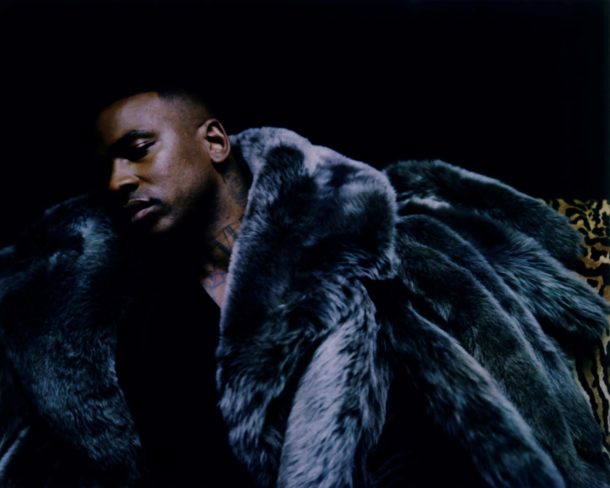
What left the most lasting impression on the young director was Abloh’s striking humility. In an industry often characterized by gatekeeping, Abloh was famously accessible, frequently replying to messages the same day with encouraging words and supportive emojis. For Moses, those small gestures were monumental, instilling a belief that boundaries were meant to be broken. Returning to London with the validation of one of the world’s most influential designers, Moses felt invincible. Observing Abloh achieve global dominance while maintaining deep approachability cemented the lesson that true success is grounded in generosity and openness.
Championing Everyday Creativity and Setting the Tempo
Today, Moses finds his primary inspiration not in traditional institutions, but in the spontaneous creativity of everyday people. Whether observing the ingenuity of youth crafting viral sketches on mobile phones or watching internet culture mint new superstars, he remains deeply connected to grassroots culture. This theme consistently anchors his commercial projects, where he frequently casts everyday individuals to inject raw authenticity into brand narratives.
This commitment to artistic integrity defined his early relationship with representation. When he first signed with an agent, Moses frequently turned down projects that misaligned with his vision, prioritizing creative control over commercial convenience. He was often willing to accept reduced budgets if it meant retaining final authority over the artistic direction. By normalizing this uncompromising approach, he hopes to pave the way for a new generation of creators who prioritize self-expression over conventional metrics of success.

Concluding the evening with advice for young creatives, Moses emphasized the necessity of radical authenticity. When an artist’s influences are genuine, the process of research—discovering books, music, and imagery—becomes an intuitive exercise in self-definition. Reflecting on his own habits as a developing artist, he shared a final piece of wisdom: writing down a concept every single day, not necessarily for immediate use, but as a way to recognize that an artist’s ideas remain their most valuable currency.