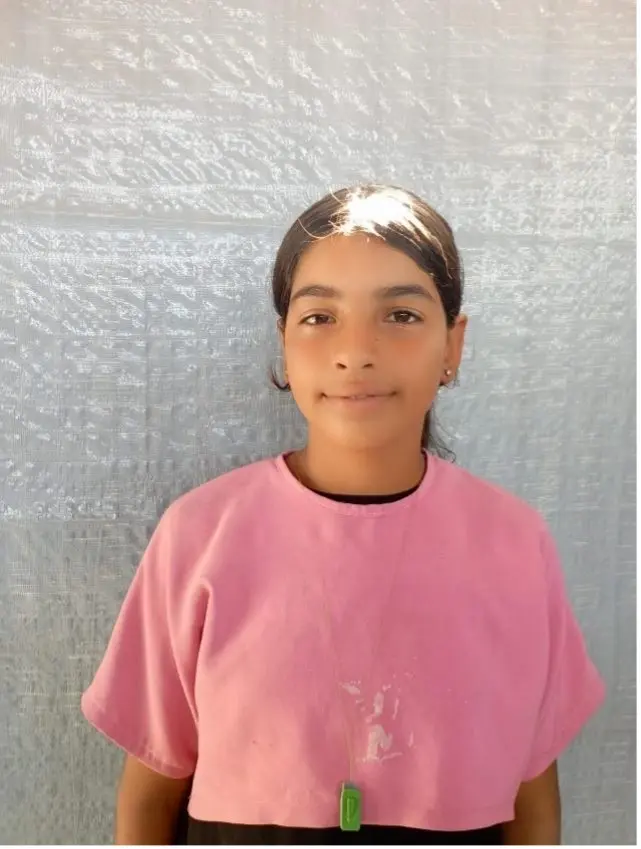
At just 12 years old, Amira has already confronted a weight of hardship that few adults will ever experience in a lifetime. She has endured the profound grief of losing her father, the abrupt trauma of displacement, and the devastating destruction of her family home amid the ongoing conflict in Gaza. Yet, despite the compounding crises that threaten to upend every facet of her childhood, Amira remains anchored by a fierce resilience. She presses forward with her education, holding tightly to the dream of one day wearing the uniform of a nurse and tending to those in need.
Amira’s world shifted irrevocably when she was just nine years old and lost her father to cancer. To young Amira, he was far more than a parent; he was an unwavering source of love, safety, and emotional strength. His passing altered the trajectory of her early years, introducing a profound sense of vulnerability. Just as she and her family were learning to navigate life in the shadow of that immense loss, the war in Gaza began, plunging them into a fresh cycle of upheaval, fear, and uncertainty.
Forced from Home to the Harsh Realities of a Tent
Before the escalation of the conflict, Amira lived a stable life with her mother, Manal, and her siblings in the Al-Salam neighbourhood of Rafah. When the family received urgent directives to flee, their lives were instantly reduced to what they could carry. Leaving behind the familiar comforts of home and the majority of their personal belongings, they packed only a few essential changes of clothes, basic bedding, and a handful of kitchen items.
Like countless others caught in the crossfire, they held onto the fragile hope that their absence would be temporary and that they would soon return to their doorstep. Instead, that hope was shattered when they learned their house had been completely destroyed. With no home to return to, the family remained displaced, eventually erecting a makeshift tent to serve as their shelter.
Life inside the camp presented a relentless daily struggle for survival. The tent offered virtually no insulation against the elements, turning into a stifling, oppressive heatbox during the peak of summer and transforming into a bitterly cold, damp shelter through the winter months. Heavy seasonal rains routinely leaked through the fabric, turning the dirt ground beneath their feet into thick, unforgiving mud.
Basic survival became a grueling logistical challenge. Accessing clean water and adequate food required immense patience and physical endurance. The family frequently spent hours waiting in long lines to collect water from passing distribution trucks, while relying heavily on community-run kitchens when financial resources dried up entirely and they could no longer afford to buy food on their own.
Losing Everything All Over Again
The family’s endurance was tested to its absolute limits when disaster struck a second time in the form of a devastating fire that swept through their tent. The blaze consumed whatever meager possessions they had managed to salvage from their previous life. Their remaining clothes, essential cooking equipment, and personal effects were reduced to cinders in a matter of moments.
“Everything we owned was turned to ashes,” Manal shares, recounting the overwhelming heartbreak of being stripped down to absolute zero once again. The fire left the family entirely devoid of the fundamental items required to sustain daily life, compounding their vulnerability in an environment already stretched to the breaking point.
Today, their most urgent material needs are stark and manifold. They require structurally sounder shelter materials and waterproof coverings to withstand the harsh weather, alongside basic sanitation facilities such as a functional bathroom, replacement cooking equipment, and adequate clothes and shoes for every family member.
Continuing to Study Despite Ongoing Displacement
Amidst the chaos and destitution of daily camp life, Amira maintains a steadfast commitment to her schooling. Operating without the reliable infrastructure of a traditional classroom, she continues her education online and has successfully advanced to the seventh grade.
Her responsibilities extend far beyond her textbooks. Lacking access to electricity, modern appliances, or even a basic washing machine, Amira steps up to help her mother by washing the family’s clothes by hand—a grueling physical chore that consumes hours of her day. Despite the immense burdens resting on her young shoulders, her aspirations remain undimmed. She dreams of pursuing a career in healthcare as a nurse, determined to keep her education on track no matter the obstacles in her path.
Amira also finds solace in creativity, possessing a deep love for drawing. However, the realities of her current situation mean she is frequently left without the basic art supplies needed to practice and nurture her talent. Her immediate personal needs remain pressing, centered heavily on winter clothing, proper underwear, and durable shoes to protect her from the elements.
Supporting Orphaned Children in Gaza
The profound challenges faced by Amira and her family reflect a wider regional crisis impacting thousands of children across Gaza who have lost parents, homes, and the foundational security of a normal childhood. In response to these enduring needs, organizations like Islamic Relief have worked on the ground to provide targeted, reliable assistance.
Through its Orphan Sponsorship Programme, which has operated in Gaza since 1999, Islamic Relief connects individual donors with vulnerable children. Under this one-to-one sponsorship model, a guardian receives regular monthly financial payments. This direct support offers families the vital flexibility to allocate funds toward the needs they deem most urgent at any given moment, whether that includes purchasing food, securing clothing, covering healthcare expenses, or investing in children’s education.
In the wake of the current crisis, Islamic Relief has significantly scaled up its operational capacity to meet the surging demand for aid. More than 25,000 children across Gaza are currently enrolled and receiving sponsorship support, though an additional 5,000 children remain on the waiting list, underscoring the immense scale of unmet need.
Where access and logistics permit, sponsored families also receive critical seasonal support. This includes the distribution of nutritious food parcels during Ramadan and Qurbani, celebratory Eid gifts for the children, and essential winter items designed to help families weather the coldest months of the year.
Holding on to Hope for a Safer Future
Amira’s story is emblematic of the resilience defining a generation of children in Gaza. Having navigated the early loss of her father, the destruction of her family home, the trials of displacement, and the subsequent loss of their shelter to fire, she refuses to let her circumstances define the boundaries of her potential.
Every day, she continues to study, to care for her family, and to look toward the horizon with a quiet determination. Her aspirations are remarkably grounded: she wishes simply to continue her education, to train as a nurse, and ultimately to live somewhere safe and secure alongside her family.
Through established humanitarian networks such as Islamic Relief’s Orphan Sponsorship Programme, individuals around the world have the opportunity to extend a vital lifeline to children like Amira, providing the consistent support necessary to help them weather ongoing crises and rebuild their futures.