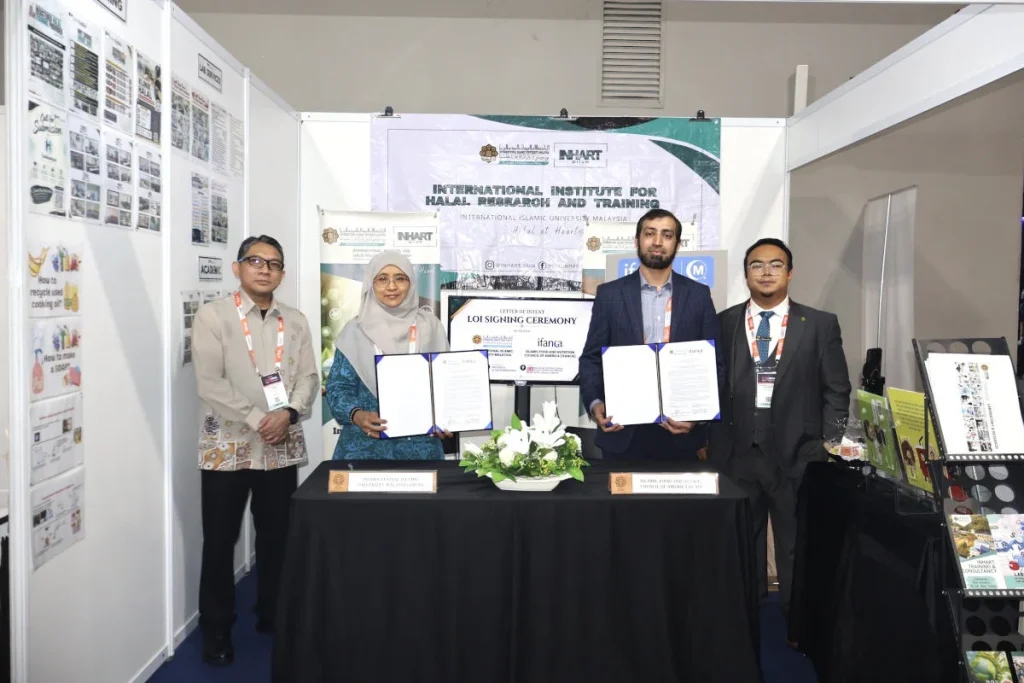
Collaboration highlights the importance of knowledge, professional capability, and public trust in the international halal industry.
KUALA LUMPUR, 24 September 2026: Behind every certified halal product available on supermarket shelves or served in restaurants is a complex, meticulous chain of decisions. This intricate web involves raw ingredient sourcing, precision in production processes, adherence to strict supply chain standards, and the dedication of the people responsible for maintaining absolute product integrity. For businesses operating within the global marketplace, these operational and ethical decisions directly shape brand credibility, regulatory compliance, and overall market readiness. For consumers, who rely on the promise of halal compliance for both dietary and lifestyle reasons, these rigorous processes underpin unwavering confidence in the products they choose to bring into their homes and share with their families.
Against this dynamic global backdrop, the Islamic Food and Nutrition Council of America (IFANCA), based in the United States of America, and the International Islamic University Malaysia (IIUM)—acting through its specialized arm, the International Institute for Halal Research and Training (INHART)—formalized a significant partnership. The two esteemed institutions officially signed a Letter of Intent (LOI) during the high-profile Malaysia International Halal Showcase (MIHAS) 2026. This strategic signing marks a major forward step toward closer, more impactful engagement between the commercial halal industry and academic research institutions. By bringing together IFANCA’s decades of practical, hands-on experience in international halal certification and IIUM’s renowned academic and scientific expertise, the collaboration reflects the critical importance of connecting frontline industry knowledge with rigorous research, continuous education, and institutional development to actively support the businesses and communities that rely on the growing halal sector.
For companies operating within this competitive ecosystem, the practical relevance of such a cross-continental collaboration extends directly into everyday business operations. Navigating intricate halal requirements and applying them consistently across international borders requires well-informed corporate management, highly capable technical personnel, and continuous access to up-to-date, reliable knowledge bases. Stronger, more formalized connections between industry organizations and universities can help ensure that academic research remains responsive to these real-world commercial needs, while simultaneously providing businesses with broader, science-backed perspectives and innovative solutions.
This vital connection also matters deeply to the emerging generation of professionals preparing to enter the modern workforce. University graduates need to understand how high-level academic principles translate directly into practical decisions made on the factory production floor, within global supply chains, and across diverse consumer markets. Greater, more intentional engagement between academia and industry can help narrow the distance between what students learn inside traditional lecture halls and what commercial employers actively require to maintain operational excellence and compliance integrity.
At the same time, the broader public holds an equally important stake in how the halal industry evolves, manages its talent, and maintains its standards. Consumers fundamentally depend on the competence, ethics, and unwavering integrity of the professionals responsible for halal assurance at every level of the supply chain. Clear communication, transparency, and accessible knowledge can empower everyday consumers to better understand halal practices, recognize authentic standards, and make informed choices that align with their values. Cooperation between experienced industry practitioners and academic institutions offers a powerful opportunity to support and elevate that public understanding, fostering greater transparency and education on a global scale.
Bringing together prominent institutions from the United States and Malaysia also creates a unique space for diverse perspectives shaped by distinct commercial, cultural, and social environments. For a truly global industry that serves diverse communities across international borders, understanding these regional and operational differences is essential to building lasting commercial relationships and responding effectively to evolving consumer needs and expectations. MIHAS 2026 provided the ideal international setting for IFANCA and IIUM to publicly affirm their shared intention to strengthen this vital connection between theory and practice. The true significance of the LOI signing lies in the unprecedented opportunity to bring grassroots industry experience and advanced academic scholarship into a closer, more productive conversation, actively supporting businesses while keeping consumer trust, scientific rigor, and public benefit firmly at the center of international halal industry development.