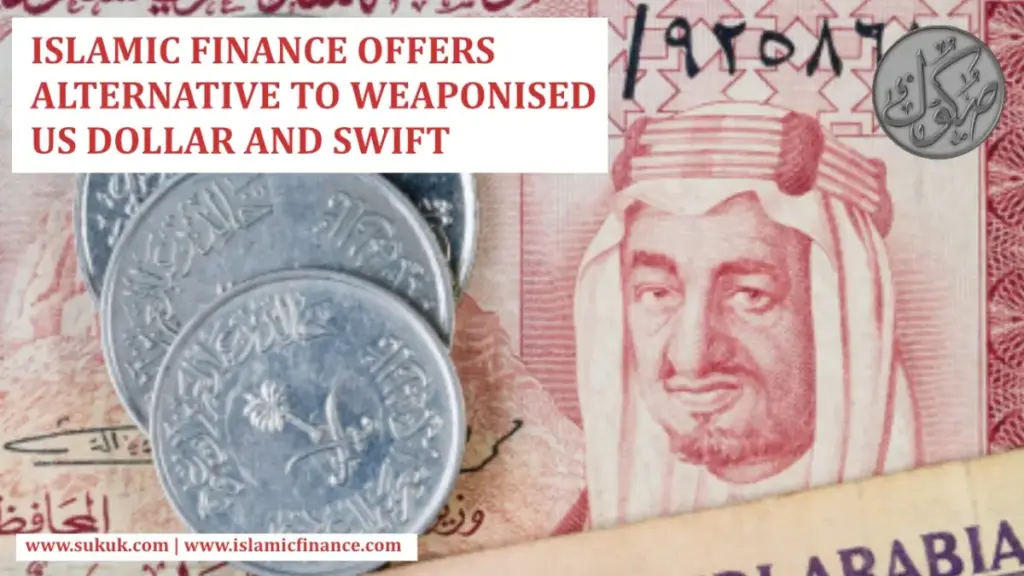
The growing utilization of the United States dollar and the Society for Worldwide Interbank Financial Telecommunication (SWIFT) system as instruments of foreign policy and economic coercion has triggered a profound shift in the global financial landscape. As the greenback and Western-dominated payment infrastructure are increasingly leveraged for unilateral sanctions and geopolitical pressure, trust among major emerging economies has begun to wane. In response to this weaponization of international finance, a concerted push is underway across multiple regions to identify, develop, and implement alternative trade mechanisms, with Islamic finance instruments and local currency settlements taking center stage in the debate over the future of global commerce.
Islamic Finance Instruments Can Replace US Dollar in Trade
At the forefront of this movement, Turkish President Recep Tayyip Erdogan has strongly advocated for the broader adoption of Islamic finance principles and alternative settlement mechanisms to protect national economies from external financial shocks. Highlighting the pressing nature of the issue in the current geopolitical climate, President Erdogan emphasized that trade conducted in national currencies has gained unprecedented urgency. He noted that the international community should prioritize placing the issue of Islamic finance firmly on the global economic agenda to shield emerging markets from currency volatility and foreign intervention.
The Turkish leader has previously issued public calls for nations to dismantle what he characterizes as the absolute monopoly of the dollar in international trade, arguing that a multipolar currency system is essential for global economic stability. These concerns are not entirely dismissed within Western financial circles. Former US Treasury Secretary Steve Mnuchin previously acknowledged the inherent risks of aggressive sanctions policies, warning that if policymakers are not careful, international actors will actively look for ways to utilize alternative currencies and payment channels to bypass American jurisdiction.
Iranian Banks Removed from SWIFT
The catalyst for many of these defensive maneuvers lies in the severe economic impact of unilateral US sanctions, which have effectively isolated targeted nations from the global financial grid. Most notably, American sanctions policies have forced the removal of Iranian banks from the SWIFT payment system, severely crippling the nation’s capacity to conduct normal foreign trade, settle international accounts, and participate in cross-border commerce.
This aggressive use of financial infrastructure as a diplomatic weapon has not been limited to the Middle East. Similar extraterritorial sanctions have created substantial friction and operational hurdles for European entities, directly impacting European and, specifically, German firms working on major cross-border energy infrastructure projects, such as the Russian-German pipeline.
In an effort to insulate themselves from these escalating geopolitical vulnerabilities, major powers like Russia and China have taken decisive countermeasures. Moscow and Beijing have successfully established their own independent bilateral payment systems and alternative financial channels, enabling them to trade directly with one another in local currencies and completely avoid exposure to the US dollar and Western clearinghouses.
Increased Use of Gold and Local Currencies
The momentum away from the dollar extends well beyond bilateral arrangements between Moscow and Beijing. The Shanghai Cooperation Organization (SCO), an influential eight-nation security and economic bloc that includes key global players such as China, Pakistan, and Russia, currently represents nearly a quarter of total global Gross Domestic Product. Recognizing their collective economic weight, member states of the SCO have steadily accumulated substantial foreign exchange and gold reserves, which now amount to nearly four trillion US dollars.
This massive financial cushion has provided member states with the confidence to alter their trading habits. During a high-level finance ministers meeting held in Moscow, the SCO officially reached a decisive agreement to conduct bilateral trade, cross-border investments, and economic cooperation using local currencies rather than routing transactions through traditional Western fiat systems. By reducing their reliance on foreign clearing currencies, these nations aim to insulate their domestic economies from external political pressures and exchange rate fluctuations.
Use of Gold in Islamic Cultures
Parallel to the de-dollarization efforts led by state coalitions, ancient forms of value storage are experiencing a modern renaissance. Gold has long remained an attractive asset class and a traditional store of wealth passed down through generations within Asian and Middle Eastern cultures. In recent years, Turkey and Malaysia have emerged as pioneers at the forefront of Islamic financial gold banking and the contemporary development of gold-backed currency systems.
Demonstrating the practical application of these concepts, the Malaysian states of Kelantan and Perak introduced gold dinar and silver dirham coins as complementary mediums of exchange and commercial trade. Meanwhile, in the Turkish banking sector, institutions such as Kuveyt Türk Participation Bank initiated comprehensive gold banking operations. By enabling citizens and businesses to deposit physical gold into the formal financial system, the bank successfully collected over 26 tons of gold—valued at approximately $1.2 billion—and integrated it directly into the broader Turkish economy. Current financial innovations building upon these foundations include ongoing initiatives to develop an Islamic finance, gold-based cryptocurrency designed to seamlessly facilitate modern cross-border trade while adhering to traditional ethical standards.
Islamic Finance Gold Standard
The integration of precious metals into modern Islamic financial architecture received a major institutional endorsement when the World Gold Council and the Accounting and Auditing Organisation for Islamic Financial Institutions (AAOIFI) jointly approved a comprehensive sharia standard for gold-based products. The primary objective of this regulatory milestone was to significantly increase the utilization of physical bullion within Islamic finance and pave the way for the creation of innovative financial instruments that comply with religious jurisprudence.
This standardized framework addressed critical operational aspects of gold trading, including the proper use of collateral, the structuring of spot transactions, and the rules governing deferred exchanges. By establishing clear, universally accepted guidelines for gold-backed financial products, regulators and financial institutions have laid the groundwork for a more resilient, transparent, and diversified global trade architecture that operates independently of traditional Western monetary dominance.