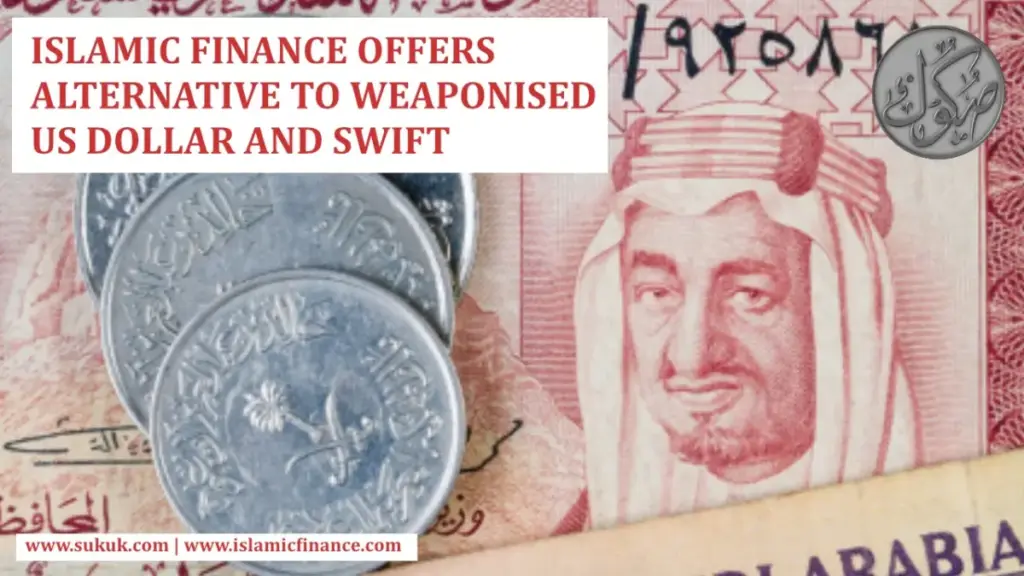
The growing trend of utilizing the United States dollar and the SWIFT international payment system as instruments of geopolitical leverage has catalyzed a profound shift in global commerce. As trust in the greenback and traditional Western-dominated financial infrastructure wanes, nations around the world are increasingly exploring alternative mechanisms to secure their economic sovereignty. This movement away from traditional systems is driven by rising concerns over economic sanctions and financial exclusion, prompting global leaders to seek out resilient alternatives rooted in regional cooperation, local currencies, and alternative asset classes.
In response to these shifting geopolitical and economic realities, Turkish President Recep Tayyip Erdogan has strongly advocated for the broader adoption of Islamic finance principles. Emphasizing the urgency of the matter during international discussions, President Erdogan noted that trade conducted in national currencies has transitioned from a preference to an urgent necessity. He underscored that the international community must place the development and application of Islamic finance instruments firmly on the global economic agenda.
President Erdogan’s proactive stance aligns with his previous public calls urging foreign nations to dismantle what he terms the global "monopoly" of the US dollar in international trade. The vulnerability of the existing system has not gone unnoticed by Western policymakers either. Acknowledging the shifting sentiment within global markets, US Treasury Secretary Steve Mnuchin previously admitted that if policymakers are not careful, global actors will increasingly look toward utilizing alternative currencies and payment networks to bypass potential vulnerabilities.
Iranian Banks Removed from SWIFT
The urgency behind these alternative financial architectures is largely rooted in the aggressive application of unilateral economic sanctions. Notably, restrictions imposed by the United States have resulted in the removal of Iranian banks from the Society for Worldwide Interbank Financial Telecommunication, commonly known as the SWIFT payment system. This decisive action has severely crippled Iran’s capacity to engage in routine foreign trade and integrate smoothly into global financial markets.
The reach of these measures has extended beyond primary geopolitical targets, occasionally creating friction among traditional allies as well. Similar sanctions and regulatory pressures have directly impacted European commercial entities, including German firms actively involved in the construction and realization of the Russian-German energy pipeline projects.
In direct reaction to these restrictive measures and the weaponization of payment corridors, major global economies have taken steps to insulate their trade relationships. Most notably, Russia and China have established their own independent financial messaging and payment systems. These bilateral arrangements are specifically designed to facilitate direct trade between Moscow and Beijing, effectively bypassing the US dollar and mitigating exposure to external financial interferences.
Increased Use of Gold and Local Currencies
The strategic pivot away from Western-centric financial systems is further exemplified by the actions of the Shanghai Cooperation Organization. Comprising eight member states—including economic and regional heavyweights such as China, Pakistan, and Russia—the bloc represents nearly a quarter of global gross domestic product. Over recent years, member nations of the Shanghai Cooperation Organization have systematically increased their collective gold and foreign exchange reserves, which now amount to an impressive portfolio totaling nearly four trillion US dollars.
This accumulation of secure reserves has provided the foundation for practical monetary policy shifts. During a high-level finance ministers meeting held in Moscow, the Shanghai Cooperation Organization officially resolved to conduct a significantly larger share of their bilateral trade and investment activities utilizing local currencies rather than relying on benchmark Western currencies. This cooperative approach aims to safeguard member economies from external currency fluctuations and geopolitical pressures while deepening regional economic integration.
Use of Gold in Islamic Cultures
Beyond sovereign currency arrangements, tangible assets such as gold have re-emerged as cornerstones of economic security. Gold has long held a position as an attractive asset class and a reliable store of wealth, traditionally passed down through generations across various Asian cultures. In the contemporary economic landscape, nations such as Turkey and Malaysia have emerged at the forefront of pioneering Islamic financial gold banking and developing gold-backed currency models.
Practical implementations of these concepts are already visible in regional economies. The Malaysian states of Kelantan and Perak notably introduced physical gold dinar and silver dirham coins as a complementary means of payment and local trade exchange. Similarly, within the Turkish banking sector, the Islamic financial institution Kuveyt Türk—known as Kuwait Turkish Bank—began offering specialized gold banking services in 2007. Through this innovative model, the bank successfully collected over twenty-six tons of gold, valued at approximately 1.2 billion US dollars by July 2019, and fully integrated those physical assets back into the broader Turkish economy.
Current initiatives in this domain have continued to evolve with technological advancements. Financial institutions and policymakers are exploring the development of Islamic finance gold-based cryptocurrencies and digital assets. These modern instruments are designed to bridge traditional commodity-backed wealth preservation with contemporary digital infrastructure, ultimately better facilitating secure and efficient cross-border trade without dependence on traditional Western clearing houses.
Islamic Finance Gold Standard
The institutional credibility of these alternative commodity-based systems received a significant boost in 2016. During that year, the World Gold Council and the Accounting and Auditing Organisation for Islamic Financial Institutions officially approved a comprehensive sharia standard for gold-based financial products.
The primary objective of this standardized framework has been to encourage and expand the responsible use of physical bullion within the broader Islamic finance sector, while simultaneously paving the way for the creation of innovative financial instruments compliant with religious jurisprudence. The newly established standard meticulously addressed complex operational mechanics, including the precise use of collateral, as well as the protocols governing the exchange of gold in both immediate spot transactions and deferred delivery agreements. By establishing these clear, universally recognized guidelines, the initiative has provided a sturdy foundation for the continued expansion of gold-linked trade and finance instruments on the international stage.