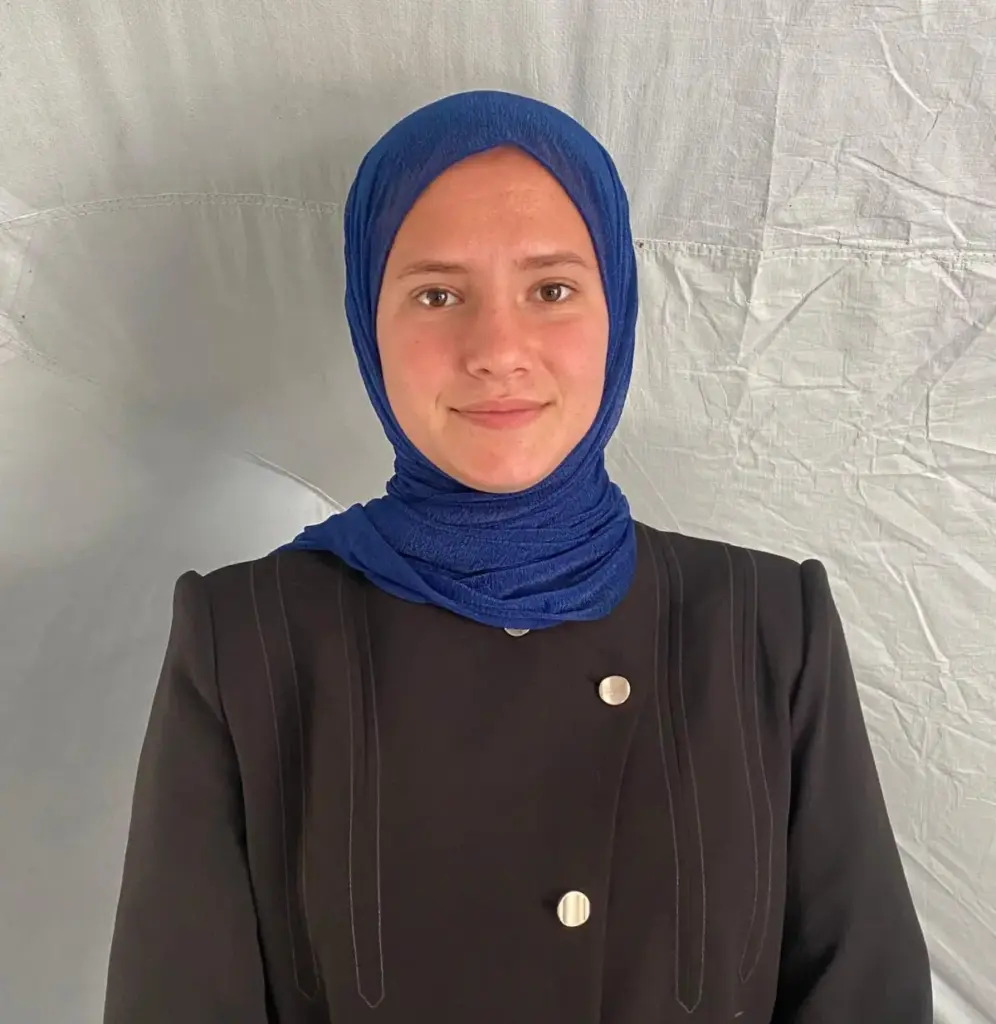
At just 18 years old, Malak is holding firmly onto the most profound ambition of her childhood: to become a doctor. Today, that aspiration exists in stark contrast to her immediate reality. She lives alongside her mother and her two brothers, Uday and Atef, inside a cramped and worn tent in Gaza. Their lives have been upended after their permanent family home was completely destroyed in the ongoing crisis, leaving them exposed to the elements and stripping away the security they once knew. Life in the makeshift camp is profoundly difficult, marked by constant uncertainty, scarcity, and physical hardship. Yet, despite the immense weight of these circumstances, Malak remains remarkably determined to continue her education, reclaim her future, and ultimately heal others who have suffered.
Her journey to this point is a testament to extraordinary resilience. Despite widespread displacement and the severe, systemic disruptions affecting every level of society in Gaza, Malak managed to complete her high school education with an impressive score of 96 percent. Armed with academic excellence and an unwavering sense of purpose, she made the decisive choice to study medicine—taking a vital, courageous first step toward the career she has dreamed of pursuing for years.
However, continuing those higher education studies under current conditions is an extraordinary challenge. The physical infrastructure of learning in Gaza has been devastated; many universities, lecture halls, and educational facilities have been heavily damaged or entirely destroyed by the conflict. Consequently, a significant portion of education has been forced online. For Malak, accessing reliable internet connections is a daily struggle. Furthermore, she lacks the essential tools required for modern distance learning, urgently needing a personal laptop to attend lectures, access course materials, and complete academic assignments.
Financial barriers compound these technological hurdles. Her university tuition fees represent another major, seemingly insurmountable challenge that her family simply cannot afford to shoulder alone. Without additional financial support from external sources, the gateway to her medical career risks being firmly shut through no fault of her own.
Studying While Living with Pain
Malak’s academic struggles are further compounded by a severe, life-altering physical injury. During the crisis, she was shot, and the live bullet remains dangerously lodged inside her abdomen. Managing this ongoing trauma requires constant medical attention. She continues to attend regular medical check-ups while she waits for complex surgery—a procedure that is currently entirely unavailable to her under Gaza’s collapsing healthcare system, which is overwhelmed, under-resourced, and struggling to function amid continuous strain.
Living with chronic pain would be enough to halt the ambitions of most individuals, but Malak refuses to let her physical suffering define her limits. She balances her rigorous studies with steadfast dedication to her family, stepping up to help shoulder the domestic burden at home. In their makeshift tent, she assists her mother with vital everyday tasks, including cooking, cleaning, and washing clothes.
Her mother works tirelessly in a small local bakery, trying to contribute whatever she can to the household. However, the wages earned from this small enterprise are meager and wholly inadequate to cover the family’s most basic daily needs, let alone specialized medical care or university expenses.
Life After Losing Their Home
Before the crisis shattered their lives, Malak and her family enjoyed the safety and stability of a traditional concrete house. That home is now gone, reduced to rubble, forcing the family to seek shelter in a worn, fragile tent. This temporary dwelling offers virtually no insulation or protection against the biting cold of winter weather, the intense heat of summer, or heavy seasonal rains that routinely flood makeshift camps.
The family’s daily survival depends on basic items that are currently scarce or entirely out of reach. They urgently need a stronger, more resilient tent structure, waterproof coverings to keep out the rain, mattresses, blankets to combat the cold, cooking equipment, household gas, a reliable water tank, adequate food supplies, and essential hygiene items. They also lack a reliable source of light to navigate the dark nights in the camp.
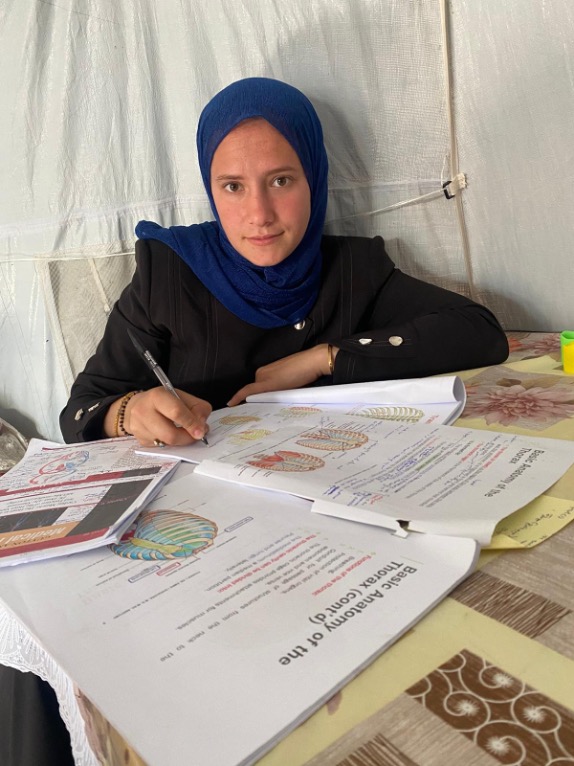
For Malak personally, the needs extend to basic personal items like clothes and shoes, alongside the critical financial assistance required to pay her university fees and acquire a laptop to sustain her medical education.
How Islamic Relief Supports Orphaned Children
During this time of unprecedented hardship, when soaring costs and systemic displacement have made meeting everyday survival needs nearly impossible, Malak’s family receives crucial assistance from Islamic Relief.
Islamic Relief has a long-standing commitment to vulnerable communities in the region, having supported orphaned children in Gaza since 1999 through its dedicated Orphan Sponsorship Programme. This vital initiative is specifically designed to support children who have tragically lost one or both parents, providing their households with a regular monthly financial payment.
This predictable support offers families a degree of autonomy, allowing them to allocate funds toward the needs they consider most urgent and pressing at any given moment—whether that involves purchasing food, paying for vital healthcare, covering educational expenses, or managing other essential household costs. In addition to regular monthly financial allocations, Islamic Relief strives, wherever possible, to include sponsored families in broader seasonal support initiatives. These encompass Ramadan and qurbani food distributions, festive Eid gifts, and targeted winter assistance campaigns designed to help families weather the harshest months of the year.
The scope of this programme has expanded significantly in response to the current crisis. Today, Islamic Relief is actively supporting nearly 25,200 orphaned children across the Gaza Strip, providing a lifeline of stability amid widespread chaos.
Despite this massive mobilization, the need remains staggering. There are currently over 5,100 orphaned children sitting on the organization’s waiting list, hoping and waiting for the life-changing security of a formal sponsorship.
A Chance to Keep Moving Forward
For Malak, the drive to continue her university education transcends the conventional goal of merely earning a professional degree. Her deepest aspiration is rooted in empathy and shared suffering; she hopes that by successfully becoming a doctor, she will one day possess the medical knowledge and capacity to care directly for people who are experiencing the exact same pain, trauma, and hardship she has been forced to live through herself.
Despite losing her family home, enduring a serious and unoperated gunshot injury, living amid ongoing danger, and confronting systemic educational and financial barriers at every turn, Malak has resolutely refused to give up on that vision of the future.
With continued community backing and sustained support, young people like Malak are given the vital chance to keep learning, retain a sense of hope, and work steadily toward a more secure, dignified tomorrow.
Islamic Relief’s Orphan Sponsorship Programme helps provide regular support to orphaned children and their families in Gaza, serving as a critical bridge between despair and opportunity for youth determined to rebuild their lives.