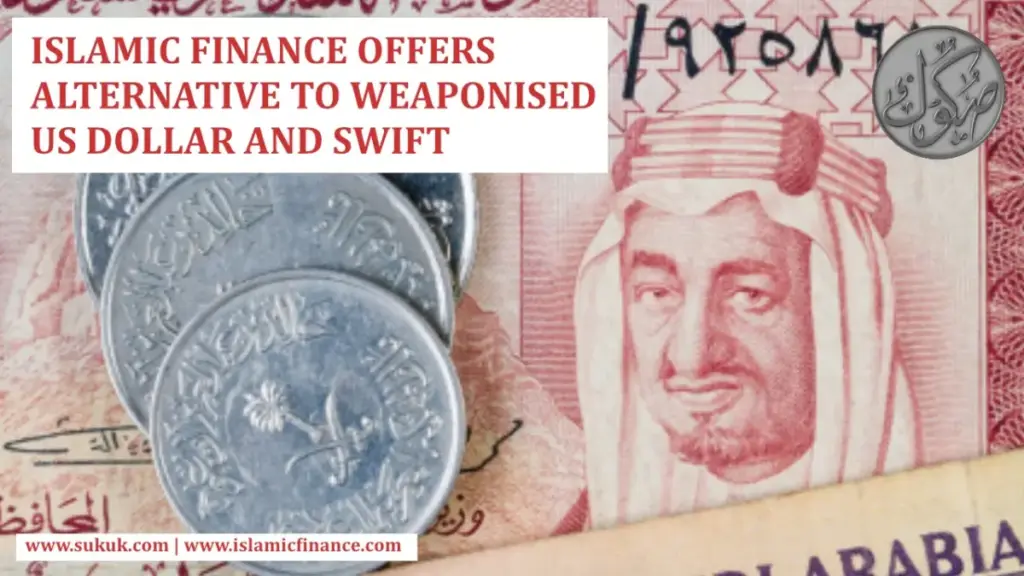
The growing trend of utilizing the United States dollar and the SWIFT international payment architecture as instruments of foreign policy has catalyzed a profound shift in global commerce. As Washington increasingly leverages economic sanctions and financial restrictions to achieve geopolitical objectives, trust in the greenback and traditional Western-led payment clearing networks has steadily eroded. In response to these mounting pressures, emerging economies and major regional powers are actively accelerating their search for alternative mechanisms to insulate their national economies, secure bilateral trade flows, and reduce their reliance on a single dominant global currency.
This sentiment has found a prominent voice in Turkish leadership. Turkish President Recep Tayyip Erdogan has strongly advocated for the broader adoption of Islamic finance principles and the expansion of trade settled in national currencies, describing these measures as matters of pressing urgency for nations seeking financial sovereignty. In outlining this vision, the Turkish president emphasized that the international community must place the issue of Islamic finance firmly on its collective agenda to counteract external financial vulnerabilities.
President Erdogan has previously leveled explicit criticisms against the global economic status quo, calling on other nations to dismantle the absolute monopoly held by the US dollar in international trade. These concerns are not entirely dismissed within Western financial circles. Former US Treasury Secretary Steve Mnuchin previously acknowledged the inherent risks of overusing financial sanctions, explicitly warning that if policymakers are not careful, global actors will increasingly look for alternative payment methods and competing currencies to conduct their cross-border business.
Iranian Banks Removed from SWIFT and the Rise of Alternative Payment Systems
The practical consequences of financial isolation have become glaringly apparent through the implementation of sweeping US sanctions. Most notably, Iranian financial institutions have been systematically disconnected from the SWIFT international payment system. This decisive action has severely crippled Iran’s capacity to engage in standard foreign trade, disrupting its export revenues and complicating essential imports. Similar extraterritorial sanctions have also impacted European commercial interests, including German firms participating in the construction of the major Russian-German energy pipeline, highlighting how widespread secondary sanctions can disrupt traditional transatlantic business partnerships.
Faced with the constant threat of exclusion from Western-dominated financial infrastructure, major economic powers have begun constructing parallel networks. Russia and China, both frequent targets of Western trade restrictions, have established their own bilateral payment and settlement systems. These dedicated mechanisms allow Moscow and Beijing to trade directly with one another, effectively bypassing the US dollar and mitigating the risk of disruption by foreign regulators.
Increased Use of Gold and Local Currencies Across the Shanghai Cooperation Organization
The movement away from the US dollar extends far beyond individual bilateral arrangements, gaining institutional momentum within multilateral organizations. The Shanghai Cooperation Organization (SCO), an eight-nation security and economic bloc that includes influential members such as China, Pakistan, and Russia, collectively accounts for nearly a quarter of global Gross Domestic Product. Recognizing their collective economic weight, SCO member states have systematically increased their gold reserves and foreign exchange holdings, which now amount to nearly four trillion US dollars.
This accumulation of tangible assets supports a deliberate strategy to decouple regional commerce from Western financial oversight. During a high-level finance ministers meeting held in Moscow, the SCO reached a formal decision to significantly expand the practice of conducting bilateral trade and investment using local currencies rather than relying on the US dollar as an intermediary. By trading in national currencies, these countries aim to protect their foreign exchange reserves from exchange rate volatility and shield their commercial transactions from external political interference.
Use of Gold in Islamic Cultures and Modern Banking Innovations
Parallel to the de-dollarization efforts led by major governmental blocs, Islamic finance has increasingly embraced precious metals as a secure and reliable store of wealth. Gold has long held a deeply attractive position as an asset class and a generational store of value across various Asian and Middle Eastern cultures. Building upon these cultural foundations, nations such as Turkey and Malaysia have emerged at the forefront of modern Islamic financial gold banking and the development of gold-backed currency systems.
In Malaysia, regional state governments have taken tangible steps to institutionalize alternative mediums of exchange. Specifically, the Malaysian states of Kelantan and Perak introduced gold dinar and silver dirham coins intended to serve as recognized means of payment and facilitation for everyday trade.
Meanwhile, the commercial banking sector has adapted these traditional concepts for the modern era. Kuveyt Türk, a prominent Turkish Islamic bank operating as a subsidiary of Kuwait Finance House, pioneered significant innovations in gold banking when it launched specialized gold accounts in 2007. Over the subsequent decade, the bank successfully collected more than 26 tons of physical gold from retail and institutional depositors, representing a valuation of roughly 1.2 billion US dollars by July 2019. By integrating this physical gold directly into the broader Turkish economy, the bank demonstrated the viability of mobilizing dormant bullion assets. Current financial technology initiatives are now building upon this foundation, exploring the development of Islamic finance gold-based cryptocurrencies designed to streamline and secure cross-border trade transactions.
Establishing an Islamic Finance Gold Standard
The integration of precious metals into modern Islamic finance received a major institutional boost in 2016, when the World Gold Council and the Accounting and Auditing Organisation for Islamic Financial Institutions (AAOIFI) jointly approved comprehensive sharia standards for gold-based financial products. The primary objective of this regulatory milestone was to encourage the expanded use of physical bullion within Islamic financial institutions and clear the regulatory path for the creation of innovative financial instruments compliant with Islamic law.
These established standards provided much-needed clarity and uniformity across global markets by explicitly regulating complex financial mechanics, including the proper use of collateral, as well as the execution of gold exchanges in both spot and deferred commercial transactions. By establishing clear religious and legal parameters for gold trading, the framework has empowered Islamic banks and regional governments to design sophisticated financial products that harness the stability of precious metals, offering a robust alternative to fiat currency systems dominated by Western monetary policy.