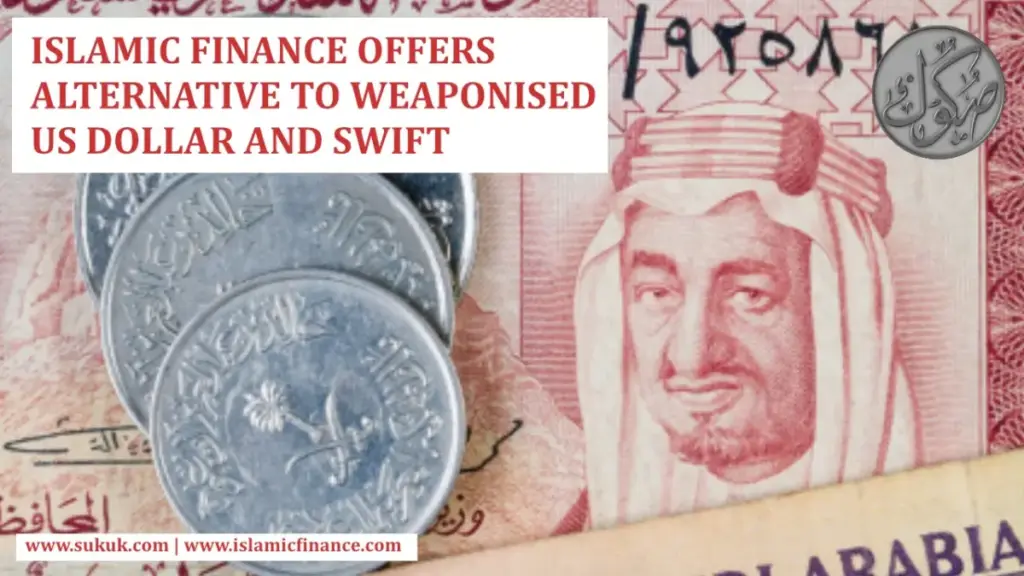
The growing geopolitical weaponization of the US dollar and the international payment system known as SWIFT has triggered a profound shift in global commerce. As trust steadily wanes in the greenback and the Western-dominated financial infrastructure that supports it, nations around the world are actively seeking viable alternatives to insulate their economies from unilateral sanctions and financial coercion.
This rising anxiety over the centralization of global finance has placed the spotlight on alternative mechanisms, with leaders and financial strategists exploring everything from bilateral local-currency trading to traditional asset classes like gold and innovative Islamic finance instruments.
Islamic Finance Instruments Can Replace US Dollar in Trade
In response to these systemic vulnerabilities, Turkish President Recep Tayyip Erdogan has emerged as a vocal advocate for systemic change, pushing for the broader adoption of Islamic finance principles to circumvent Western-controlled financial networks. Speaking on the urgency of the matter, President Erdogan emphasized that trade conducted in national currencies has gained unprecedented urgency. He noted that policymakers should first and foremost place the issue of Islamic finance on their active agendas to foster greater economic independence.
The Turkish leader has a track record of challenging the established global order, having previously called on the international community to dismantle what he terms the "monopoly" of the dollar in global trade. This growing sentiment is not entirely lost on Washington. Acknowledging the risks associated with the aggressive application of economic sanctions, US Treasury Chief Steve Mnuchin previously conceded that if policymakers are not careful, international actors will increasingly look at using other currencies and alternative payment channels.
The apprehension expressed by Western officials stems from real-world disruptions that have severely impacted global trade flows and penalized nations and corporations operating outside the direct purview of American foreign policy objectives.
Iranian Banks Removed from SWIFT
The catalyst for many of these urgent search efforts lies in the practical consequences of sweeping economic sanctions. The deployment of aggressive US sanctions has resulted in the systematic removal of Iranian banks from the SWIFT financial messaging network. This decisive move has effectively crippled Iran’s ability to conduct routine foreign trade, cutting off the nation from conventional international liquidity and banking connections.
The reach of these measures extends far beyond traditional adversaries of the United States. Similar secondary sanctions and regulatory pressures have directly impacted European enterprises, notably disrupting the commercial activities of German firms working on the joint Russian-German energy pipeline projects. These disruptions have served as a wake-up call for major economies, demonstrating that reliance on a single, centralized financial architecture exposes even powerful sovereign states and multinational corporations to extraterritorial political pressure.
Faced with these mounting challenges, major geopolitical players have begun constructing parallel financial ecosystems. Notably, Russia and China have taken concrete steps to establish their own independent payment and messaging systems. By doing so, Moscow and Beijing can trade directly with each other in their respective national currencies, thereby bypassing the dollar entirely and insulating their bilateral commerce from external interference.
Increased Use of Gold and Local Currencies
This decentralization trend is further amplified by multilateral economic blocs. The eight-nation Shanghai Cooperation Organization (SCO)—which includes major economies such as China, Pakistan, and Russia—collectively represents nearly a quarter of global gross domestic product. Member states within the SCO have systematically increased their gold holdings and foreign exchange reserves, which now accumulate to an imposing total of nearly $4 trillion USD.
Recognizing their combined economic weight, financial authorities from the bloc took decisive action during a ministerial meeting in Moscow. The SCO officially resolved to conduct an increasing share of their bilateral trade and investment portfolios using local currencies rather than relying on the US dollar. This strategic pivot reduces transactional costs, minimizes exchange rate risks, and diminishes the utility of American financial leverage over regional commerce.
In tandem with local currency arrangements, participating nations are increasingly turning to time-tested physical assets to secure their financial reserves and facilitate cross-border economic stability.
Use of Gold in Islamic Cultures
Gold has long maintained a deeply rooted appeal as an attractive asset class and a reliable store of wealth, traditionally passed down through generations across various Asian and Middle Eastern cultures. In recent years, nations like Turkey and Malaysia have placed themselves at the forefront of integrating Islamic financial traditions with gold banking and modern gold-based currency development.
Within Malaysia, regional initiatives have seen local state governments—specifically Kelantan and Perak—introduce gold dinar and silver dirham coins as legitimate supplementary means of payment and commercial trade. These initiatives seek to revive historical monetary models that align with ethical economic frameworks.
Meanwhile, the Turkish banking sector has made significant strides in institutionalizing gold accumulation. Kuveyt Türk, a prominent Turkish Islamic bank, pioneered retail and corporate gold banking when it launched its initiatives in 2007. Through innovative deposit schemes and vault services, the institution successfully collected over 26 tons of gold—valued at approximately $1.2 billion by July 2019—and seamlessly integrated these physical assets back into the broader Turkish economy.
Building upon these foundations, contemporary financial innovators are exploring cutting-edge adaptations, including Islamic finance gold-based cryptocurrencies designed to streamline and secure cross-border trade transactions without depending on Western clearing houses.
Islamic Finance Gold Standard
The formalization of these alternative financial instruments received a major institutional boost in 2016, when the World Gold Council and the Accounting and Auditing Organisation for Islamic Financial Institutions (AAOIFI) jointly approved a comprehensive Sharia standard for gold-based products.
The primary objective of establishing this standardized framework was to encourage the expanded use of physical bullion within Islamic finance, paving the way for the creation of sophisticated new financial instruments compliant with religious jurisprudence. The newly instituted standard meticulously addressed critical operational parameters, including the proper use of gold as collateral, as well as the execution guidelines for the exchange of gold in both immediate spot transactions and deferred delivery contracts. By providing a universally recognized religious and regulatory framework, the standard has provided the necessary legitimacy for institutions to scale up gold-backed financial products globally.