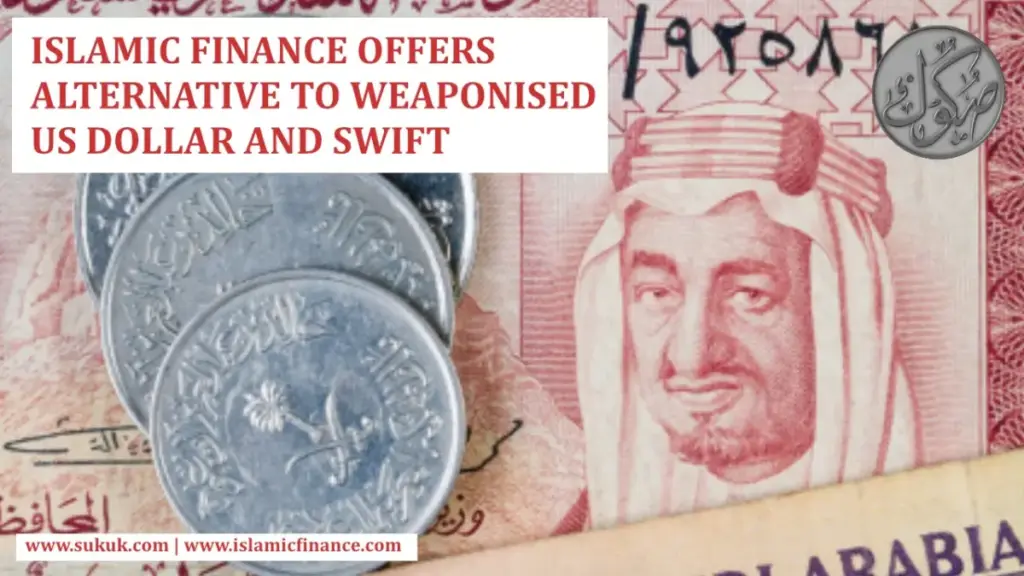
The growing weaponization of the United States dollar and the global financial messaging network known as SWIFT has triggered a profound shift in international commerce. As trust in the greenback and Western-dominated payment systems steadily wanes, nations around the world are actively seeking alternative mechanisms to safeguard their economic sovereignty and maintain uninterrupted trade flows.
This anxiety has intensified significantly due to aggressive economic measures and secondary sanctions imposed by Washington. In response to these pressures, Turkish President Recep Tayyip Erdogan has strongly advocated for the broader adoption of Islamic finance principles. Speaking on the matter, the Turkish leader emphasized that the necessity to conduct trade in national currencies has gained unprecedented urgency, suggesting that the international community must place Islamic finance firmly on its collective agenda.
President Erdogan has previously criticized the absolute monopoly of the dollar in global financial markets, arguing that it creates structural vulnerabilities for emerging economies. This sentiment is not entirely lost on Washington policymakers. United States Treasury Secretary Steve Mnuchin previously acknowledged the inherent risks of this overreach, conceding that if the United States is not careful, international actors will increasingly look for ways to utilize alternative currencies to conduct their cross-border transactions.
Iranian Banks Removed from SWIFT
The catalyst for many of these defensive economic maneuvers can be traced directly to unilateral United States sanctions. These measures have effectively severed Iranian banks from the SWIFT international payment system, dealing a devastating blow to Tehran’s ability to conduct normal foreign trade and access global capital markets. Similar extraterritorial sanctions and regulatory threats have also directly impacted European firms, including companies in Germany working on the vital Russian-German energy pipeline projects, illustrating how far-reaching these financial disruptions have become.
Faced with the constant threat of exclusion from Western-centric financial architecture, major economic powers have begun constructing parallel systems. Most notably, Russia and China have established their own independent bilateral payment systems. These mechanisms are specifically designed to facilitate direct trade between Moscow and Beijing, entirely bypassing the dollar and insulating their commercial exchanges from the reach of Washington-centric regulatory bodies.
Increased Use of Gold and Local Currencies
A broader institutional movement away from the dollar is also visible within multilateral organizations. The Shanghai Cooperation Organization (SCO), an influential eight-nation security and economic bloc that includes economic powerhouses such as China, along with Pakistan and Russia, accounts for nearly a quarter of the entire global gross domestic product.
Member states of the SCO have methodically increased their collective gold and foreign exchange reserves, which now stand at an impressive total of nearly four trillion United States dollars. Capitalizing on this massive financial cushion, finance ministers from the SCO member states gathered in Moscow to reach a formal decision regarding regional commerce. The bloc officially resolved to conduct future bilateral trade and investment activities using local currencies, effectively sidelining the dollar in regional transactions.
Use of Gold in Islamic Cultures
Beyond fiat local currencies, tangible assets such as gold have re-emerged as exceptionally attractive asset classes and reliable stores of wealth. This reliance on precious metals is deeply rooted in traditions passed down through generations across many Asian cultures. Within this landscape, countries like Turkey and Malaysia have emerged at the forefront of pioneering Islamic financial gold banking and developing gold-backed currency systems.
Practical applications of this approach can be observed in Malaysia, where the state governments of Kelantan and Perak introduced gold dinar and silver dirham coins as alternative mediums of exchange for local payment and trade. Meanwhile, in the Turkish banking sector, the prominent Islamic financial institution Kuveyt Türk, known as Kuwait Turkish Bank, initiated dedicated gold banking operations in 2007. By July 2019, the bank had successfully collected over twenty-six tons of physical gold, valued at approximately 1.2 billion dollars, seamlessly integrating these bullion assets into the wider Turkish economy. Current financial technology initiatives are now pushing these concepts further, exploring the creation of an Islamic finance gold-backed cryptocurrency designed to facilitate more efficient cross-border trade.
Islamic Finance Gold Standard
The institutional credibility of these precious metal initiatives received a major boost in 2016. During that year, the World Gold Council, in collaboration with the Accounting and Auditing Organisation for Islamic Financial Institutions, commonly known as AAOIFI, officially approved a comprehensive sharia standard for gold-based products.
The primary objective of this standardized framework was to significantly increase the utilization of physical bullion within Islamic finance while encouraging the creation of innovative financial instruments that comply with religious jurisprudence. The newly established standard successfully addressed complex financial technicalities, including the proper use of collateral as well as the rules governing the exchange of gold in both immediate spot transactions and deferred delivery agreements.