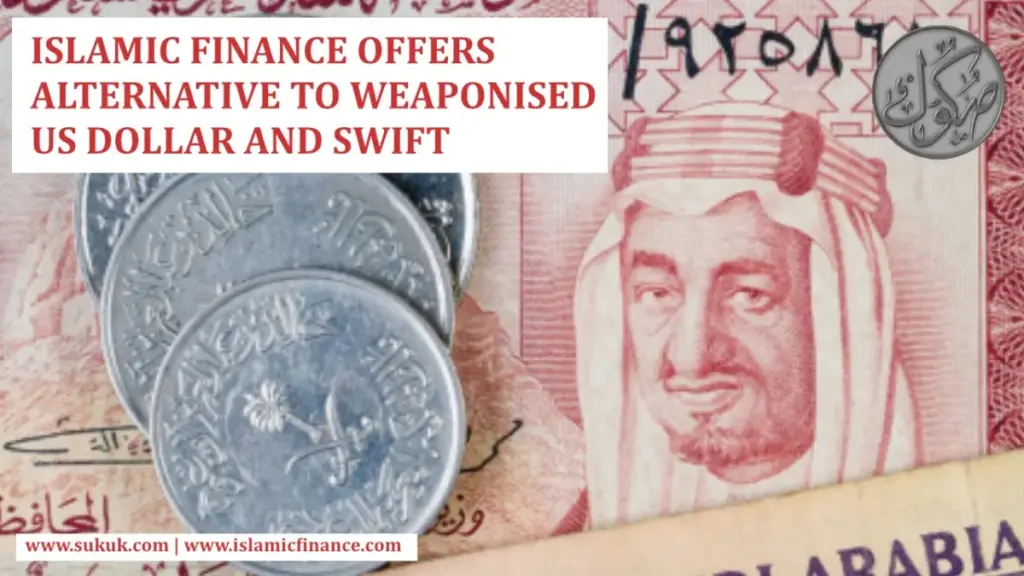
The aggressive weaponization of the US dollar and the international payment architecture provided by the Society for Worldwide Interbank Financial Telecommunication (SWIFT) has triggered a profound shift in global commerce. As trust steadily erodes in the greenback and the Western-dominated financial networks that support it, nations across the globe are actively seeking viable alternatives to safeguard their economic sovereignty.
This growing disillusionment has brought alternative financial systems to the forefront of international diplomacy. In response to these mounting geopolitical pressures, Turkish President Recep Tayyip Erdogan has championed the integration of Islamic finance instruments into global trade networks. Emphasizing the urgency of the matter during high-level discussions, President Erdogan noted that trade conducted in national currencies has gained unprecedented urgency, asserting that the international community should prioritize placing Islamic finance instruments firmly on the global agenda.
The Turkish leader has consistently urged emerging economies and trading partners to dismantle the prevailing monopoly of the dollar in international commerce. These concerns are not isolated to developing nations; even within the highest echelons of the United States government, a realization of the risks is taking root. US Treasury Secretary Steve Mnuchin publicly acknowledged the precarious nature of the dollar’s dominance, conceding that if policymakers are not careful, international actors will increasingly look toward utilizing alternative currencies for their trade needs.
Iranian Banks Removed from SWIFT
The catalyst for many of these defensive economic maneuvers lies in the aggressive deployment of unilateral sanctions by the United States. Most notably, these restrictive measures resulted in the removal of Iranian banks from the SWIFT international payment system. This unprecedented exclusion severely crippled Iran’s capacity to conduct normal foreign trade, locking the nation out of traditional Western-centric financial channels and forcing it to seek alternative mechanisms for cross-border transactions.
The impact of these sanctions has extended far beyond the Middle East, occasionally frictioning diplomatic relations between the United States and its traditional European allies. Similar secondary sanctions and regulatory threats have directly impacted European firms, including German companies involved in the construction and operation of the strategic Russian-German pipeline projects. These extraterritorial economic pressures have demonstrated to foreign capitals that reliance on US-controlled financial architecture carries immense operational and political vulnerability.
In direct defiance of these Western-led financial controls, major global powers have begun constructing parallel systems. Russia and China, both frequent targets of economic sanctions and trade restrictions, have established their own independent financial messaging and payment systems. By creating these alternative channels, Moscow and Beijing have enabled their respective commercial enterprises to trade directly with one another, thereby bypassing the traditional clearing houses that rely on the US dollar.
Increased Use of Gold and Local Currencies
The momentum away from the greenback is further reinforced by major multilateral economic blocs representing billions of people and substantial portions of global economic output. The Shanghai Cooperation Organization (SCO), an eight-nation security and economic bloc that includes major regional powers such as China, Pakistan, and Russia, currently represents nearly a quarter of the entire global Gross Domestic Product.
Recognizing their collective economic weight, member states of the SCO have steadily increased their sovereign gold holdings and foreign exchange reserves. Combined, the reserves held by SCO member nations now amount to nearly four trillion US dollars, providing a formidable financial cushion against external economic shocks. Building upon this robust fiscal foundation, finance ministers from the SCO member states gathered in Moscow for a landmark meeting, where they reached a decisive agreement to conduct bilateral trade, commerce, and investment activities directly in local currencies rather than routing transactions through the US dollar.
This strategic pivot toward local currency settlements reduces transaction costs, minimizes foreign exchange risks, and insulates participating economies from the direct impacts of unilateral foreign monetary policies. By fostering direct trade frameworks, these nations are steadily constructing a multipolar financial reality that diminishes the historical leverage once held exclusively by Western financial institutions.
Use of Gold in Islamic Cultures
Parallel to the state-level maneuvers of the SCO, the inherent properties of gold continue to make it an exceptionally attractive asset class and a reliable store of wealth that has been passed down through generations, particularly within Asian and Middle Eastern cultures. Among these regions, Turkey and Malaysia have emerged at the forefront of pioneering Islamic financial gold banking and spearheading the development of modern gold-based currencies.
Within Malaysia, regional initiatives have demonstrated the practical viability of precious metals in daily commerce. The Malaysian states of Kelantan and Perak notably introduced traditional gold dinar and silver dirham coins as an alternative means of payment and medium for trade, reviving historical monetary practices to foster local economic resilience.
Simultaneously, the Turkish banking sector has embraced gold as a foundational pillar of domestic financial stability. Kuveyt Türk, a prominent Turkish Islamic bank, initiated comprehensive gold banking services in the Turkish market. Through innovative retail and commercial products, the institution successfully collected over twenty-six tons of physical gold from the public, a collection valued at approximately 1.2 billion US dollars. By seamlessly integrating these vast private gold reserves into the broader Turkish economy, the bank created a localized buffer against currency volatility. Current modernization initiatives within this sector now include the exploration of Islamic finance gold-based cryptocurrencies, designed to leverage blockchain technology to better facilitate secure and efficient cross-border trade without relying on conventional Western payment gateways.
Islamic Finance Gold Standard
The broader institutional integration of precious metals into modern Islamic finance reached a significant milestone with the formal establishment of international regulatory standards. In 2016, the World Gold Council, in collaboration with the Accounting and Auditing Organisation for Islamic Financial Institutions (AAOIFI), officially approved a comprehensive sharia standard specifically designed for gold-based financial products.
The primary objective of this regulatory framework was to substantially increase the utilization of physical bullion within the architecture of Islamic finance and to encourage the creation of innovative financial instruments that comply with religious jurisprudence. The newly established standard meticulously addressed critical operational parameters, including the permissible use of gold as collateral and the exact regulatory mechanics governing the exchange of gold in both spot and deferred financial transactions. By establishing clear, universally recognized guidelines, this sharia standard provided the legal and operational certainty required for institutional investors and central banks to expand their engagement with gold-backed financial instruments.