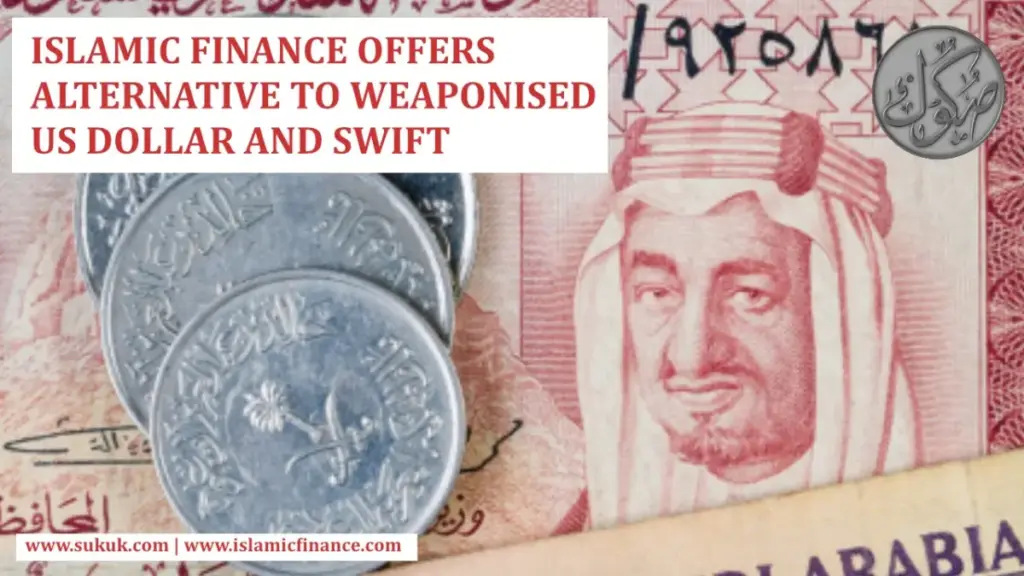
The growing use of economic sanctions and the perceived weaponization of the US dollar and the international payment system of SWIFT have triggered an aggressive global push for alternatives. As trust steadily wanes in the greenback and the Western-dominated financial infrastructure that supports it, nations around the world are increasingly exploring independent payment mechanisms, local currencies, and alternative asset classes to safeguard their economic sovereignty and maintain international trade flows.
In response to these shifting geopolitical and financial dynamics, Turkish President Recep Tayyip Erdogan has strongly advocated for the broader adoption of Islamic finance principles. Highlighting the urgency of the moment, the Turkish leader noted that conducting trade in national currencies has become an essential priority. Emphasizing the need for systemic innovation, President Erdogan urged regional and international partners to place Islamic finance directly on the global agenda as a practical solution to mounting trade restrictions.
This push aligns with previous statements from Ankara calling on the international community to dismantle the effective monopoly of the dollar in global commerce. Concerns over the long-term viability of relying solely on the American currency are not confined to emerging economies alone. Highlighting the risks associated with aggressive financial policies, former US Treasury Secretary Steve Mnuchin previously acknowledged the very real threat posed by these trends, warning that if policymakers are not careful, international actors will increasingly seek out alternative currencies and payment systems to bypass the US financial network.
Iranian Banks Removed from SWIFT and the Rise of Alternative Payment Networks
The vulnerability of the existing global financial architecture has been laid bare by sweeping unilateral US sanctions, which have systematically removed Iranian banks from the Society for Worldwide Interbank Financial Telecommunication (SWIFT) network. This unprecedented exclusion has severely crippled Iran’s ability to conduct routine foreign trade, cutting the nation off from standard international banking channels. Similar restrictive measures have also impacted European commercial interests, including German firms actively working on the Russian-German energy pipeline projects, further alienating traditional allies who find their economic activities ensnared by extraterritorial US sanctions.
Faced with these persistent economic pressures, major powers targeted or wary of similar actions have begun carving out independent financial pathways. Most notably, Russia and China have established their own bespoke payment and messaging systems designed to facilitate direct bilateral trade. By bypassing traditional Western clearing houses entirely, Moscow and Beijing have demonstrated that alternative trade corridors can successfully function outside the orbit of the US dollar, offering a blueprint for other nations seeking insulation from financial coercion.
Increased Use of Gold and Local Currencies Across Emerging Markets
The movement away from the dollar is gaining institutional backing through major multilateral organizations. The eight-nation Shanghai Cooperation Organization (SCO)—which includes economic powerhouses such as China, Pakistan, and Russia—collectively represents nearly a quarter of global Gross Domestic Product. Recognizing the shared vulnerability to currency fluctuations and financial sanctions, SCO member states have systematically increased their collective foreign exchange and gold reserves, which now amount to nearly $4 trillion USD.
Demonstrating a concrete shift in policy, representatives at a crucial finance ministers’ meeting in Moscow formally decided that SCO members would increasingly conduct bilateral trade and investment using local currencies rather than defaulting to the US dollar. This coordinated strategy not only reduces transaction costs for participating nations but also insulates their regional economies from external monetary shocks originating in Western markets.
Use of Gold in Islamic Cultures and Modern Financial Integration
Beyond fiat currencies, precious metals are reclaiming a central role in international commerce, building upon deep historical traditions. Gold has long remained an attractive asset class and a reliable store of wealth, traditionally passed down through generations across various Asian cultures. In contemporary financial markets, nations like Turkey and Malaysia have positioned themselves at the forefront of Islamic financial gold banking and the development of gold-backed currency systems.
Innovative practical steps have already been taken at regional levels. For instance, the Malaysian states of Kelantan and Perak introduced gold dinar and silver dirham coins as alternative mediums of exchange and payment for trade, reviving historical monetary traditions to foster local economic independence.
Concurrently, the Turkish Islamic banking sector has pioneered large-scale bullion integration. Kuveyt Türk, a prominent Turkish Islamic bank, began offering specialized gold banking services in the late 2000s. Through these programs, the institution successfully collected over 26 tons of gold—valued at approximately $1.2 billion by mid-2019—effectively integrating dormant private wealth directly into the formal Turkish economy. Building upon these successful domestic initiatives, current financial strategies involve the development of Islamic finance gold-based cryptocurrencies designed to seamlessly facilitate secure, cross-border trade without relying on traditional Western banking rails.
The Islamic Finance Gold Standard and Future Market Expansion
The institutional framework supporting these alternative instruments received a significant boost with the formal introduction of standardized guidelines for precious metals. In 2016, the World Gold Council and the Accounting and Auditing Organisation for Islamic Financial Institutions (AAOIFI) jointly approved a comprehensive Sharia standard for gold-based products.
The primary objective of this standardized framework was to safely increase the utilization of physical bullion within the broader Islamic finance industry and pave the way for the creation of innovative financial instruments. Specifically, the standard addressed complex regulatory issues regarding the use of gold as collateral, alongside the precise mechanics governing the exchange of gold in spot and deferred transactions. By establishing regulatory clarity and religious compliance, this milestone continues to empower Islamic financial institutions to deploy gold-backed mechanisms more broadly, offering a sturdy, reliable foundation for international trade as the global economic order continues to fragment away from the dominance of the US dollar.