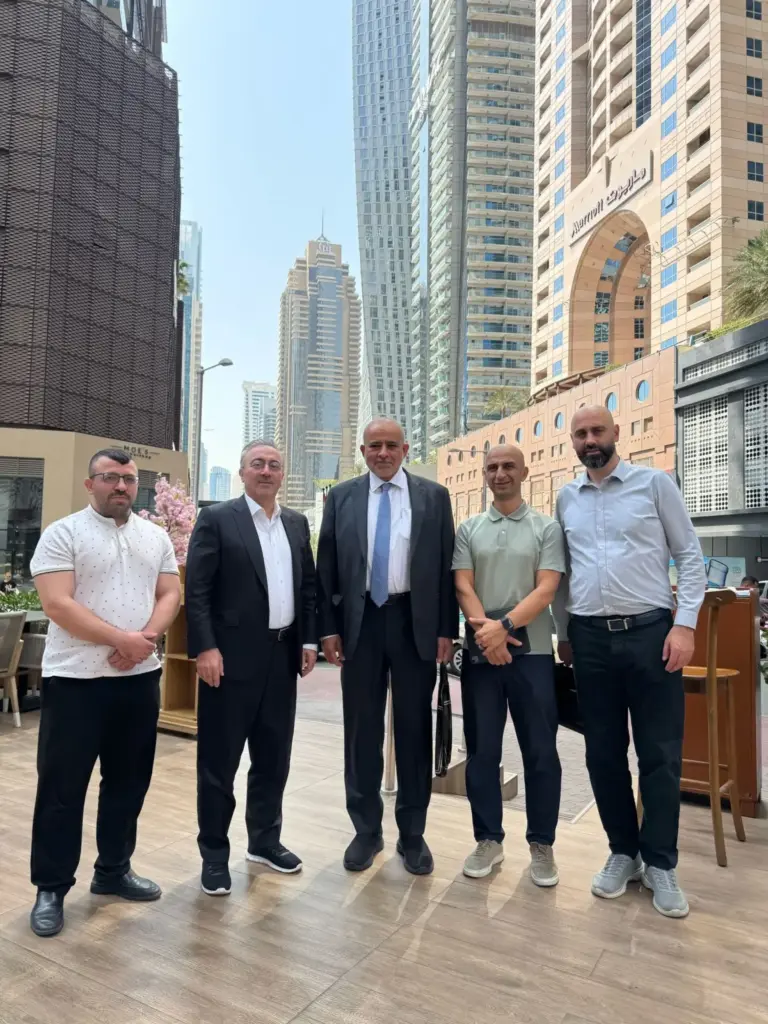
Kalam Research & Media (KRM) has officially signed a strategic cooperation agreement with the Media Institute of the Istanbul Foundation for Knowledge and Culture (IIKV Medeniyet Enstitüsü), marking a significant and expansive milestone in KRM’s ongoing research partnerships within Turkey. This landmark development reinforces a shared vision for academic and cultural cooperation, uniting two prominent institutions dedicated to exploring the intersections of contemporary scholarship, digital communication, media studies, and technology.
The formalization of the agreement follows a high-level visit by Dr. Aref Ali Nayed to the IIKV Foundation headquarters in Istanbul. During his visit, Dr. Nayed engaged in comprehensive discussions with foundation leadership, prominent scholars, and researchers. These initial talks centered on identifying and cultivating mutual areas of interest that bridge traditional knowledge systems with modern research, specifically focusing on how media and technology intersect with public discourse, ethics, and contemporary society.
The resulting strategic cooperation agreement establishes a robust framework designed to facilitate collaborative research projects, the systematic exchange of academic and professional expertise, and joint initiatives across multiple disciplines. By combining their institutional strengths, KRM and the IIKV Media Institute aim to address complex questions facing modern societies, particularly within Muslim-majority contexts and wider interfaith frameworks.
Building on Shared Vision and Intellectual Heritage
The Istanbul Foundation for Knowledge and Culture has long maintained a distinguished history of promoting profound scholarly dialogue, cultural exchange, and the preservation and dissemination of classical and contemporary Islamic thought. Within the foundation, the Media Institute has carved out a vital niche, concentrating its efforts on contemporary media studies, digital communication ecosystems, and the profound role that emerging technologies play in shaping public opinion and social norms. These core focus areas align seamlessly with KRM’s own dynamic research agenda, creating a fertile ground for deep institutional synergy.
The newly minted partnership represents a crucial step forward in KRM’s overarching mission to build sustainable bridges between research institutions across diverse geographic regions. Turkey’s unique geopolitical and cultural position—serving as a vibrant historical and contemporary hub for Islamic scholarship alongside a rapidly expanding and innovative technology sector—makes it an indispensable partner for KRM’s international initiatives.
Dr. Nayed’s engagement with the IIKV unfolded in a deliberate, two-stage process that underscored the depth of the collaboration. The initial visit allowed both organizations to move beyond surface-level networking, diving directly into substantive discussions regarding potential collaborative ventures. This groundwork culminated in the formal signing ceremony with the Media Institute, cementing a partnership that is expected to yield substantial academic and societal contributions in the months and years ahead.

Broader Turkish Partnerships and Global Networks
The new agreement with the IIKV Media Institute does not happen in a vacuum; rather, it builds organically upon KRM’s existing, well-established relationships with various Turkish academic and research institutions. KRM already maintains active and productive partnerships with universities such as Üsküdar University, and its representatives have actively participated in numerous scholarly events, conferences, and symposia across Turkey. These engagements have frequently focused on Nursi studies, contemporary Islamic thought, and the synthesis of faith-based traditions with contemporary intellectual inquiry.
These deep-rooted Turkish partnerships complement KRM’s broader, global network of institutional relationships spanning across Europe, North America, and the Arab world. By weaving together these diverse academic threads, KRM fosters unique opportunities for comparative research and cross-cultural dialogue. Scholars affiliated with these networks are better positioned to tackle pressing global questions concerning the ethical implications of technology, the evolution of societal norms, and the preservation of cultural and intellectual heritage in a hyper-connected world.
The integration of Turkish scholarship into KRM’s global framework enriches the quality and perspective of the research produced, ensuring that local insights are brought to bear on global challenges, and vice versa.
Future Directions in Media, Technology, and Society
Looking ahead, the cooperation agreement between Kalam Research & Media and the IIKV Media Institute opens up a wide array of possibilities for future collaborative efforts. Anticipated initiatives include joint research projects that address the technological and cultural shifts of the twenty-first century, scholar exchange programs designed to foster direct mentorship and collaborative thinking, and co-published academic works that contribute to international literature.
Furthermore, the partnership strategically positions both institutions to address emerging and critical questions regarding the role of media, artificial intelligence, and digital technology in Muslim-majority societies and within broader interfaith contexts. As digital technologies continue to radically reshape communication channels, personal identities, and social interactions on a global scale, institutional partnerships of this caliber become increasingly indispensable.
They provide the necessary framework for grounded, culturally-informed research that evaluates technology’s true impact on human communities. By drawing upon diverse intellectual traditions and combining rigorous academic methodologies, KRM and the IIKV Media Institute aim to develop thoughtful, proactive responses to the complex technological landscape of the modern era. The collaboration stands as a testament to the power of cross-border institutional cooperation in advancing knowledge, fostering mutual understanding, and addressing the shared intellectual challenges of our time.