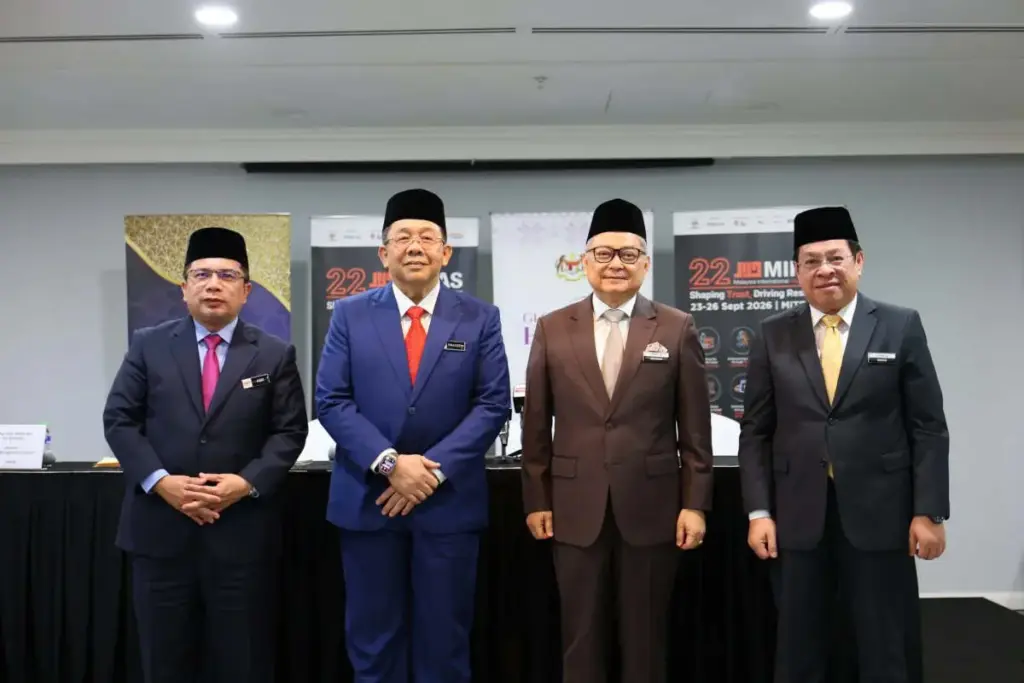
KUALA LUMPUR, Sept. 26, 2026 — In a strategic move to elevate its domestic halal expertise onto the international stage, Malaysia is overhauling how it bridges regulatory standards with overseas commerce. The country is seeking to transform a certification system built on meticulous compliance into a dynamic, direct instrument of international trade, ensuring that its trusted reputation translates seamlessly into tangible market access for local enterprises.
The cornerstone of this initiative is a newly minted Letter of Intent signed between the Malaysia External Trade Development Corporation (MATRADE) and the Department of Islamic Development Malaysia (JAKIM). This agreement establishes a dedicated Halal Development Officer Programme functioning under the newly introduced Malaysia Halal Global Nexus (MHGN). Unveiled during the Global Halal Summit 2026 in Kuala Lumpur, the initiative is engineered to seamlessly link Malaysia’s stringent halal governance and certification expertise directly with its expansive overseas trade-promotion network. Under this framework, MATRADE officers stationed strategically abroad will be equipped to provide on-the-ground guidance regarding Malaysia’s comprehensive halal ecosystem, with the overarching objectives of strengthening the international recognition of Malaysian halal certification and actively accelerating halal exports.
The true significance of the agreement extends far beyond the creation of yet another bureaucratic initiative; rather, it successfully brings two critical pillars of Malaysia’s economic machinery into profound alignment. Historically, government responsibilities were strictly demarcated: JAKIM maintained absolute authority over halal governance, religious compliance, and technical standards, while MATRADE served as the premier agency responsible for promoting Malaysian exports and assisting local companies in developing international markets. By establishing the Malaysia Halal Global Nexus, the government has brought these vital functions together under a single, unified framework specifically intended to expand international footprints, reinforce robust industry networks, and fortify global confidence in the uncompromised integrity of Malaysia’s halal infrastructure.
For exporters navigating the complex maze of international commerce, this institutional connection carries immense consequence. A halal certificate is far more than a simple compliance label affixed to a consumer package. For any company attempting to breach a foreign market, persistent questions regarding technical standards, the accreditation of certification bodies, mutual recognition, and regulatory compliance can ultimately determine whether a commercial product is warmly accepted by foreign buyers and strict regulatory authorities. According to Religious Affairs Minister Senator Dr. Zulkifli Hasan, Malaysia has methodically worked to build international confidence in its certification system through a robust framework that includes the official recognition of foreign halal certification bodies across diverse global regions.
The newly minted Halal Development Officer Programme is explicitly designed to project that hard-earned institutional knowledge well beyond Malaysia’s borders. By embedding specialized understanding within foreign trade missions, the initiative places trade officials—rather than domestic certification authorities alone—in direct proximity to the practical, everyday challenges faced by companies seeking to conduct business internationally. These officials will be positioned to clarify how Malaysia’s halal system functions, what its rigorous certification genuinely represents, and how authentic Malaysian halal products and services can establish profitable connections with overseas markets.
This collaborative arrangement forms a crucial component of Kuala Lumpur’s broader ambition to treat halal not merely as a domestic religious certification system, but as a core pillar of the nation’s international trade infrastructure. The introduction of the MHGN at the Global Halal Summit carried the explicit mission of expanding international markets, strengthening networks among key industry players, and increasing global confidence in Malaysia’s halal integrity. Fittingly, the initiative operates under the clear and focused tagline, “Connecting the Global Halal Ecosystem.”
The timing of this strategic integration clearly reflects the rapidly growing economic importance that Malaysia attaches to the halal sector. Demonstrating the immense commercial momentum behind the initiative, MATRADE has established an ambitious sales target of RM5 billion for the Malaysia International Halal Showcase (MIHAS) 2026, scaling up its initial goal of RM4.5 billion following an unprecedented surge of interest from international buyers. The agency reported receiving more than 500 applications from international buyers and importers for this year’s installment, significantly surpassing its original target of 300 buyers.
Now in its 22nd edition, MIHAS has steadily evolved from a traditional exhibition into a powerful, transaction-driven trade platform. This year’s massive event successfully unites exporters and international buyers across 14 distinct halal-related clusters. Simultaneously, MATRADE has systematically expanded its business-matching capabilities and digital tools, ensuring that exhibition participation translates directly into measurable commercial opportunities.
This distinction is vital because Malaysia’s primary contemporary challenge is no longer simply demonstrating that it possesses a mature, time-tested halal certification system. Instead, the challenge lies in ensuring that the immense credibility attached to that system directly translates into friction-free market access.
This is precisely where the alignment between MATRADE and JAKIM proves transformative. While JAKIM provides world-class certification and governance expertise, MATRADE provides an extensive overseas trade network. The Halal Development Officer programme is designed to give the latter direct access to the former, creating a reliable, institutional channel through which Malaysia’s gold standard of halal compliance can be expertly explained, defended, and promoted in competitive international markets.
The Malaysian government has consistently linked the burgeoning halal sector to much larger national export ambitions. MATRADE announced earlier this year that Malaysia is actively targeting an impressive RM80 billion in halal exports by 2030, all while seeking to elevate the sector’s broader contribution to the national economy through continuous innovation and supply-chain resilience.
Achieving that ambitious target, however, will depend on far more than certification alone. Malaysian companies must still fiercely compete on fundamental market metrics, including price, quality, product development, supply-chain reliability, and localized market knowledge. Nevertheless, official certification often determines whether a product can legally cross a border and meet the stringent entry requirements of a particular target market. Furthermore, broad international recognition of that certification can significantly reduce the regulatory barriers frequently faced by exporters operating across vastly different legal environments.
For Malaysia, the underlying strategic question is evolving into a broader consideration: whether the profound credibility developed through decades of rigorous halal certification can be effectively converted into a definitive competitive advantage for Malaysian businesses operating overseas.
The newly launched programme represents a concerted attempt to make that connection much more direct and impactful. Rather than treating halal certification and export promotion as isolated government functions operating in separate silos, Malaysia is deliberately housing them within the exact same international framework. The ultimate success of this forward-thinking approach will not be measured by the ceremonial signing of a Letter of Intent, but by whether it tangibly helps Malaysian companies gain wider international recognition, reach new buyers, and convert hard-earned halal credentials into sustained, long-term export growth. For a nation that has spent decades painstakingly building its global reputation around uncompromised halal standards, the next phase of development is increasingly centered on what happens far beyond the certificate—and how effectively that foundational trust travels alongside Malaysian products into the bustling global marketplace.