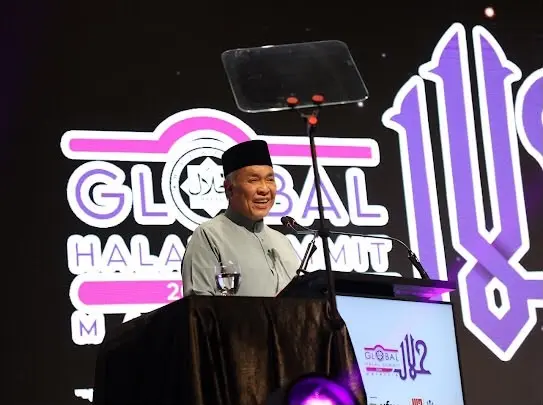
KUALA LUMPUR, Sept. 25, 2026 — Malaysia has spent decades meticulously building one of the world’s most robust and respected systems for halal certification and governance. Yet, as global demand for ethical and halal-compliant goods continues to accelerate, the nation’s primary challenge has shifted from regulatory establishment to commercial expansion: getting more of the companies operating within that well-regulated ecosystem to successfully sell their products beyond the country’s borders.
This pressing economic question took center stage on Friday during the high-profile opening of the Global Halal Summit (GHaS) and the Malaysia International Halal Showcase (MIHAS). Amid the gathering of global trade leaders, regulators, and industry pioneers, the Malaysian government unveiled a series of strategic new initiatives specifically designed to bridge the historical divide between local halal standards and international trade pathways.
The timing of these announcements underscores both the ambition and the urgency of Malaysia’s economic strategy. The nation has set a formidable target of achieving approximately RM80 billion in halal exports by 2030. However, during the opening ceremony, Deputy Prime Minister Ahmad Zahid Hamidi highlighted a stark structural reality within the domestic economy: only about 14.7 percent of currently halal-certified companies are engaged in exporting their goods. This low conversion rate persists even as the broader halal industry robustly contributes roughly 11 percent to Malaysia’s gross domestic product.
These figures illustrate a striking disconnect between the undeniable scale and reputation of Malaysia’s domestic halal ecosystem and the relatively small proportion of enterprises that have successfully translated domestic certification into sustainable overseas business revenue.
"Certification is only the beginning of that journey," Ahmad Zahid remarked during his keynote address at the opening ceremony. He emphasized that holding a certificate alone does not guarantee commercial viability in foreign markets. Instead, companies must navigate a complex web of operational requirements, including consistent production standards, appropriate and appealing packaging, adequate working capital, reliable logistics networks, and a deep, nuanced understanding of their target international consumer bases.
In response to these multifaceted challenges, Malaysia’s policy approach has evolved to forge tighter, more functional operational links between the institutions responsible for domestic halal governance and those tasked with driving international trade promotion.
A prime example of this strategy is the introduction of the Malaysia Halal Global Nexus (MHGN), which was officially announced on Friday. Developed through a close institutional collaboration between the Department of Islamic Development Malaysia, widely known as JAKIM, and the Malaysia External Trade Development Corporation, or MATRADE, the initiative aims to synergize national strengths. Under this framework, JAKIM brings its premier authority in halal governance, auditing, and standards maintenance, while MATRADE contributes its extensive, globally recognized expertise in international trade promotion, market intelligence, and exporter development. The overarching objective of the MHGN is to systematically expand international markets for Malaysian businesses, strengthen vital industry networks, and fortify global confidence in the absolute integrity of Malaysia’s halal system.
Complementing domestic institutional integration, the government also announced the establishment of a bilateral Malaysia-Indonesia Halal Council. This strategic body creates a formalized mechanism focused initially on streamlining and simplifying the halal certification process between the two neighboring economic powerhouses.
The council will be chaired by Indonesia’s Halal Product Assurance Organising Agency, known as BPJPH, while Malaysia will fulfill the role of secretary-general. Its inaugural official meeting is slated for October, with an immediate mandate to facilitate smoother halal certification procedures and enhance bilateral halal trade flows.
This new bilateral arrangement naturally builds upon a foundational memorandum of cooperation signed by Malaysia and Indonesia in 2023. Ahmad Zahid noted that comprehensive bilateral negotiations aimed at facilitating mutual halal certification and trade were successfully concluded in June. The primary purpose of the council is to actively address persistent differences in regulatory requirements between the two nations and to drastically reduce the costly, time-consuming repeated procedures frequently faced by businesses seeking to enter each other’s respective markets.
For commercial enterprises, this distinction between standard compliance and market entry is critical. While a halal certificate formally establishes compliance with established religious and quality standards, it does not inherently solve the pragmatic commercial challenges involved in distributing, marketing, and selling goods within another country’s regulatory and retail environment.
The Malaysian government’s vocal emphasis on these practical, everyday barriers was widely considered one of the most revealing aspects of Friday’s announcements. Ahmad Zahid pointed out that smaller manufacturers require a much clearer, unobstructed route to overseas buyers, and that halal-certified companies urgently need targeted institutional support to help them successfully fulfill and sustain their very first export orders.
The ongoing exhibition at MIHAS provided an immediate, tangible measure of the robust trade activity that Malaysia is actively seeking to foster and expand. The 22nd edition of the prestigious exhibition is currently being held at the Malaysia International Trade and Exhibition Centre (MITEC) in Kuala Lumpur, running from September 23 to 26. Ahead of the event, MATRADE projected that the showcase would attract approximately 50,000 visitors hailing from 45 different countries, featuring around 1,700 participating companies spread across 2,400 booths. Furthermore, the exhibition’s dedicated International Sourcing Programme was projected to facilitate an impressive 4,000 business-matching meetings involving 450 international buyers and roughly 600 Malaysian exporters.
By Friday, the commercial momentum of the event was already evident. Ahmad Zahid announced that MIHAS had successfully recorded an extraordinary US$1.2 billion in sales during just its first two days alone. Concurrently, Malaysia’s public broadcaster RTM reported the equivalent figure as RM5.2 billion.
While financial analysts note that these impressive figures reflect immediate transactional activity generated during the exhibition rather than Malaysia’s total annual halal exports—and therefore should not be treated as equivalent statistical measures—they vividly illustrate the vital catalyst role the government intends MIHAS to play as an active marketplace connecting ambitious Malaysian businesses directly with serious international buyers.
Significantly, the exhibition has also evolved far beyond its traditional trade-show format to embrace modern technological advancements. For MIHAS 2026, MATRADE introduced an innovative artificial intelligence-based system specifically designed to assist registered participants in discovering relevant businesses, effortlessly connecting with exhibitors, arranging structured meetings, and navigating the sprawling exhibition floor with greater efficiency.
Meanwhile, the broader Global Halal Summit has successfully convened an international community of regulators, certification bodies, industry leaders, academics, and technical professionals. Together, participants have engaged in deep discussions covering critical themes such as rigorous certification protocols, technical capacity building, and the holistic development of the worldwide halal ecosystem. Official program details indicate that the summit’s formal opening ceremony took place at MITEC on September 25, immediately following several days of intensive certification, technical workshops, and networking programs held in Putrajaya.
Taken together, the comprehensive announcements made during Friday’s dual events strongly suggest that Malaysia’s current economic policy emphasis extends far beyond simply increasing the raw volume of domestically certified businesses.
The immediate, tactical objective is to make the country’s existing halal infrastructure significantly more useful and accessible to companies actively seeking international customers. This is being pursued through enhanced institutional cooperation, the systematic reduction of certification-related friction between major trading markets, and the seamless integration of Malaysian standards with robust trade-promotion networks.
However, the longer-term target remains considerably larger and more demanding. Malaysia’s ultimate ambition is to elevate its total halal exports to the milestone figure of RM80 billion by the year 2030. Yet, the government’s own candid acknowledgment that a mere 14.7 percent of certified companies currently engage in exporting underscores the sheer scale of the task ahead: exponentially expanding the cohort of enterprises equipped to make the challenging leap from domestic certification to consistent, sustained international sales.
Consequently, Friday’s high-profile opening produced far more than just another routine showcase for Malaysia’s established halal credentials. Instead, it laid out a concrete series of structural measures explicitly intended to connect those well-earned credentials to the rigorous, demanding business of exporting.
Whether these newly introduced initiatives successfully generate a substantially larger pool of internationally active Malaysian halal companies will ultimately depend on the execution that follows the ceremonies—inside busy certification offices, factory floors, modern logistics networks, tailored financing arrangements, and, most importantly, the direct commercial negotiations between Malaysian suppliers and discerning overseas buyers.