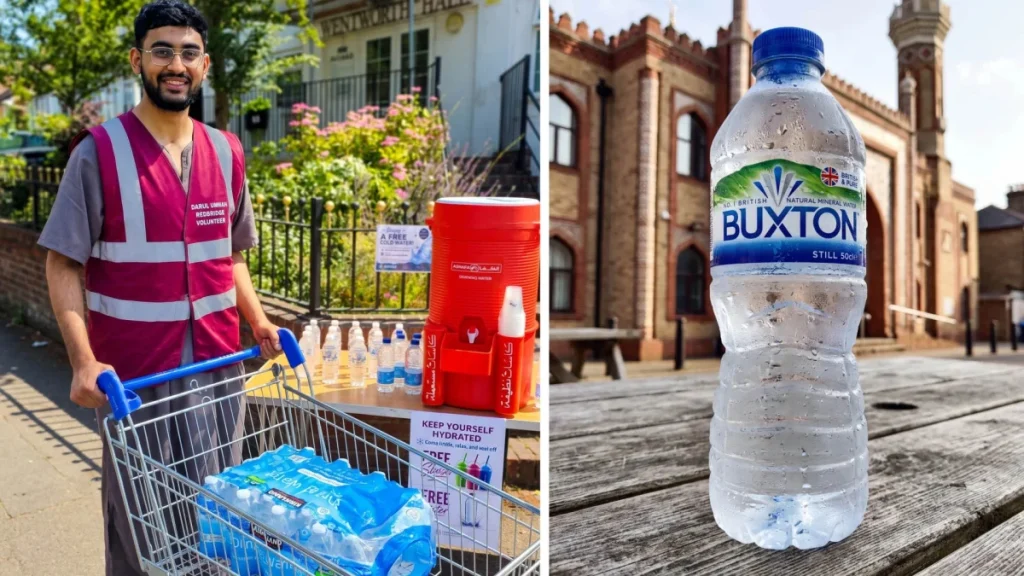
As temperatures climbed significantly across the United Kingdom this week, bringing a wave of intense summer heat, a familiar and heartwarming sight began appearing outside mosques nationwide.

Tables neatly lined with rows of ice-cold bottles of water were set up directly on pavements, inviting any passing members of the public to take a bottle entirely for free. There were no catches, no conditions attached, and no questions asked—just a simple, practical message of kindness and community care extended to anyone feeling the exhausting physical effects of the baking weather.

While many British mosques opted to place dedicated water stations right outside their boundary walls and entrances, others took their community outreach a step further. In East London, volunteers from the Darul Ummah Redbridge Mosque in Gants Hill chose to brave the scorching sun directly. Moving out into the bustling streets, they walked among pedestrians, outdoor workers, and weary commuters, personally handing out cold bottles of water to help people cope with the blazing afternoon heat.

Across the country, similar scenes unfolded as religious and cultural centers found practical, ground-level ways to serve their local neighborhoods during one of the hottest weeks of the year. Some institutions opened their air-conditioned prayer halls and community spaces to offer vulnerable individuals a safe, cool sanctuary to rest and regulate their temperatures. Others focused on welcoming passers-by to stop, catch their breath, and stay hydrated before continuing their journeys.

Participating organizations spanning various regions included the Muslim Cultural and Welfare Association of Sutton (MCWAS), the historic East London Mosque, Madrassah Ta’aleemul Qur’an, the Islamic Da’wah Academy, At-Taqwa Academy in Ilford, and the Zidna Foundation in Streatham. Each of these institutions mobilized volunteers to ensure that relief was readily accessible to anyone navigating the extreme weather conditions outdoors.

While these acts of service may appear straightforward and modest on the surface, they embody a timeless Islamic teaching centered on the importance of caring for fellow human beings without expecting any reward or recognition in return. Islamic tradition frequently emphasizes public welfare and charity, encapsulated by a well-known saying of the Prophet Muhammad, who stated that the best of people are those who prove most beneficial to others.

For many of these mosques and community organizations, responding to a heatwave was not viewed as an extraordinary or isolated undertaking, but rather as a natural extension of their year-round commitment to local welfare. Throughout the seasons, mosques across Britain routinely operate food banks, provide support services for the homeless, host blood donation drives, and organize a wide array of neighborhood assistance initiatives. When the extreme summer weather arrived, it simply presented an immediate, seasonal need within the community, and local volunteers responded in kind.

At a time when public discourse and news headlines frequently focus on themes of social division, conflict, and isolation, these quiet, grassroots acts of generosity offer a different narrative. They reflect a reality of neighbors looking after neighbors, driven by a faith that inspires active community service. In doing so, these mosques have opened not only their physical doors, but also their hearts to the wider public.

For the volunteers who gave up their time to stand in the heat and distribute refreshments, the initiative served as a practical expression of faith. Observers and community leaders noted that sometimes the most powerful form of outreach does not require formal speeches or complex programs. On a blistering summer afternoon, meaningful engagement can be as simple as a cold bottle of water offered alongside a genuine smile.