New Delhi: More than 160 years ago, while enduring exile far from his ancestral home in Rangoon, the last Mughal emperor, Bahadur Shah Zafar, penned a poignant couplet that has since become synonymous with profound displacement and sorrow:
“Kitna hai bad-naseeb ‘Zafar’ dafn ke liye,
Do gaz zameen bhi na mili kuu-e-yaar mein.”
(How unfortunate is Zafar, even in death, he was denied a place to rest in his beloved land.)
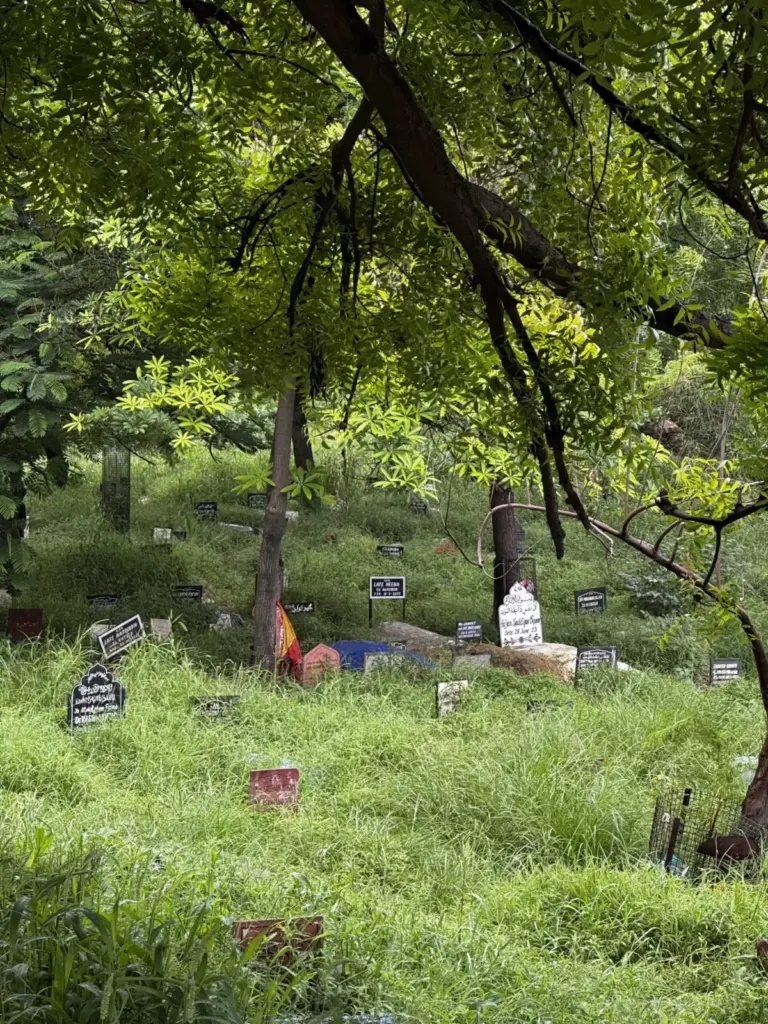
Today, centuries later, those haunting verses continue to echo across the lanes and neighborhoods of the Indian capital. The emperor’s grief over being denied a final resting place in his own homeland mirrors the mounting anguish experienced by a significant segment of Delhi’s Muslim community. As the city hurtles forward through rapid urbanization and sprawling real estate development, grieving families are finding it increasingly difficult to secure even two yards of land to lay their loved ones to rest with dignity.
For many residents, the final chapter of life—traditionally marked by solemn rituals, community solidarity, and a peaceful farewell—has transformed into a frantic and deeply distressing ordeal.
Recalling the harrowing days following his father’s passing in November 2024, Abrar Ali, a resident of the historic Jama Masjid area, described a grim reality. “When my father died, I went from one graveyard to another but could not find space to bury him,” Ali said.
In a desperate bid to find an available plot, Ali eventually reached Jadid Qabristan Ahle Islam, one of the largest and most prominent Muslim cemeteries in the city, located near Delhi Gate at ITO. However, his hopes were dashed when caretakers and administrators allegedly informed him that the grounds were already completely exhausted, leaving families with nowhere to turn during their moments of deepest vulnerability.
Graveyards Disappearing from Delhi’s Map

The individual tragedies faced by families like Ali’s are part of a much larger, systemic crisis that is quietly reshaping the topography of the national capital. A comprehensive study conducted by the Delhi-based Human Development Society sheds light on the alarming scale of the problem, revealing a stark disconnect between official records and ground realities.
According to the study, while Delhi officially possesses 131 physical graveyards, only a fraction of these sites remain fully operational. At least 16 cemeteries are entirely unused, rendered inactive due to protracted legal litigation or severe neglect. Furthermore, 43 graveyards have suffered from partial encroachment, with land slowly chipped away by private individuals, local communities, commercial companies, and even government bodies.
The bureaucratic landscape presents an even more confusing picture. The Delhi Waqf Board lists a staggering 624 graveyards on its paper records. This massive discrepancy between official documentation and physical existence underscores just how many historical burial sites have vanished entirely from Delhi’s urban map over the decades, swallowed by concrete structures and shifting municipal boundaries.
Operational cemeteries, meanwhile, are buckling under immense pressure. At least 32 graveyards have officially reported zero vacancies, leaving them completely filled to capacity. To cope with the overwhelming demand, some cemetery caretakers have resorted to unorthodox and unsustainable methods, such as “landfilling.” This practice involves burying a newly deceased person directly over an older grave by building up raised soil mounds—a method that many in the community view as deeply problematic and lacking in the traditional dignity accorded to the dead.
The Human Development Society’s study also provides a historical breakdown of Delhi’s remaining burial grounds, highlighting their deep roots in the city’s heritage. The data shows that 34% of these graveyards are between 100 and 200 years old, while 12% boast an antiquity of over two centuries. An additional 18% date back 51 to 100 years, 20% are between 10 and 50 years old, and a mere 4% have been established within the last decade.
This chronological distribution reveals a glaring structural failure: as Delhi has modernized and expanded, urban planners have consistently neglected to allocate new land for Muslim cemeteries in contemporary development schemes, creating an inevitable demographic and spatial bottleneck.
Encroachment and Urban Pressure
As the city’s population swells, demographic pressures exacerbate an already fragile situation, hitting densely populated Muslim-majority neighborhoods like Okhla particularly hard. In these areas, families struggle daily to secure burial plots, while rampant encroachment on Waqf properties continuously diminishes the shrinking pool of available land.

“We have no space in Batla House graveyard. It is shrinking every day. Residents nearby are forced to travel to other areas to bury their loved ones,” said Shakeel, the caretaker of the Batla House Muslim cemetery, capturing the daily frustration of local residents.
Shakeel noted that the space crunch is particularly severe in densely populated urban pockets, especially at smaller graveyards attached to local mosques and dargahs. Ironically, while these sites are the most sought-after due to their proximity and spiritual significance, they are also the most vulnerable to encroachment and unauthorized occupation.
Encroachment remains a pervasive threat across the capital. Over the years, numerous graveyards have steadily lost chunks of their perimeter to expanding housing colonies, municipal government offices, arterial roads, public parks, and commercial complexes. Investigative reports and community observations have repeatedly highlighted how plots originally dedicated to eternal rest are steadily being consumed by Delhi’s relentless urban footprint.
“The remaining space in the existing qabristans is hardly enough for two more years,” warns the Human Development Society in its findings. The organization cautions that without immediate, decisive intervention from authorities, the community faces the terrifying prospect of running out of burial grounds entirely in the near future.
A Broader Religious and Cultural Context
Community leaders and activists argue that the deepening cemetery crisis cannot be viewed in isolation; rather, it forms part of a broader, troubling pattern of institutional neglect regarding minority religious infrastructure. Historically, Delhi was home to hundreds of mosques, dargahs, and cemeteries established, endowed, and maintained by rulers, nobles, and ordinary citizens alike. However, in the decades since India’s Independence, a significant number of these sacred spaces have been systematically abandoned, legally sealed, or quietly absorbed into state and private hands.
Dr. Zafarul-Islam Khan, the former chairman of the Delhi Minorities Commission, emphasized the gravity of the situation. “This study is an eye-opener. It shows that a majority of Muslim graveyards registered with the Delhi Waqf Board and other agencies have practically disappeared. Both public and government agencies have occupied or encroached upon them, while new land is not being earmarked in planning schemes,” he said.
For many families, this chronic shortage fosters a profound sense of alienation and betrayal. In Islamic tradition, burial is not merely a logistical disposal of remains, but a strict religious obligation, a fundamental cultural tradition, and a final act of communal duty. As space vanishes, this essential rite of passage is increasingly turning into an elusive privilege rather than an assured right.
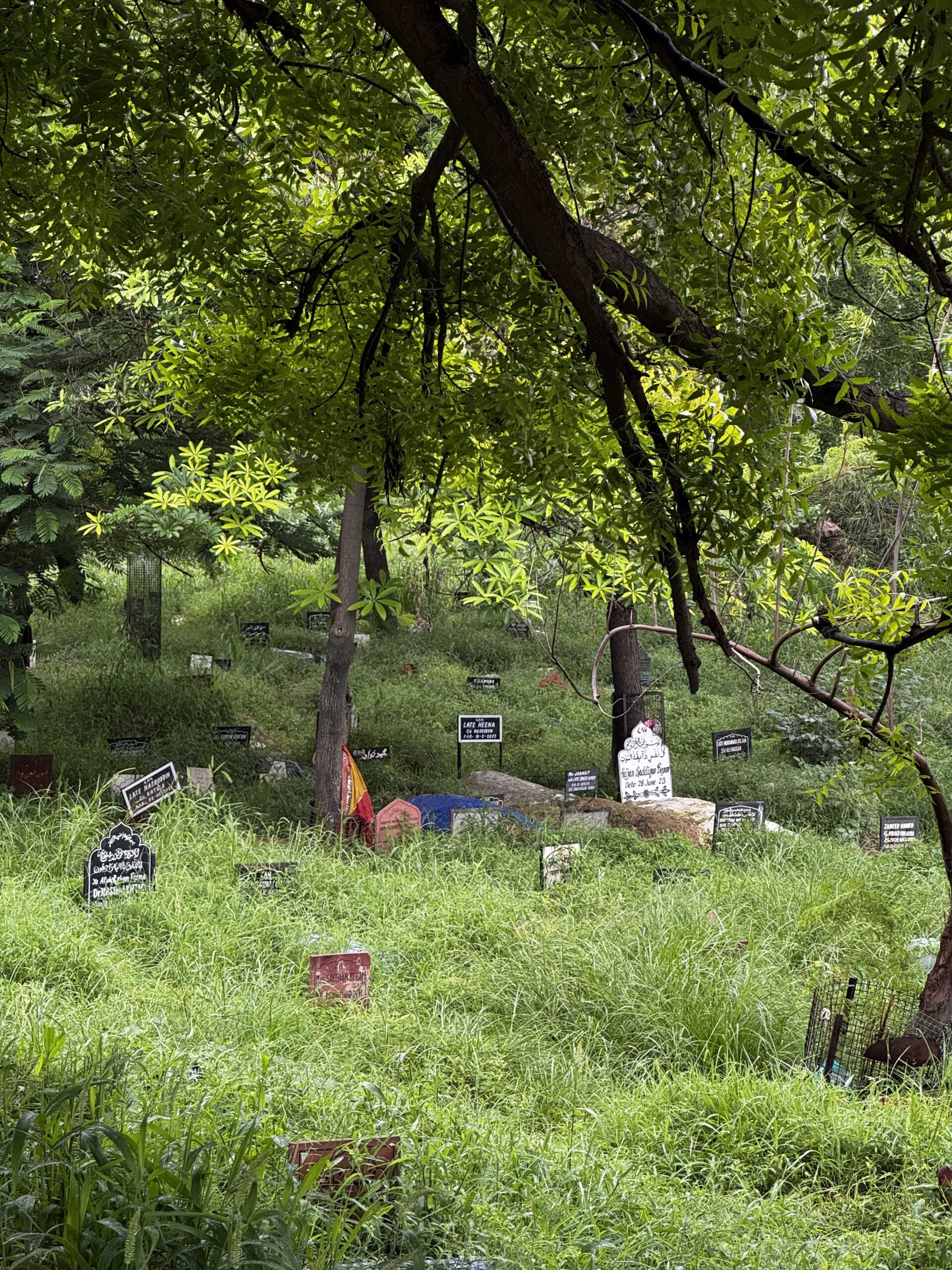
Elders in the community vividly recall an era when graveyards were treated as sacred community commons that served both the living and the dead as spaces of reflection and remembrance. Today, those centuries-old sanctuaries are rapidly disappearing, leaving communities struggling to find a place to honor their ancestors.
Calls for Urgent Action
In response to the mounting crisis, social activists and community stakeholders are intensifying their calls for immediate government intervention. They argue that authorities must take swift steps to legally protect existing graveyards, reclaim and restore abandoned or encroached properties, and proactively mandate the allocation of dedicated land for burial grounds in all future urban master plans and development schemes. Without such measures, experts warn that the underlying sense of marginalization among Delhi’s Muslim population will only deepen.
“Initially, mosques were abandoned by the central government and very few remain open in Delhi. Now, graveyards too are shrinking and being taken over. This is a complete violation of the religious beliefs of minorities,” said Ismail, a social activist based in Old Delhi.
As the crisis persists, daily scenes at Delhi’s remaining cemeteries reflect the grim reality on the ground. At spaces like the Panj Peera graveyard in Nizamuddin, people are often forced to meticulously collect soil just to fill a grave, as decades of overuse have left the grounds stripped of earth. At the Jadid Qabristan Ahle Islam near Delhi Gate, tightly packed, overcrowded graves stand as silent testimeters to a city running out of room. Meanwhile, at the Batla House graveyard, the severely limited remaining acreage continues to fuel deep anxiety over where future generations will find peace.