By Farheen Saifi
“Kitna hai bad-naseeb ‘Zafar’ dafn ke liye,
Do gaz zameen bhi na mili kuu-e-yaar mein.”
(How unfortunate is Zafar, even in death, he was denied a place to rest in his beloved land.)
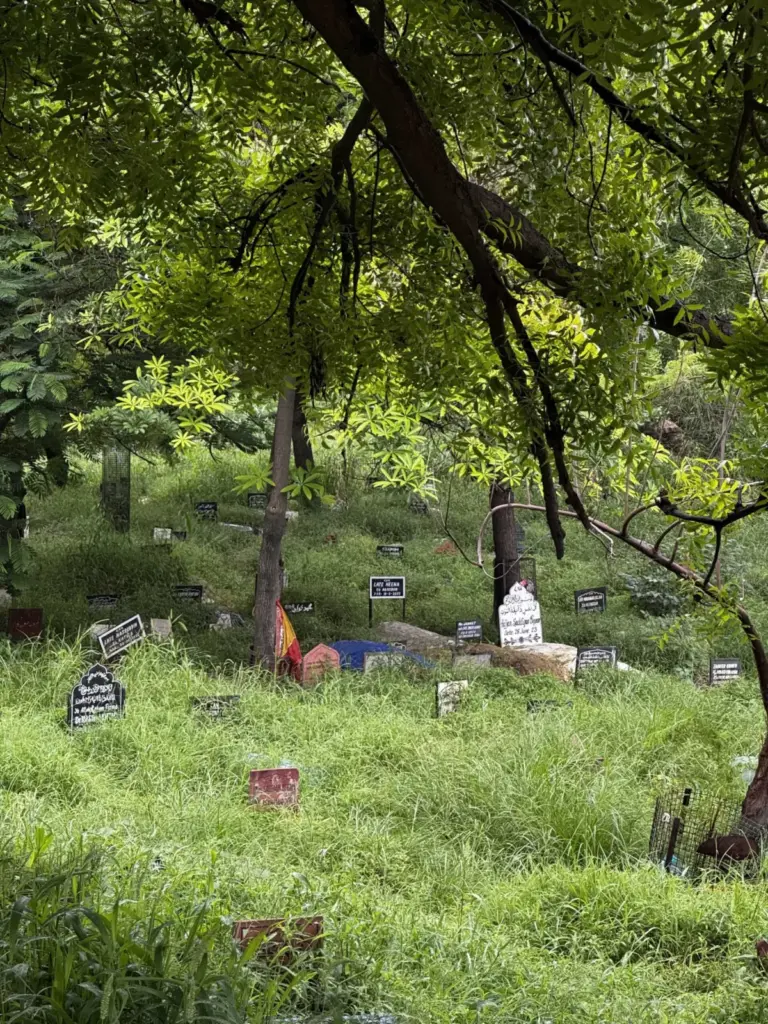
Over 160 years ago, the last Mughal emperor, Bahadur Shah Zafar, penned these poignant lines while living in desolate exile in Rangoon. Today, his grief over being denied a final resting place in his homeland continues to echo through the historic lanes of Delhi. For a significant segment of the capital’s Muslim community, the sorrow captured in Zafar’s verse mirrors a deeply painful contemporary reality: the mounting struggle to find adequate space to lay their loved ones to rest with dignity.
The crisis of space strikes ordinary families at their most vulnerable moments. In November 2024, Abrar Ali, a resident of the historic Jama Masjid area, experienced this firsthand when his father passed away. “In the month of November 2024, when my father died, I went from one graveyard to another but could not find space to bury him,” Ali recalled, recounting the frantic hours spent searching the city as grief pressed heavily upon his family.
He eventually reached Jadid Qabristan Ahle Islam, one of the largest and most prominent Muslim cemeteries in the city, located near Delhi Gate at ITO. There, he was met with the grim news that the land was already exhausted and no new plots could be allocated.

For families like Ali’s, the natural conclusion of life—a milestone meant to be observed with community support and profound dignity—transforms into a desperate, exhausting search for two yards of earth. Decades of unbridled urbanisation, widespread encroachment, and institutional neglect have steadily eroded the historical resting places of generations past, leaving a gaping void in the capital’s civic infrastructure.
Graveyards Disappearing from Delhi’s Map
A comprehensive study conducted by the Delhi-based Human Development Society lays bare the staggering scale of the problem. While Delhi officially possesses 131 physical graveyards, only a fraction of these sites remain fully operational. The data reveals that 16 cemeteries are entirely unused today due to protracted legal litigation or severely poor upkeep. Furthermore, 43 graveyards have suffered partial encroachment by private individuals, local communities, corporate entities, and even various government bodies.
The administrative discrepancy adds another layer of complexity. The Delhi Waqf Board lists 624 graveyards on paper, highlighting a massive gap between official records and ground realities. This stark contrast demonstrates just how many sacred sites have quietly vanished from Delhi’s urban landscape over the decades.
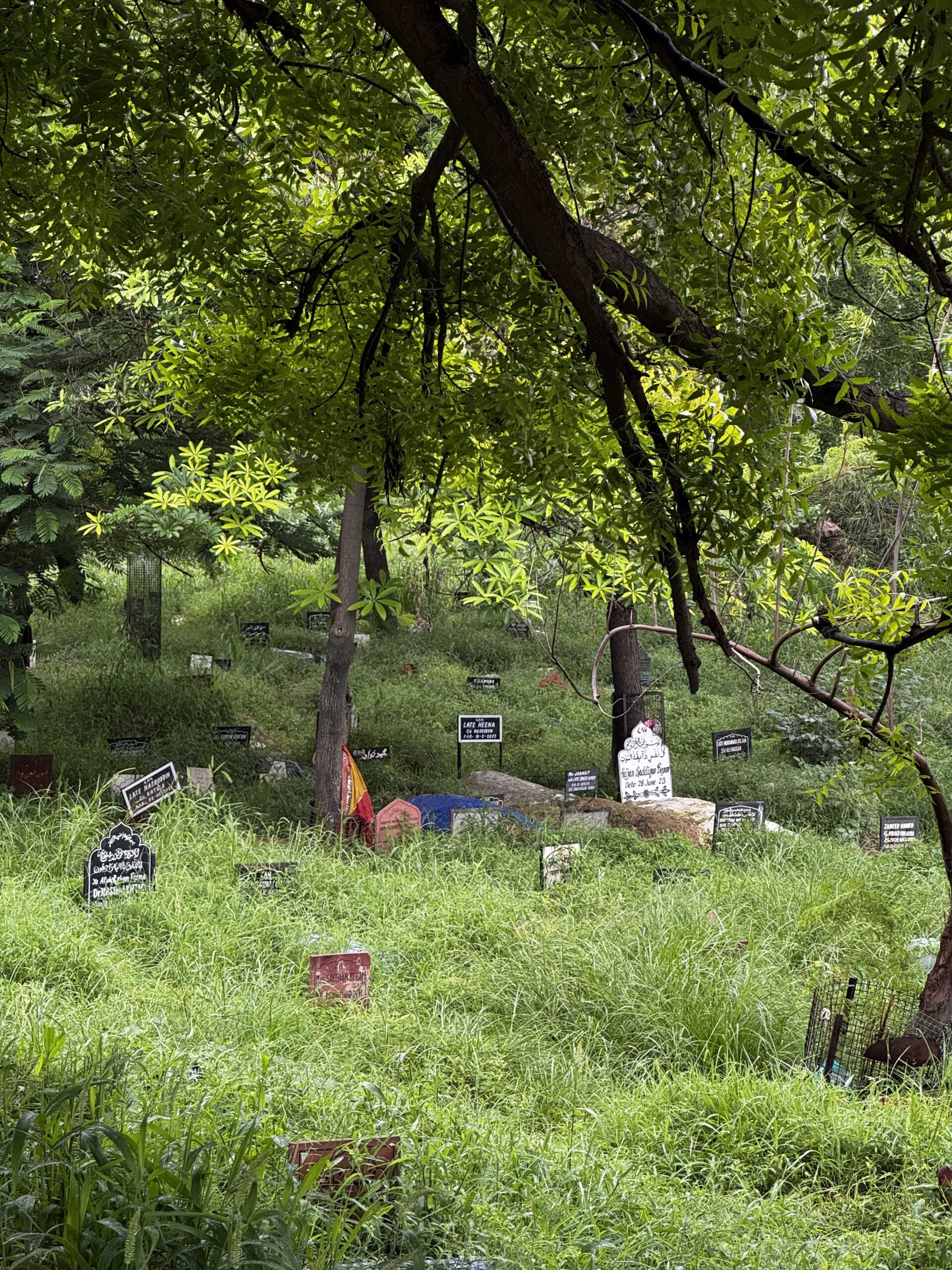
Operational pressures have pushed existing cemeteries to their absolute limits. Thirty-two active graveyards have officially reported zero vacancies. To cope with the overwhelming demand, some cemetery caretakers have resorted to a practice known as “landfilling.” This method involves burying one body directly over another within raised soil mounds—a makeshift measure that many community members and administrators view as both unsustainable and lacking in basic dignity.
The Human Development Society study also traces the historical timeline of Delhi’s burial grounds, underscoring their deep roots in the city’s heritage. The findings show that 34% of the capital’s graveyards are between 100 and 200 years old, 12% exceed 200 years in age, 18% date back 51 to 100 years, 20% are between 10 to 50 years old, and a mere 4% have been established within the last 10 years.
This stark generational imbalance reflects a glaring failure in urban planning. Modern development schemes and master plans for the capital have consistently overlooked the necessity of earmarking land for future Muslim cemeteries to accommodate a growing population.

Rising population pressures have exponentially worsened overcrowding, particularly in densely populated Muslim-majority neighborhoods such as Okhla. Families living in these congested areas face immense hurdles in securing burial plots, while ongoing encroachments on Waqf properties continue to shrink the few remaining options.
“We have no space in Batla House graveyard. It is shrinking every day. Residents nearby are forced to travel to other areas to bury their loved ones,” said Shakeel, the caretaker of the Batla House Muslim cemetery.
He added that the shortage is felt most acutely in densely populated neighborhoods, particularly at graveyards directly attached to historic mosques and dargahs. These specific locations remain the most sought-after by grieving families, yet they are paradoxically the most vulnerable to encroachment and commercial pressure.
Encroachment and Urban Pressure
Encroachment remains a primary driver of the crisis. Across the capital, many historical graveyards have progressively lost portions of their land to expanding housing colonies, government offices, municipal roads, public parks, and commercial complexes. Investigative reports and community surveys have repeatedly documented how plots explicitly designated for burials are continually consumed by Delhi’s relentless urban expansion.
“The remaining space in the existing qabristans is hardly enough for two more years,” warns the Human Development Society in its report, adding that the community faces the imminent possibility of running out of burial grounds entirely unless immediate, decisive action is taken by civic authorities.
A Broader Religious Context
Prominent community leaders and civil rights advocates point out that the current burial crisis is not an isolated issue, but rather part of a larger, systemic pattern of religious neglect. Historically, Delhi was home to hundreds of mosques, dargahs, and cemeteries established, endowed, and maintained by rulers, nobles, and ordinary citizens alike. However, since India’s independence, a substantial number of these sacred spaces have been systematically abandoned, legally sealed, or informally taken over.
“This study is an eye-opener. It shows that a majority of Muslim graveyards registered with the Delhi Waqf Board and other agencies have practically disappeared. Both public and government agencies have occupied or encroached upon them, while new land is not being earmarked in planning schemes,” said Dr. Zafarul-Islam Khan, former chairman of the Delhi Minorities Commission.
For ordinary families, this compounding shortage generates a profound sense of alienation and betrayal. The act of burial—simultaneously a fundamental religious obligation, a personal duty, and a long-standing cultural tradition—is rapidly transforming from a guaranteed right into an elusive privilege. Elders in the community vividly recall a time when graveyards functioned as sacred civic commons, serving both the living as quiet sanctuaries and the dead as places of eternal repose. Today, centuries-old resting places are vanishing before their eyes, leaving communities without adequate spaces to honour their dead.
Calls for Action
Social activists and urban planners are urging the government to intervene urgently. Their demands include securing and protecting existing graveyards from further encroachment, legally restoring abandoned or contested sites, and proactively allocating adequate land for new cemeteries in upcoming urban development master plans. Without these structural interventions, community advocates warn that the deep-seated sense of marginalisation among Delhi’s Muslim population will only continue to intensify.
“Initially, mosques were abandoned by the central government and very few remain open in Delhi. Now, graveyards too are shrinking and being taken over. This is a complete violation of the religious beliefs of minorities,” said Ismail, a social activist based in Old Delhi.