The staggering toll of the ongoing conflict in Gaza continues to mount, defying the very premise of a ceasefire. Official figures show that 73,914 people have been killed, 174,952 wounded, and over 1.9 million displaced since the escalation of hostilities in October 2023. These numbers, which represent profound human loss and suffering, refuse to stabilize even during a period meant to bring relief. One year on from the implementation of ceasefire measures, there remains no end in sight to the extreme hardship endured by the civilian population.
The reality on the ground highlights the fragility and inadequacy of the current cessation of hostilities. At least 1,358 of those deaths and 4,541 of those injuries have occurred strictly since the ceasefire came into effect. Continuous bombardment and severe restrictions on access into the enclave mean that residents continue to live in a state of perpetual fear. The overarching danger and uncertainty prevent families from taking even the first steps toward rebuilding their shattered lives, leaving communities trapped in a prolonged state of devastation.
For hundreds of thousands of displaced families, survival has been reduced to enduring the elements in flimsy tents that were never engineered to provide long-term shelter. These makeshift camps have increasingly become breeding grounds for rats and disease. Compounding this public health nightmare is the systematic blocking of essential materials, heavy machinery, and fuel required to construct more durable, permanent housing.
As a result, many families are now facing their fourth consecutive winter with little more than plastic sheeting to protect them from wind, rain, and dropping temperatures. The inability to rebuild and repair the Gaza Strip’s scarred towns and cities does more than simply trap communities in perpetual limbo; it poses a direct and escalating threat to their very survival.
The catastrophic consequences of this infrastructure paralysis were starkly illustrated in mid-September, when a damaged six-storey residential building in Gaza City collapsed. At least 21 people who had been sheltering inside lost their lives in the disaster. Others remained trapped beneath the heavy concrete rubble, waiting in vain for rescue teams who lacked the specialized heavy equipment required to safely lift the debris and save survivors.
Compounding these physical dangers, humanitarian workers are facing an escalating array of restrictions placed on their operational activities and movements. These bureaucratic and physical barriers widen the chasm between vulnerable civilians and the critical life-saving assistance they desperately require, making the delivery of aid an increasingly perilous and complicated endeavor.
Feeding the Hungry, Caring for Pregnant Women
Despite the immense and compounding challenges on the ground, organizations like Islamic Relief and their local partners continue to mount operations to support populations in desperate need, constantly adapting their humanitarian response to match the rapidly changing and volatile situation.
In direct response to a crippling hunger crisis that has left vast segments of the population malnourished, humanitarian teams are providing hot meals to displaced families sheltered in Gaza City. Thus far, hundreds of people have received sustaining meals featuring staples like rice and meat. Simultaneously, broader distribution programs are providing families with specialized vouchers. These vouchers empower recipients to purchase food of their own choosing from functioning local markets, thereby injecting a measure of dignity into the aid process while supporting local economic activity. Implementing partners ensure that this limited support is targeted directly toward the most vulnerable demographics, including the elderly, households headed by women, and individuals living with disabilities.
Beyond immediate food security, specialized interventions are targeting pregnant women and new mothers. This vulnerable group has been left largely without access to professional medical care due to the systematic decimation of Gaza’s healthcare system. Humanitarian agencies are stepping in to provide expectant mothers with crucial antenatal checks and vital vitamin supplements designed to support maternal health and ensure safer pregnancies under impossible conditions.
Supporting Gaza’s Youth
The long-term psychological and developmental toll on Gaza’s younger generation remains one of the most pressing concerns of the crisis. More than 25,000 children are currently enrolled in structured sponsorship programs, receiving monthly financial stipends designed to help cover their families’ basic survival needs. While these sponsorship initiatives have expanded significantly since the crisis began, the sheer scale of the need means that thousands of children are still waiting for a sponsor.
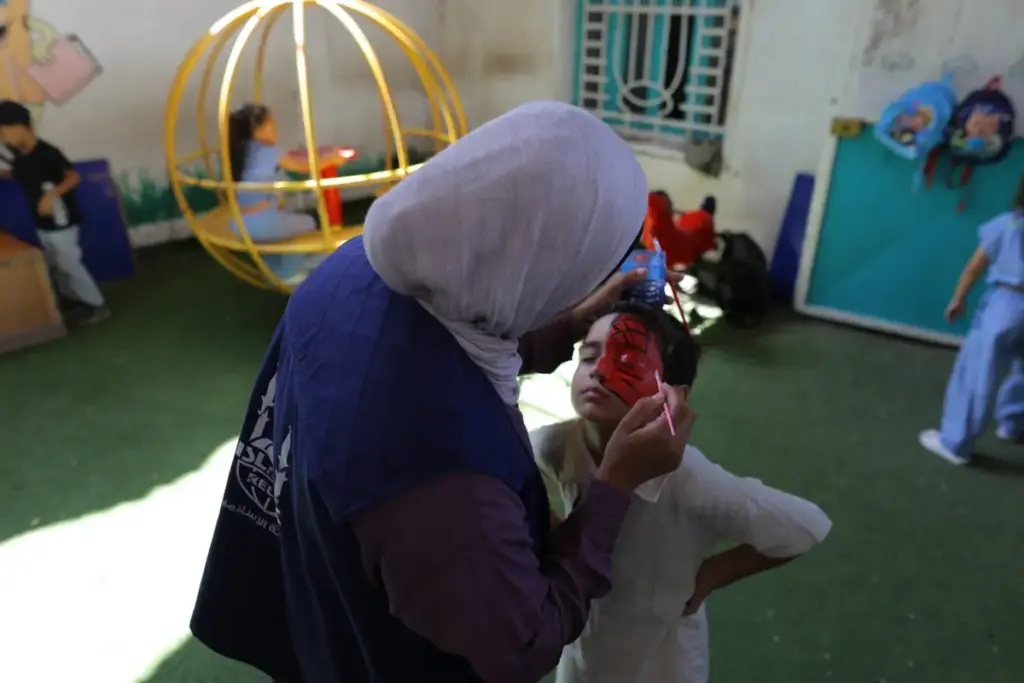
Educational initiatives are also striving to restore a sense of normalcy and routine for children who have suffered years of severely disrupted learning. In both North and South Gaza, more than 2,500 young students are now attending 13 temporary learning centres supported by humanitarian agencies. Within these safe spaces, children participate in classes covering core academic subjects such as Arabic, English, and mathematics. For those carrying the invisible scars of the conflict, specialized counselling sessions are integrated into the curriculum. To combat widespread malnutrition and support cognitive development, these children also receive fortified biscuits enriched with essential vitamins and minerals.
International Action Urgently Needed
The generosity of donors worldwide makes it possible for these vital support networks to reach Palestinian families navigating one of the worst humanitarian catastrophes of the modern era. Every contribution helps maintain the critical lifeline that relief organizations have extended to Palestinians in need for decades.
However, humanitarian aid alone remains fundamentally insufficient to resolve the crisis. The existing ceasefire has failed to deliver the baseline security, legal protection, and comprehensive humanitarian assistance that Palestinians were promised and to which they are legally entitled under international frameworks.
International leaders face growing pressure to take immediate, decisive action to protect Palestinian civilians, alleviate their widespread suffering, and compel Israel to comply fully with its obligations under international humanitarian law. Currently, the volume of aid entering Gaza falls drastically short of meeting the massive, daily needs of the population.
Humanitarian access must be comprehensively facilitated to ensure that vital supplies reach every corner of the enclave. All border crossings into Gaza must be reopened to allow both humanitarian cargo and commercial goods to enter at scale. Furthermore, restrictive classifications applied to "dual-use" items and critical infrastructure materials must be lifted immediately, and humanitarian aid must be permitted to enter through independent and impartial channels.
Advocacy efforts and sustained humanitarian aid remain essential as Palestinians continue to navigate a daily reality defined by survival, resilience, and the ongoing struggle for basic human dignity.