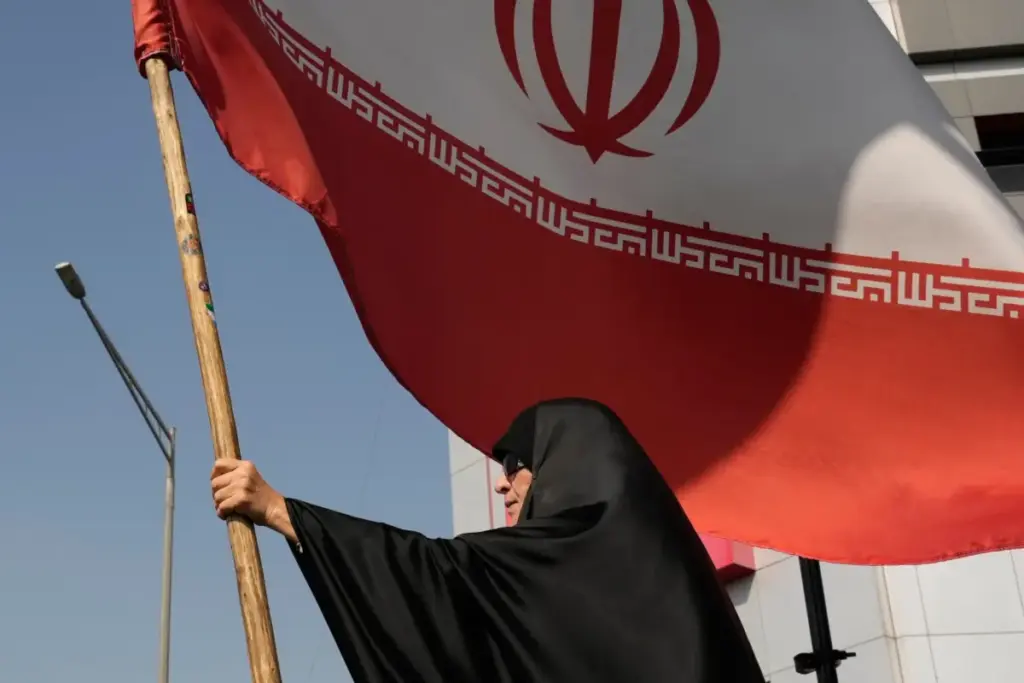
As regional powers rapidly step up diplomatic interventions to avert a catastrophic escalation in the eight-month-old war between the United States, Israel, and Iran, Tehran is demonstrating little inclination to back down from its core red lines. The mounting diplomatic scramble underscores an acute international anxiety over a conflict that has severely fractured global energy markets, choked crucial maritime trade, and repeatedly spilled across national borders throughout the Middle East.
China announced on Tuesday that Beijing will soon dispatch a special envoy to key regional capitals in a concerted bid to help broker a peaceful resolution and forestall another major military escalation. This high-level intervention mirrors parallel diplomatic tracks launched earlier in the week. On Monday, senior representatives from Saudi Arabia, Pakistan, and Turkiye—the three nations that formally signed the Mecca defense pact in August—held crucial talks with high-ranking Iranian officials in Tehran, pledging to pursue ongoing discussions aimed at securing long-term peace and stability across the region.
Despite this flurry of international diplomacy, Tehran appears firmly resolved not to compromise on its fundamental demands. This uncompromising stance is heavily underpinned by the considerable leverage Iran holds over maritime traffic in the Strait of Hormuz, a critical geopolitical chokepoint through which one-fifth of the world’s global oil and liquefied natural gas was shipped prior to the outbreak of hostilities.
"Iran’s priority is not simply to secure another ceasefire, but to end the war permanently and establish deterrence so that the cycle of military attacks by the US and Israel does not keep repeating itself," said Negar Mortazavi, editor and host of The Iran Podcast, in an interview with Al Jazeera.
Tehran continues to insist on comprehensive sanctions relief, an immediate cessation of the US naval blockade on Iranian ports in the Persian Gulf, and firm, enforceable guarantees that Washington will not renew military strikes. In exchange, Iran has indicated a willingness to help resume normal maritime traffic in the Strait of Hormuz. Conversely, the United States demands that Iran make far-reaching concessions prior to any final peace settlement, including major concessions regarding its nuclear program.
Geopolitical analysts observe that Iran’s current calculus is informed by several critical variables. Chief among these are a deep-seated distrust of Washington—which has launched direct airstrikes on Iranian territory three separate times since June 2025 while simultaneously engaging in diplomatic talks—the belief that sustained economic pressure could eventually compel the US to offer more favorable terms, and the high-stakes national elections unfolding in Israel and the United States this week and next.
Lack of Trust
At the core of Iran’s unyielding posture is the conviction that previous diplomatic agreements have failed to provide adequate protection against renewed military aggression by the United States and Israel. The current conflict erupted on February 28, when the US and Israel launched their initial wave of airstrikes precisely as delicate peace negotiations were underway in Oman. That offensive followed a 12-day war initiated by Israel against Iran in June of last year, a campaign that Washington quickly joined.
Earlier this year, in June, regional diplomacy appeared to bear fruit when Pakistan and Qatar successfully brokered a memorandum of understanding designed to reopen the Strait of Hormuz, dismantle the US naval blockade on Iranian ports, and establish foundational conditions for broader negotiations over Iran’s nuclear development. However, that fragile arrangement rapidly unraveled as mutual distrust resurfaced and military operations resumed. The breakdown triggered weeks of sustained US airstrikes on Iran throughout July, which were swiftly met by retaliatory Iranian missile and drone strikes targeting US military assets and energy infrastructure across neighboring Gulf states and Jordan.
Sina Toossi, a senior non-resident fellow at the Center for International Policy (CIP), noted that the catastrophic failure of that summer agreement has hardened political and military calculations in Tehran.
"Iran believes previous negotiations and ceasefire arrangements failed to protect it from renewed military attacks, and it is therefore seeking more tangible and durable guarantees," Toossi told Al Jazeera.
Meanwhile, US President Donald Trump has maintained a characteristically ambiguous stance regarding his administration’s next moves. Speaking to reporters on Sunday, Trump remarked, "My question is, do I make a deal with them or do I finish them off?" This followed earlier assertions from the White House that major offensive actions against Iran would be deferred until after the US midterm elections on November 3.

In response to ongoing American threats, Mohsen Rezaei, secretary of Iran’s Supreme National Security Council, warned last week that the country’s armed forces are fully prepared to retaliate against any new aggression. Under its newly adopted "offensive" military doctrine, Rezaei stated that Iranian forces are postured to strike back by targeting neighboring nations and military bases utilized in US operations. Furthermore, Rezaei reiterated that Tehran will neither reopen the Strait of Hormuz nor engage in formal peace talks until Washington takes verifiable steps to rebuild trust—namely by suspending sanctions, unfreezing sovereign Iranian assets, lifting the naval blockade, and providing concrete, binding assurances against future military strikes.
US Midterms, Israel Elections Loom
The domestic political landscapes in both the United States and Israel are casting long shadows over the diplomatic arena. In the US, the upcoming midterm elections will decide the allocation of all 435 seats in the House of Representatives and 35 of the 100 seats in the Senate, ultimately determining control of Congress for the remainder of Trump’s presidential term. The ongoing war has proven deeply unpopular with the American public, transforming foreign policy into a volatile domestic issue.
A Reuters/Ipsos poll conducted earlier this month revealed that only 34 percent of Americans approve of Trump’s handling of the conflict, marking his lowest approval rating across either of his presidential terms. The Republican party currently holds exceptionally narrow majorities in both chambers of Congress—standing at 53-47 in the Senate, factoring in two independents who caucus with Democrats, and 218-214 in the House.
Beyond the political fallout, the conflict has driven a severe spike in global energy costs. Diesel prices have nearly doubled, imposing a heavy financial burden on farmers, logistics operators, and small businesses, thereby intensifying public anxiety over inflation and the rising cost of living as voters head to the polls.
Some regional reports citing Iranian officials suggest that Tehran may be deliberately dragging out negotiations to deny Trump any tangible political victory ahead of the midterms. A significant Republican setback at the ballot box could severely constrain the administration’s policy maneuvering room, particularly if Democrats capture congressional majorities and ramp up investigative oversight regarding the executive branch’s conduct of the war.
"Tehran wants to teach a lesson to Washington, including future American presidents, that attacking Iran comes with a high price," analyst Mortazavi observed. "Its deterrence strategy is multilayered, aimed at imposing military, economic, and political costs that extend well beyond the battlefield."
Adding to the diplomatic complexity, Israel holds its national elections on Tuesday. A potential defeat for Prime Minister Benjamin Netanyahu could substantially alter the dynamics of joint military operations with the US against Iran. Defense experts widely regard Netanyahu as the primary political driver who convinced Trump to greenlight the war. While some analysts suggest that an opposition victory led by former military chief Gadi Eisenkot might foster a more moderate climate for regional de-escalation, Netanyahu’s removal would not automatically herald a fundamental softening of Israel’s strategic posture toward Tehran. Eisenkot, himself a seasoned military leader, has frequently voiced profound concerns regarding Iran’s nuclear ambitions and its regional proxy networks.
Nevertheless, Mortazavi noted that while Iranian officials are closely monitoring the electoral consequences in both Washington and Jerusalem, they remain acutely aware of the persistent danger of renewed escalation once the ballots are cast, "making a durable diplomatic settlement even more urgent."
Iran’s Hormuz Leverage
Iran’s continued control and disruption of maritime transit through the Strait of Hormuz remains its most potent strategic and economic bargaining chip. Before the outbreak of hostilities on February 28, the narrow waterway accommodated approximately 20 percent of the world’s petroleum and gas supplies, affording Tehran immense leverage over international energy markets.
Data compiled by the Washington Institute for Near East Policy indicates that October has witnessed the highest frequency of attacks on commercial shipping in the vicinity of Hormuz since the conflict began. Driven by these persistent threats and actual strikes on oil tankers, benchmark Brent crude surged past $117 a barrel last week, a dramatic leap from pre-war levels of around $72. Meanwhile, commercial shipping volumes through the strait remain severely depressed.
Chris Beauchamp, chief market analyst at IG Group, suggested that Iran is consciously exploiting this economic pressure as part of a protracted war of attrition against Washington.

"They know they are in an attritional race with the US to see who breaks first," Beauchamp told Al Jazeera. "For now, however, they are happy to keep attacking shipping to push prices higher."
Uncertainty Over Diplomatic Efforts
The recent wave of regional diplomatic initiatives reflects a profound and growing anxiety among Middle Eastern capitals regarding the catastrophic spillover effects of prolonged warfare. The high-stakes talks held in Tehran on Monday between Iranian officials and representatives from Saudi Arabia, Pakistan, and Turkiye underscore these collective fears.
The engagement in the Iranian capital unfolds against a backdrop of regional volatility, notably heightened by weeks of cross-border attacks targeting Saudi Arabia by Yemen’s Iran-aligned Houthi movement, which remains locked in a parallel civil conflict with the internationally recognized, Saudi-backed Yemeni government. Pakistan and Turkiye maintain deep strategic alliances with Riyadh and have formally committed to providing military assistance under the Mecca Joint Defence Agreement, a mutual defense pact recently forged between the three Muslim-majority nations.
Rami Khouri, a nonresident fellow at the Arab Center in Washington DC, explained that the multilateral meeting in Tehran served several distinct layers of objectives, ranging from immediate tactical de-escalation to long-term strategic realignment.
"The most immediate goal: to de-escalate and to try to return to the diplomatic process, to have a permanent ceasefire, and then define the issues and address them with much stronger mediation, supported by these three countries [Saudi Arabia, Pakistan, and Turkiye] and maybe others," Khouri told Al Jazeera. He added that these diplomatic maneuvers could signal the tentative beginnings of a structural shift away from a US-dominated regional security architecture toward an order where Middle Eastern nations assert greater collective agency.
Similarly, Toossi of the Center for International Policy emphasized that regional governments are increasingly coming to terms with the reality that their national security cannot be insulated from the trajectory of Iran.
"It will be difficult to stabilise Yemen while the wider US-Iran confrontation continues, just as it will be difficult to reach a durable settlement with Iran while regional military escalation remains a constant threat," he said.
Ultimately, however, analysts agree that the most formidable stumbling block to lasting peace remains the profound absence of trust between Tehran and Washington.
"After two wars, Tehran is deeply sceptical of American commitments and wants concrete guarantees that any agreement will not simply become another temporary pause before the next attack," Mortazavi concluded. "Iran is willing to negotiate and has already demonstrated flexibility by presenting a proposal to end the war. But Tehran believes it retains significant leverage, particularly in the Strait of Hormuz, and will not surrender that leverage under military or economic pressure. The goal is a permanent end to the war, not another temporary ceasefire that leaves the underlying conflict unresolved."