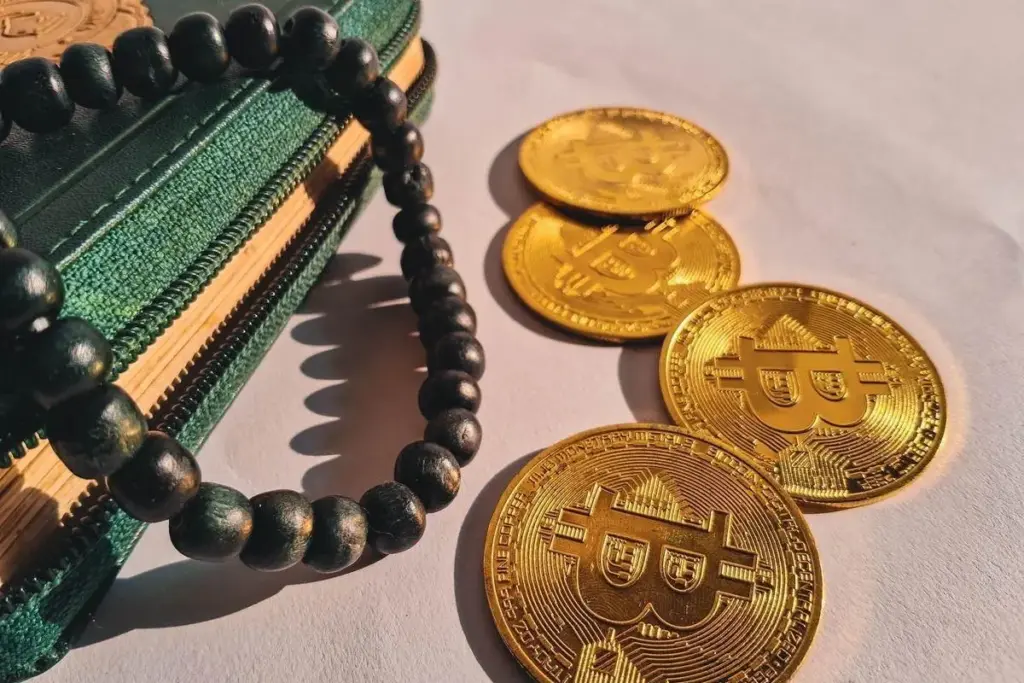
For Muslim investors attempting to navigate the modern digital asset economy, the path forward is fraught with complexity and lacking a single, universally accepted answer. The tension lies in the intersection of centuries-old Islamic commercial law and a volatile asset class that has barely existed for two decades. Prominent institutions, regulatory bodies, and legal scholars around the globe remain sharply divided on how existing traditional principles apply to cryptocurrencies, leaving faithful investors to weigh deeply conflicting interpretations.
This divergence is underscored by contrasting regulatory stances. In Malaysia, the securities regulator maintains a Shariah advisory council that approved trading on registered exchanges as early as 2020. Conversely, a prominent fatwa issued from Darul Uloom Karachi and signed in June 2026 by Mufti Muhammad Taqi Usmani alongside five other scholars concluded that cryptocurrency does not constitute wealth at all. Rather than chasing a single, elusive verdict across international borders, analysts suggest that understanding the fundamental tests scholars apply when evaluating digital coins is the most effective approach for investors.
Trade What You Own
Islamic commercial law places heavy weight on the principle of possession, known as qabd. Historical tradition records that the Prophet advised the companion Hakim ibn Hizam not to sell what he did not have. In the context of modern digital finance, this principle raises crucial questions regarding how transactions are executed: Does a purchase deliver the coin directly into an account in the buyer’s name, or does it merely create a derivative contract that tracks the underlying price?
Scholars who permit cryptocurrency trading under specific conditions tend to confine their approval strictly to spot purchases. In these transactions, the asset actually changes hands, and the buyer assumes its full financial risk. Consequently, anyone evaluating a crypto trading platform must examine whether it delivers actual coins, whether leverage is involved, and whether short selling is offered. Interest-funded margin trading raises significant problems regarding riba (usury), while short selling introduces complex questions regarding the trading of an asset that the seller does not actually own at the time of the transaction.
Does Crypto Count as Property?
The broader question of permissibility largely depends on whether a specific digital coin qualifies as mal—a recognized thing of value that can be lawfully owned and exchanged.
The Securities Commission Malaysia’s Shariah Advisory Council famously announced that digital assets are recognized as mal and that trading them on regulated exchanges is permissible, a view the commission’s chairman further elaborated on in a public address in 2020. Similarly, Mufti Muhammad Abu-Bakar reached a broadly comparable view in a 2018 paper written for the Indonesian fintech firm Blossom Finance. He argued that bitcoin is generally permissible because modern markets treat it as a store of value and a medium of exchange, provided it is not utilized in jurisdictions where national law explicitly bans it.
However, the opposing camp carries substantial legal and theological weight. Egypt’s Dar al-Ifta ruled bitcoin trading impermissible at the outset of 2018, pointing to the absence of centralized state oversight and the heightened risk of fraud. The Karachi fatwa, reported by Dawn in July 2026, went even further by describing crypto balances—including stablecoins like USDT—as mere numbers recorded in an account. From this perspective, paying for goods or services in crypto does not even successfully transfer ownership of what is ostensibly being bought.
Meanwhile, international bodies have chosen caution over consensus. The Organization of Islamic Cooperation’s (OIC) International Islamic Fiqh Academy deliberately held back from issuing a definitive ruling. Its 2019 resolution on electronic currencies classified coins, altcoins, and tokens, but ultimately called for further research given the extreme instability of these markets. Major standard-setting bodies like the Accounting and Auditing Organization for Islamic Financial Institutions (AAOIFI) have likewise refrained from issuing a dedicated crypto standard to date.
Volatility Is Not the Same as Uncertainty
Excessive uncertainty, known as gharar, represents one of the primary objections raised by jurists against cryptocurrencies. Traditional Islamic jurisprudence, however, has long distinguished between the minor uncertainty inherent in almost every commercial sale and the prohibited kind of gharar that goes to the heart of a contract—specifically, not knowing what is being sold, whether it even exists, or whether it can be delivered.
Some contemporary scholars argue that severe price swings alone do not necessarily constitute contractual gharar. A known quantity of an asset bought at a transparent price and delivered immediately leaves little structural ambiguity in the deal itself. While future value remains uncertain, the same can be said for traditional equities or gold.
Nevertheless, this objection grows considerably stronger when applied to opaque token launches, anonymous developers, or decentralized projects whose underlying rights and utility remain vague. Even the permissive Blossom Finance paper cautioned that many coin offerings prevalent during its drafting likely carried excessive uncertainty.
Maysir and the Line Between Investing and Betting
The concept of maysir refers to prohibited games of chance in which financial gain depends entirely on an uncertain, speculative outcome rather than a legitimate commercial exchange. Ordinary commercial risk, by contrast, is governed by the legal maxim al-ghunm bil-ghurm, which establishes that the right to profit is inherently tied to exposure to potential loss.
When the Indonesian Ulema Council (MUI) declared cryptocurrency unlawful as a currency in November 2021, it explicitly cited excessive uncertainty, wagering, and societal harm. Yet, the council left a narrow path open for trading digital assets as commodities, provided they meet specific Shariah conditions and demonstrate clear utility and benefit. Buying a digital asset out of long-term economic conviction and holding it through market cycles raises vastly different ethical questions from engaging in rapid, leveraged bets on short-term price movements. In this view, individual conduct matters just as much as the nature of the underlying asset.
Different Tokens, Different Rulings
Treating "crypto" as a single, homogenous asset class often obscures more than it reveals. Native coins such as bitcoin and ether sit at the center of the debate regarding whether decentralized currencies qualify as valid property or money. Utility tokens, meanwhile, are judged strictly by the specific services they unlock; a token tied to a lawful, productive service differs fundamentally from one linked to online gambling or interest-based lending.
Asset-backed tokens introduce older, well-established classical rules into the digital sphere. PAX Gold, for instance, represents one fine troy ounce of London Good Delivery gold safely stored in physical vaults. If treated as a direct digital representation of gold ownership, its exchange is subject to the specific Shariah rules governing gold transactions. Based on the recorded hadith of Ubada ibn al-Samit, these rules mandate that the exchange must take place immediately rather than through deferred settlement. Scholars who accept such asset-backed tokens insist that they represent allocated, identifiable physical gold and that the transaction executes instantly.
Stablecoins raise separate regulatory and ethical questions. While some are backed by reserves comprising interest-bearing government debt, lending cryptocurrency for a fixed return runs straight into the absolute prohibition against riba, regardless of how the financial product is branded. Similarly, the permissibility of various staking rewards remains heavily contested among contemporary jurists.
What Is Settled and What Remains Open
Certain foundational principles within Islamic finance remain firmly established. Interest-based lending and borrowing are strictly prohibited, as are selling assets that one does not own and engaging in speculative wagering devoid of genuine commercial exchange.
Other questions, however, remain wide open for debate: whether a decentralized coin qualifies as valid property or money, whether extreme market volatility amounts to prohibited gharar, and whether stablecoins resting on interest-bearing reserves are acceptable for faithful investors. Because credible religious authorities and regulatory bodies continue to disagree on each of these points, the most prudent course of action for investors is to consult a qualified scholar or an authorized Shariah board.
Ultimately, the practical sequence for observant market participants involves confirming what is actually owned, actively avoiding leverage and interest-bearing features, rigorously scrutinizing the project behind any given token, and maintaining honesty regarding whether a digital trade functions as a genuine investment or a speculative wager.