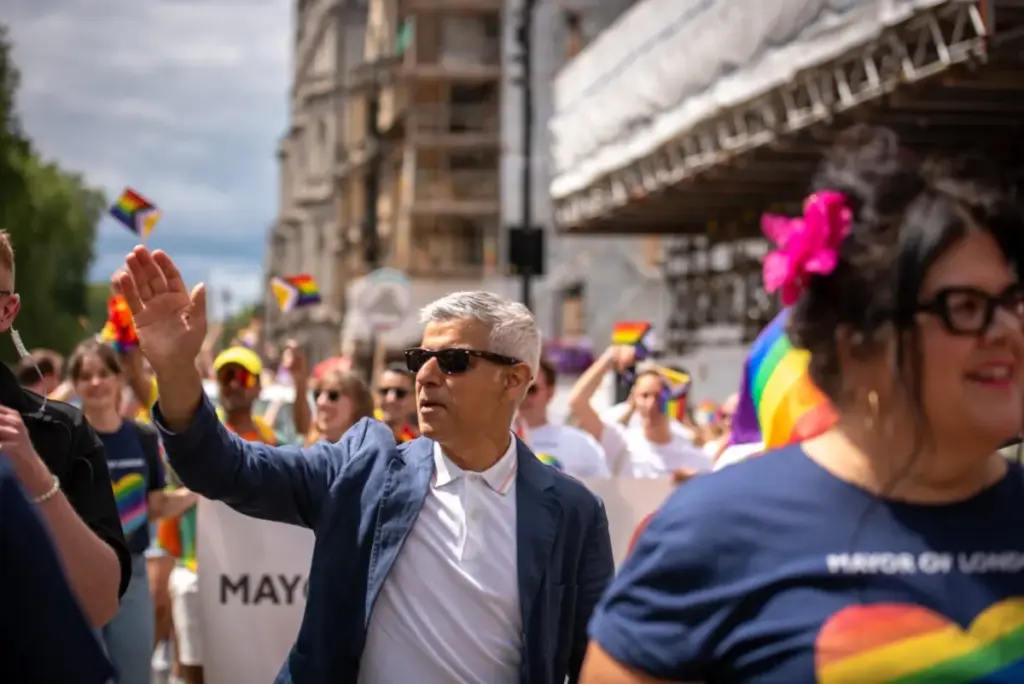
Labour’s Sadiq Khan has been elected mayor of London, winning a historic third term in a dramatic contest that successfully brought to a close weeks of intense political speculation and a fiercely contested campaign trail. Khan’s definitive win saw him successfully fend off Conservative candidate Susan Hall on a Saturday afternoon that ultimately confirmed a comfortable majority for the incumbent, despite earlier nerves caused by fluctuating polling predictions and social media rumblings.
Hall, who served as Khan’s main adversary throughout the electoral cycle, pushed hard on a platform designed to challenge the mayor’s track record, but ultimately fell short as the final ballots were tallied. Khan secured 1,088,000 votes, translating to 43.7% of the overall share. This granted him a commanding majority of some 275,000 votes over Ms Hall, who secured just under 812,000 votes, representing 32.6% of the electorate. According to London Elects, the official body that manages the mayoral and London assembly elections, voter turnout remained remarkably steady, registering only a fractional 1.5% drop from the previous election cycle in 2021, settling at 40.5%.
For Khan and his campaign team, the afternoon relief followed a tense and agonizingly slow countdown. Confidence within the Labour camp surged decisively after the party captured the North East and West Central constituencies from the Conservatives, a breakthrough that occurred more than two hours before the final official result was declared to the public.

This breakthrough came at the tail end of a tense Friday night, a period described by internal Labour sources as a "24-hour vacuum." The delay was caused by a structured pause on the London mayoral counts, which inadvertently created a temporary information gap. This window of silence enabled excited Tory activists to dominate the social media space, circulating persistent rumors that Hall was posing a much greater threat than anticipated and claiming that pre-election polling predictions were completely wrong. Consequently, these online narratives led some nervous Labour insiders to briefly entertain the possibility that the final race between the two leading candidates might come down to just a few percentage points.
However, outside of the capital’s political bubble, the wider electoral landscape revealed a much more complex picture for the Labour Party. While national figures celebrated successes elsewhere, senior party figures were forced to acknowledge publicly that the party’s stance on the ongoing conflict in Gaza had visibly weakened local election support in several Muslim-heavy areas across England.
The national picture on Friday saw Labour leader Sir Keir Starmer celebrating historic wins in regions such as Blackpool, Hartlepool, and Thurrock. Yet, even amidst the celebratory atmosphere of these council gains, Starmer was pressed to address the clear friction points that had emerged during the campaign, publicly promising to "win back" Muslim support in key northern and midlands areas such as Oldham, Newcastle, and Bolton.
In the wake of the London results, political analysts and party insiders began dissecting the Conservative campaign strategy as well. A London Conservative MP openly criticized Susan Hall’s campaign approach, arguing that it had become far too narrowly focused on channeling an "anti-Khan" sentiment rather than presenting voters with a substantive, forward-looking vision of what she would actually do if she were elected to lead the capital.

The London mayoral victory arrived alongside a broader wave of Labour successes in mayoral contests across the north of England. On the same Saturday, Steve Rotheram comfortably won the Liverpool mayoral election, Andy Burnham was successfully re-elected in Greater Manchester, and Tracy Brabin secured a second term as the mayor of West Yorkshire, reinforcing Labour’s stronghold in several major urban centers.
Despite these regional mayoral victories, the underlying tensions regarding the party’s foreign policy stances did not go unnoticed by community leaders and political advocates. The chair of the Labour Muslim Network issued a stark warning following the election results, emphasizing that the party still has "so much work to do with regaining the trust of Muslim voters." This warning underscored how Labour’s official stance on Gaza appeared to have deeply dented local election support in several demographics, compounded further by a concurrent local political row that erupted over allegations of Islamophobia within political discourse.
Adding to these observations, Ali Milani, a prominent political figure who previously stood against former Prime Minister Boris Johnson at the 2019 general election, told the BBC that there was a palpable sense of "hurt and betrayal" among many Muslim voters. He attributed this sentiment to the Labour leadership’s initial hesitation to immediately back an Israel-Gaza ceasefire and their reluctance to support an arms embargo during the height of the crisis.
The electoral fallout from this dynamic was clearly visible in several local council results. In Oldham, Labour suffered significant losses, ceding seats to independent candidates across five separate wards and ultimately losing control of the local council in the process. Reflecting on the shift in voter sentiment, retiring councillor Paul Fryer told The Oldham Times that while Labour had been in power in Oldham for 13 years and local residents might simply be tired of the incumbent administration, in certain parts of the borough it was undeniably the Gaza issue that cost them their seats.

Similar patterns emerged in other traditional heartlands. In Rochdale, Labour lost one seat while George Galloway’s Workers Party managed to secure two seats, though Labour managed to retain overall control of the council. More critically, Labour lost overall control in Kirklees after surrendering five seats—a local defeat that followed closely on the heels of two councillors resigning earlier in the year in direct protest over the party’s national stance on the Gaza conflict.