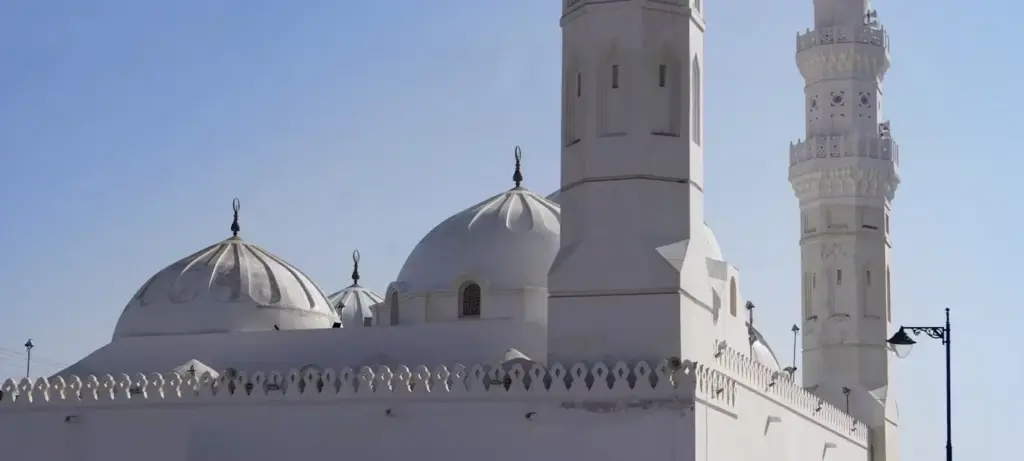
There is something profoundly disorienting about making a life decision as colossal as rerooting. It is a choice that forces an intense reckoning with the past and an anxious projection into the future, catapulting you acutely into the present. For those with young families or demanding routines, accustomed to the constant grind of daily life and the relentless planning of one event after another, the present is a strange and alien domain. It is an arid, hostile territory for anyone constantly chasing tomorrow.
The present is a sensory plain. Like a predatory animal, your senses become languidly heightened, making you acutely aware of the minutiae of your surroundings in a way that is impossible when you are preoccupied with meeting work deadlines or preparing the evening meal. Suddenly, you hear the small, echoing drips of a leaking tap or notice a discerning crack in the wall. The present gives you pause in a deeply discomforting way because the stakes feel unnervingly high. It forces you to address thoughts and feelings that are usually tucked away, left to be unpacked somewhere in the nebulous terrain of the future. It offers an opportunity to gauge the here and now as a barometer for a life yet to be planned, recognizing that the current moment will inevitably pass into the oblivion of yesterday, demonstrating the fleeting nature of our temporary selves.
Being acutely conscious of this gap between past and future—this blink-and-you’ll-miss-it step on the treadmill of "now"—grants a strange spatial awareness. While everyday life rarely prompts deep reflection on the institutions and structures that define us, such as the school, the office, or the neighborhood, being dislodged from them creates a necessary sense of dwarfing. Understanding oneself as a disposable component within the grander narrative of history can be unsettling. So much human identity is invested in feeling part of a greater network, shaping how we see ourselves. To be broken off from that context exposes our smallness. Like stubborn barnacles floating blissfully toward a planned future, anchored to a three-dimensional nexus near the local high street and our old secondary school, we rely on a constellation of familiar landmarks to shape our identity.
Geography as the Determinant of Identity
Geography remains one of the primary determiners in how human beings situate themselves in the world. Human nature is inherently tribal, tethering populations crudely to the material ground they inhabit. This geographical attachment often exposes the futility of material existence, highlighting how arbitrary and superficial national or cultural branding can be. People identify with or against the flag they sit under, the postcode they live in, or the football team closest to their proximity.
This dynamic encompasses everything from aggressive, exclusionary nationalism to melodic folk cultures rooted in the nostalgia of the earth and soil. It sears a loyalty that can be belligerent and ugly, or deep and beautiful, yet ultimately senseless. It plays into grand narratives that people feel so possessively wed to, feeling coded within them to the point of feeling bereft and formless without them.
The word "home" embodies the wonderment of language perfectly. It is simultaneously universal and specific, universally understood yet uniquely personal in its implications. For such a small word, it carries the colossal weight of tethering individuals completely to a single concept and space. Its unassuming, monosyllabic structure serves as an economic vehicle for a vast array of personal meanings, worn and familiar like the places shaped by human existence.
For Muslims watching the devastating reality of children being killed daily—sharing an identity with them that triggers a nullifying concept of belonging—nothing natural can be taken for granted anymore. Axioms once carried unquestioningly in back pockets have disappeared overnight, leaving a cold, gaping space. The realization sets in that one no longer exists in the same world, and illusions can no longer be maintained. British Muslims, in particular, have known for quite some time that this sense of belonging, tribalism, and nationalism comes with a distinct and telling sense of discomfort.
National rhetoric concerning belonging explicitly draws a line at the Muslim, a reality reinforced by recent events. Social anxiety is built entirely upon the identity of the Muslim on both micro and macro levels. Experiences on the street and daily media headlines suggest that to belong is to not be Muslim, and that to be Muslim is to not belong.
Witnessing the state of public discourse in the wake of recent race riots offers a renewed sense of perspective. When hotels housing Muslims can be targeted and exits blocked, simply existing as a Muslim can feel perilous. Beyond the lawlessness of the streets, the mere act of Muslims making a mark on a ballot paper—an absolute civic right—is enough to trigger panic across the media industry. This reaction forces a deep interrogation of the assumptions underpinning citizenship, legitimacy, and humanity, revealing a conspicuous, Muslim-shaped hole in these popular concepts.
A Shift in Perspectives on Migration
Conversations surrounding Muslim migration have taken on a detached, sober tone. Many Muslims witness predictable events with a resignation born from growing up in a hostile media climate. This animosity is becoming a permanent fixture of contemporary Muslim discourse and movement, reshaping how British Muslims perceive their space on earth. It fosters a sense of what it means to be a traveler, reinforcing the absolute Islamic truth that life is transitory.
While everyday distractions often blind individuals to this reality, making the conscious decision to change one’s place and time on earth requires an anchoring effort. Recent events have served as a catalyst for this sobering reflection. Although social media has increasingly been dominated by financial traders rhapsodizing about moving to Muslim countries for material benefits, many Muslims are not chasing a capitalist dream. Some are moving for affirmative religious purposes rather than purely defensive, reactionary ones. What unites these movements is the fragile foundation of belonging for Muslims in the UK—not to suggest that they don’t or shouldn’t call it home, but rather an acknowledgment of its precarious nature.
While much of the Muslim cultural canon has long fixated on the shared sentiment of diaspora, feeling like an "outsider," and the quaint narratives of cultural markers, the current historical moment demands a departure from this diaspora nostalgia. It is about inverting that story. For many in a position to leave, the passive consequence and cultural stagnation captured in poetic sentiments have reached a breaking point.
The decision is not about looking backward toward a romanticized "motherland," but rather confronting the geographies known most intimately—the streets grown up in, the concrete pavements tied to sensory DNA—where individuals are made to feel alien. It is an acknowledgment of a fragmented sense of belonging, tied to a house, a street, or a neighborhood, but increasingly detached from the broader national identity. It is a decision looking forward to what could be, rather than dwelling on the past.
Leaving a place that delegitimizes your existence—despite it being the only place you have ever fully lived, the only language you have conceptualized yourself in, and the only cultural topography you have formed—is profoundly difficult. It requires a divorce not only from a physical space but from a specific moment in time and a network of social and cultural connections.
The Complexity of Leaving Home
This departure forces a humbling acknowledgment of the spatial and temporal dimensions of belonging and existing. It places the individual within the broader story of time, representing a commitment to the unknown and an excommunication from a fragile sense of belonging. It dismantles reassuring narratives as well as pigeonholing stereotypes, offering a form of catharsis through the realization that what was once yearned for as "belonging" may not be as crucial as previously thought.
Moving to a Muslim country introduces a different kind of otherness—navigating a place where the language, etiquette, and customs are unfamiliar. Yet, this experience echoes the fluidity of "home" that millions experience, forcing a reconceptualization of the self and the discovery of new internal resources.
For many Muslims, leaving is not a defiant or reactionary choice. Just as Islam is not defined by opposition to Western liberalism, Muslim existence is whole, complete, and independent of external narratives. Leaving is often simply an endeavor for something better, despite the comfort of familiarity, driven by personal values and faith.
While the heart is often viewed as the domain of faith, the brain frequently mediates the relationship with Islam, recognizing when a situation is no longer tenable for a believer. Leaving a city like London—a place loaded with personal history, serving as a silent, non-judgmental backdrop to every rite of passage—is abjectly painful. London is embedded in muscle memory, a familiar geography known intimately.
Saying goodbye to that place and time grants a new sense of awareness, offering historic and geographic context while enabling a new consciousness. It encourages a more purposeful existence, drawing on new environmental resources while remaining grounded in personal faith and daily intentions. Though testing, it marks a new chapter for those choosing to embark on it.