LONDON — Vietnamese embroidery, a remarkable yet historically underappreciated cornerstone of the nation’s textile heritage outside of Southeast Asia, is set to take center stage in a major upcoming exhibition. Opening on November 6, 2026, a specialized display at the V&A East Storehouse—curated as part of the broader ongoing initiative The Stories of Clothes—will shine a long-overdue light on the intersection of local craftsmanship, colonial-era trade, and international artistic exchange.
The exhibition brings together rare historical artifacts from the Victoria and Albert Museum’s permanent collections alongside forward-looking contemporary fashion. By juxtaposing early 20th-century decorative pieces with modern sustainable design, the display aims to reveal the remarkable creativity of Vietnamese embroiderers across generations and map the global connections that have shaped this distinctive artistic tradition for over a century.
Embroidery in Colonial Vietnam
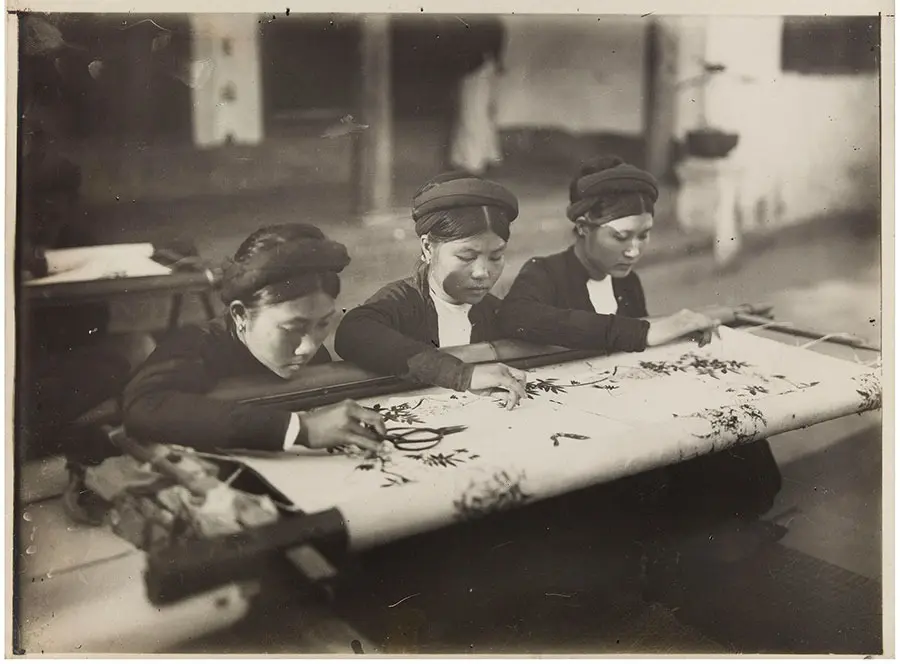
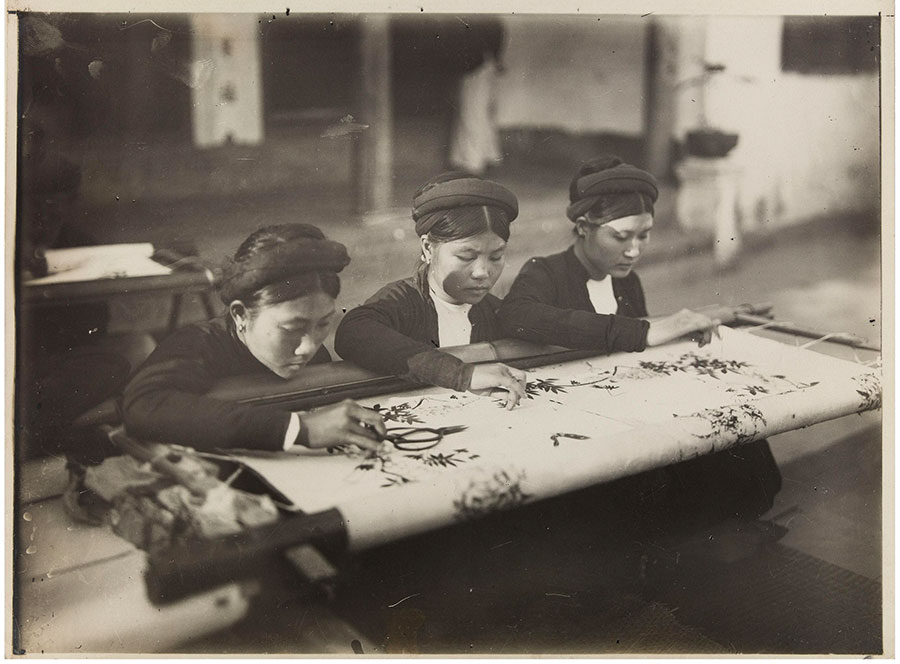
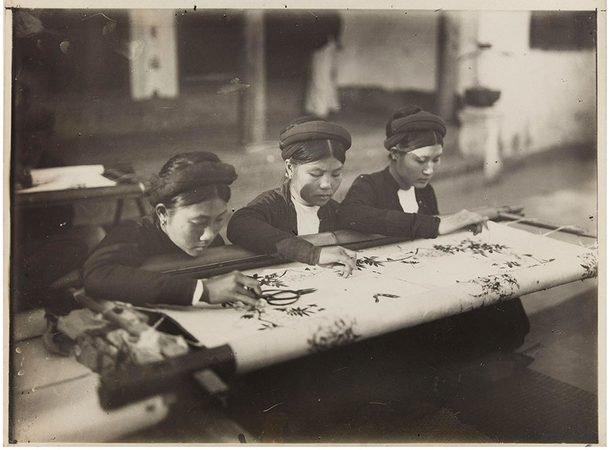
During the late 19th and early 20th centuries, the historical region of Tonkin, which encompasses the fertile Red River Delta in northern Vietnam, served as a bustling hub for textile production. Prominent embroidery villages—including Ha Dong, Bac Ninh, and Nam Dinh—were home to highly skilled artisans who produced richly decorated silk textiles tailored specifically for an expanding international market.
This flourishing commercial activity represented a fascinating synthesis of traditional local techniques and imported industrial materials. According to historical accounts documented in the 1922 publication Les Arts Décoratifs au Tonkin, Vietnamese embroiderers began around 1896 to craft their intricate needlework directly onto imported Lyon satin from France. To appeal more effectively to the evolving tastes of European and American customers, these workshops incorporated decorative motifs inspired by Chinese, Japanese, and French aesthetic traditions, while significantly expanding their palette of embroidery silks to align with Western interior design preferences.
The adaptability of these craftspeople paid off on the global stage. These innovative textiles were showcased at the prestigious Exposition Universelle in Paris in 1900, where they captured international attention and earned critical acclaim. Traditional iconography such as floral compositions, birds, animals, and mythical creatures continued to feature prominently, but they were expertly re-contextualized to captivate foreign buyers.
Among the era’s most successful commercial enterprises was Nam-Quat, a renowned embroidery firm based in Bac Ninh Province. A rare surviving artifact from this studio—an embroidery design and fabric sample book produced between 1916 and 1920, now preserved in the V&A collection—provides an extraordinary window into the business acumen of these early 20th-century workshops. Rather than functioning as a practical working pattern book for stitching, the volume was designed as a high-end catalogue for international clients to select specific patterns and luxury fabrics when commissioning custom home furnishings.
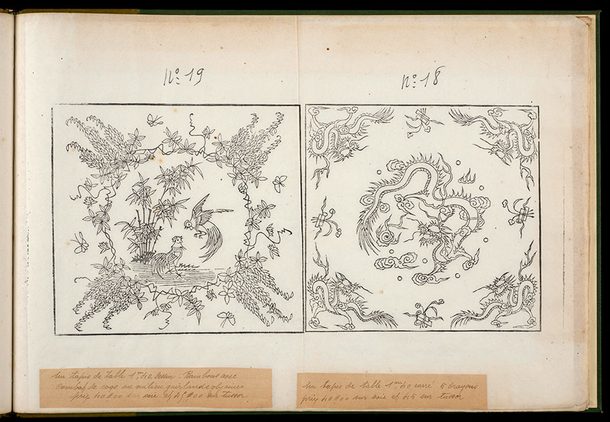
The sample book details a vast array of luxury interior items available for order, ranging from bedspreads, bolster covers, and piano throws to elaborate curtains, folding screen panels, and tablecloths. The pages showcase classic floral motifs such as chrysanthemums, lotus blossoms, roses, and wisteria, alongside auspicious symbols like dragons and phoenixes. The final pages feature a curated selection of twelve color swatches of Lyon silk satin, demonstrating the transnational supply chains that sustained the enterprise.
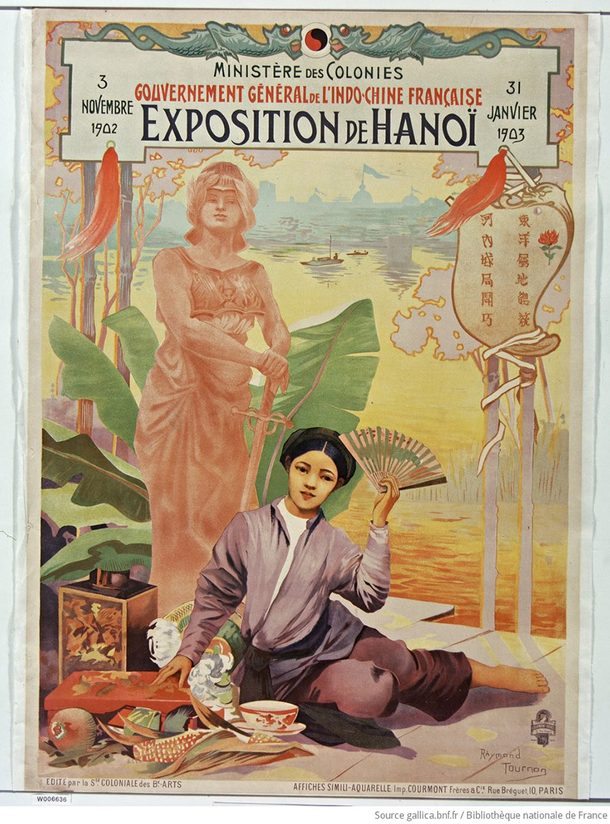
To aggressively expand its footprint abroad, Nam-Quat entered numerous national and international exhibitions, securing an impressive array of medals and awards. These accolades included a silver medal at the Hanoi Exhibition of 1902–1903, a gold medal at the Marseille Colonial Exhibition in 1906, and a silver medal at the Shanghai Exhibition in 1912, alongside participation in the 1904 Universal Exposition in St. Louis, Missouri.
Four Embroidered Textiles and Their Stories
The core of the upcoming V&A East Storehouse display centers on three historical embroidered textiles gifted to the museum, which offer deeply personal insights into the circulation of these objects. These pieces were originally collected by Edith Florence Harrop (1890–1980), a British traveler who lived extensively in Asia alongside her husband, Frederick S. Harrop. Frederick Harrop, a graduate of the Royal College of Art, served as the Headmaster of the School of Arts and Crafts in Bangkok. The couple resided in the Thai capital between 1917 and 1930 before returning to Britain with their collection of textiles, which remained in family hands for decades prior to entering the V&A collection.
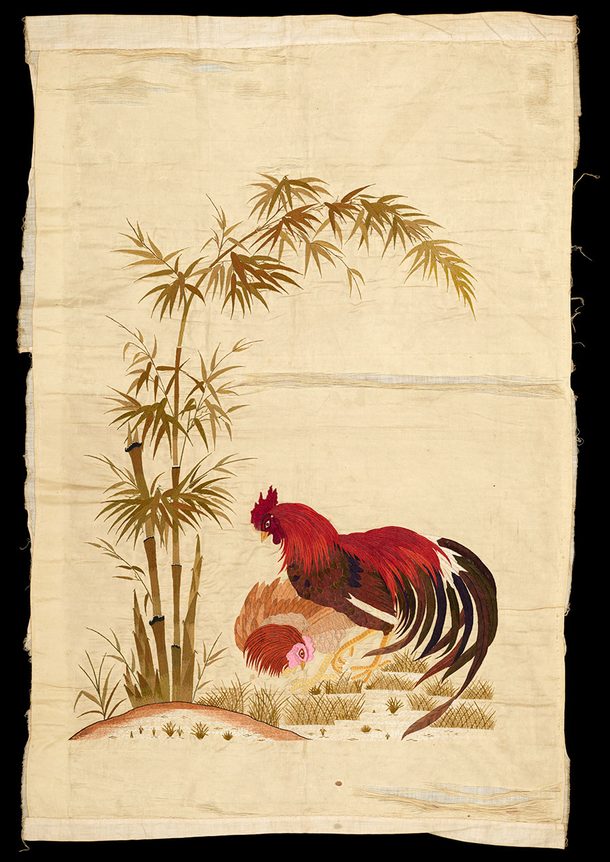
Among the highlights is a striking vertical hanging embroidered with a rooster and hen standing near bamboo stalks. The composition bears a remarkable resemblance to designs catalogued in the Nam-Quat sample book, offering a tangible link between surviving commercial design archives and finished, decorative objects. The use of Lyon silk satin once again underscores the deep commercial ties binding French textile manufacturing to northern Vietnamese embroidery houses.
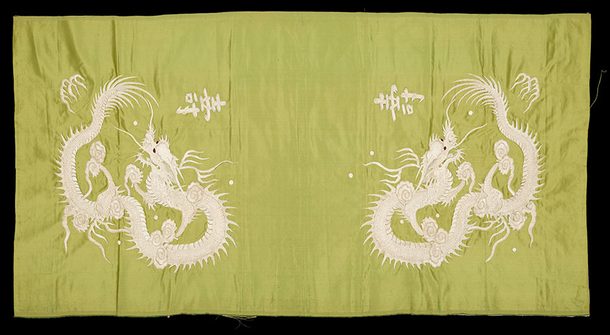
The display also features an unmade cushion cover fashioned from green satin, showcasing the extraordinary technical mastery of the period’s artisans. The textile depicts a curling dragon woven among swirling clouds and flames, accompanied by the Chinese character shou, which translates to longevity. The head and body of the dragon are executed in a high-relief embroidery technique that imparts a dramatic, three-dimensional texture to the surface.
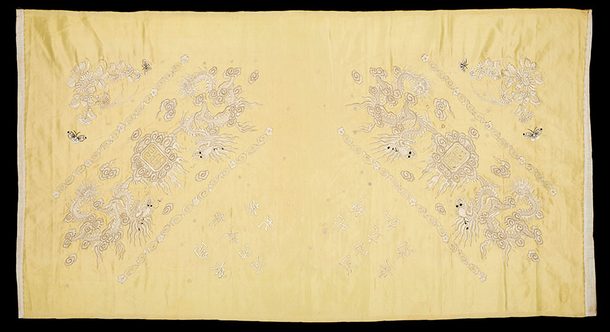
While a second unmade cushion cover of cream satin—featuring two dragons flanking a stylized shou character with inscriptions pointing to a production center in Hanoi—is not part of the physical exhibition space, it remains accessible to researchers and the public via prior appointment through the V&A’s object request services.
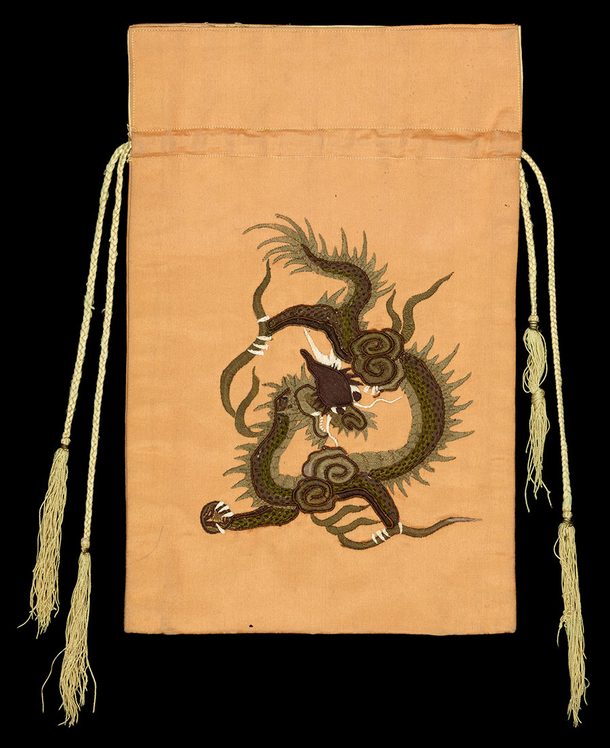
A fourth object from the Harrop collection, identified by its original owner as a "mosquito bag," presents a fascinating case study in shifting cultural interpretations. Measuring as a small, drawstring-secured purse, the accessory may have originally served a practical purpose for holding fragrant herbs intended to repel insects. Intriguingly, identical forms are categorized straightforwardly as purses within the Nam-Quat sample book. This duality highlights how the same material object could be perceived simultaneously as an exotic commercial souvenir by Western buyers and as a functional personal accessory within its native context.
Edith Harrop’s personal records add a rare layer of social history to the collection, noting that many of the textiles she acquired were second-hand items purchased directly from local pawnshops, which she valued for being genuinely reflective of everyday life in the region.
Embroidered Stories: A Ceremonial Procession
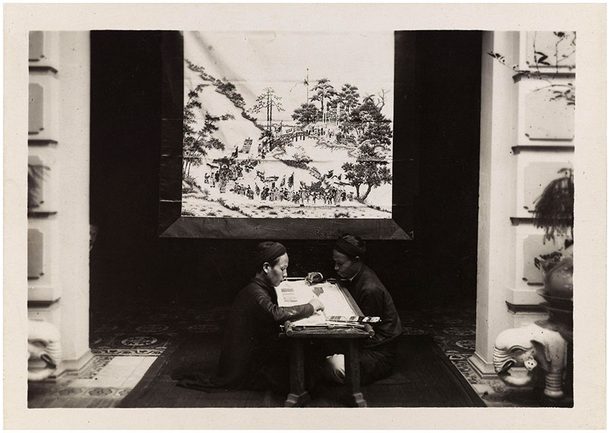
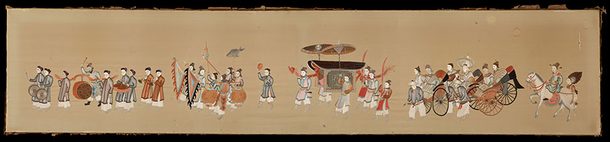
Beyond the primary items featured in the November showcase, the V&A collection houses other significant examples of Vietnamese textile artistry from the same era. Among them is a large-scale wall panel dating from around 1900 that illustrates Vinh Quy Bái Tổ, a traditional cultural concept translating to "returning in glory to pay respects to one’s ancestors."
Such procession scenes were deeply embedded in Vietnamese decorative arts and were frequently produced on a grand scale as decorative wall hangings intended for export. The imagery commemorates a scholar who achieved high-ranking success in the rigorous imperial civil service examinations. Following his triumph, the scholar would return to his home village in an elaborate, celebratory procession to honor his family and lineage. Flanked by attendants carrying ceremonial parasols, banners, and ritual offerings, the procession served as a public testament to academic achievement, familial devotion, and the enduring cultural significance of ancestral roots.
Vietnamese Textile Traditions in Contemporary Fashion
The legacy of Vietnamese textile craftsmanship is far from confined to the history books; it continues to serve as a vital source of inspiration for modern designers working at the intersection of heritage and sustainability. A key contemporary component of the upcoming display is a jacket and skirt ensemble created by designer Victoria Roe for FASHION4FREEDOM, a socially conscious fashion enterprise based in the historic city of Hue.
Operating as a social enterprise, the brand collaborates directly with traditional Vietnamese artisans, rural villages, and craft cooperatives to preserve ancient techniques while ensuring ethical and sustainable supply chains. Produced between 2016 and 2017, the featured ensemble marries Lãnh Mỹ A—a celebrated traditional black silk from Tân Châu in southern Vietnam often referred to as "lacquer silk"—with embroidery techniques derived from the imperial court dress traditions of Hue.
The production of Lãnh Mỹ A is notoriously labor-intensive, relying on natural dyes extracted from the fruit of the mặc nưa tree. The fabric achieves its signature deep, light-absorbing black hue and subtle greenish sheen through a prolonged cycle of repeated dipping, sun-drying, and manual beating.
The accompanying jacket reinterprets historical court garments through a contemporary lens, pairing metallic-wrapped threads and vibrant silks with softer pastel tones and intricate knot stitches. By bridging historical needlework practices with modern silhouettes, the ensemble demonstrates how traditional textile arts continue to evolve and find relevance in the global fashion landscape.
Visitors can explore these historical embroidered textiles and contemporary garments starting November 6, 2026, on Level 3, Display 28, at the V&A East Storehouse.