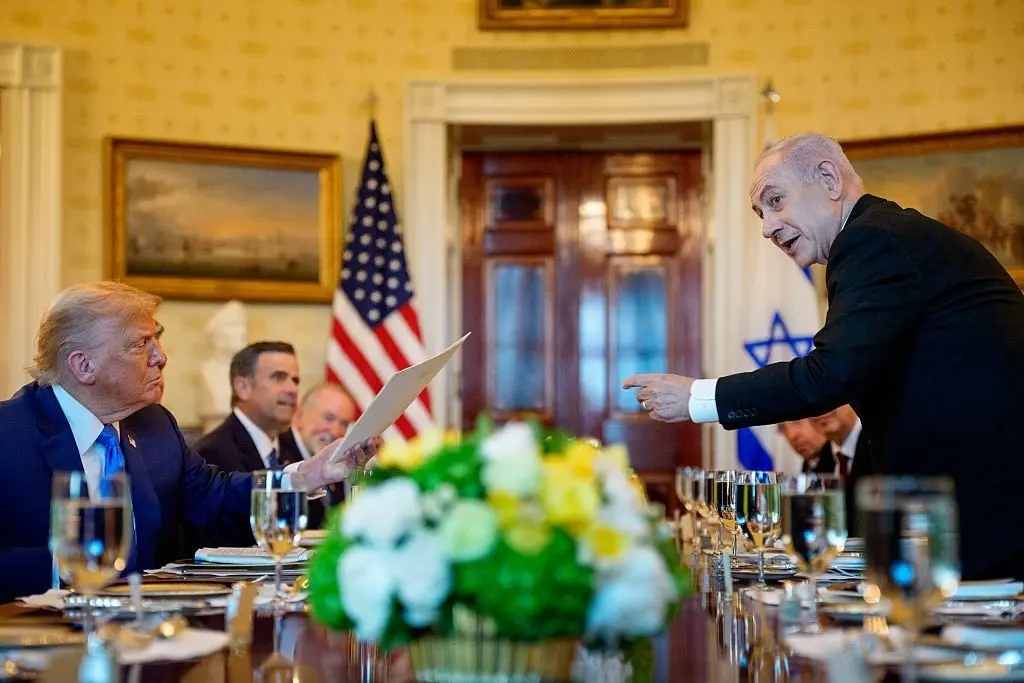
As U.S. President Donald Trump navigates an increasingly treacherous political landscape at home, a growing chorus of analysts suggests it is time to reopen public debate on several critical policy failures. Chief among these is the profound and destabilizing influence that Israeli Prime Minister Benjamin Netanyahu has exerted over the current administration, dragging the United States into strategic entanglements that are now coming back to haunt the White House.
When examining the root causes of the friction between Washington’s policy decisions and domestic realities, observers point first to the friction generated by conflict in the Middle East. Through the strategic course of actions championed by Netanyahu, a broader campaign against Iran was initiated. In its natural economic progression, that conflict sent shockwaves through global markets, driving up the costs of oil, food, and agricultural fertilizer across the entire world. That economic wound remains unhealed, continuing to erode the financial stability of ordinary citizens in numerous nations, most notably within the United States itself.
Political analysts have long understood a fundamental axiom of American elections: when voters head to the polls, fuel and grocery prices matter immensely. During periods of relative stability, a gallon of gasoline in the United States hovered around a much more manageable $2.80. Today, however, that same gallon has surged to between $4.30 and $4.50—a severe, unfamiliar price point to which the American public is entirely unaccustomed and deeply resentful.
Historical comparisons further illustrate the precariousness of Trump’s current position. When past administrations declared military campaigns, such as the U.S. intervention in Iraq, they often enjoyed substantial surges of patriotic unity; 63 percent of the American public stood firmly behind then-President George H.W. Bush during the Gulf War. In stark contrast, President Trump has struggled immensely to push public support for the ongoing confrontation involving Iran beyond a dismal 30 to 35 percent.
Falling polls
With public backing for the regional conflicts languishing at these historically low levels—largely exacerbated by the compounding crises in Gaza and Iran—Trump’s overall presidential approval rating continues to tumble day by day. The relentless pressure of rising interest rates, stubbornly high food prices, and costly fuel has forced the American public to bear an economic burden that is rapidly shifting political loyalties.
Recent polling data compiled by nearly all major research firms indicate that Trump’s support has plummeted to around 30 percent. Political historians note that a sitting U.S. president has rarely, if ever, fallen into such a deeply troubled political posture during a term. Analysts warn that in the upcoming midterm and general elections, the severe shortfall in votes could severely damage the administration’s standing in both chambers of Congress. With both the Senate and the House of Representatives potentially slipping further from reliable legislative control, Trump may find himself relegated to a weakened, lame-duck position for the remainder of his term.
Compounding these electoral liabilities is a potent cultural and political phenomenon known broadly among the electorate as the "Gaza effect." This narrative has continually revived and preserved its vitality across the American public, particularly within younger demographics and urban centers. At the nation’s elite universities—institutions historically responsible for graduating the future leaders, diplomats, and policymakers of the United States—any campus that dared to host demonstrations or voice strong protests against Israeli military actions in Gaza met with a severe and uncompromising reaction from authorities.
Rather than allowing for traditional academic discourse, these institutions became sites of heavy-handed interventions. Police forces were deployed to disperse demonstrators, resulting in the physical removal and beating of both academics and students. Highly esteemed professors and researchers were arrested, while federal funding for several prominent universities was threatened or withdrawn. Furthermore, the presidents and senior administrative leadership of world-renowned institutions, such as the Massachusetts Institute of Technology (MIT) and Harvard University, found themselves summoned before congressional panels and subjected to direct, intense government pressure.
Secret everybody knew
The internal policy divisions within the administration have further highlighted these tensions, notably through the candid remarks of U.S. Vice President J.D. Vance. His outspoken stance regarding Israel’s military strategy brought long-running diplomatic realities into public view. By explicitly telling Israel’s leadership that "you can’t just kill your way out of solving every single national security problem," and simultaneously reminding them that Trump remains "the only head of state in the entire world who is sympathetic to the nation of Israel," Vance inadvertently confessed a secret that virtually everyone in Washington already knew.
Throughout modern American history, the diplomatic and strategic apparatuses of Israel and the United States have frequently functioned almost as a single state. Time and time again, congressional leadership and entrenched federal bureaucracies have prioritized Israel’s strategic objectives and security interests ahead of America’s own domestic and economic needs.
Yet, a profound shift is currently underway in the grassroots political landscape of the United States. Looking closely at the contemporary state of U.S.-Israeli relations, numerous regions across the country—with New York standing out above all—are witnessing the emergence of prominent anti-Israel political candidates. Even socialist and progressive candidates, who traditionally command limited real influence within the mainstream American political system, are suddenly finding a receptive audience among the electorate simply by staking out firm anti-Israel and pro-Palestinian positions.
The United States thus appears to be facing an exceptionally difficult domestic and international test. While Israel steadily loses the goodwill and moral backing of the broader American public on one side, President Trump faces the very real prospect of losing crucial elections entirely because of the fallout generated by Netanyahu’s policies.
Iran’s election card
From a geopolitical standpoint, the government in Tehran has skillfully utilized the American electoral cycle as a strategic card to weaken Washington’s resolve. Despite the implementation of severe, sweeping economic embargoes and sanctions by the U.S. against Iran, Tehran has managed to sustain its position, banking on the strategy of holding out until the American political landscape shifts.
President Trump has frequently maintained and publicly declared his intention to launch a major military offensive against Iran following the conclusion of the election cycle. However, political analysts point out that once the ballots are cast, a newly constituted or politically chastened Senate and House of Representatives could step in to directly block such reckless military ventures, exercising congressional war powers to prevent further entanglement.
As concurrent electoral processes unfold in both Israel and the United States, global diplomatic dynamics are visibly shifting. During recent proceedings at the United Nations, international news agencies captured a striking visual statement: as Prime Minister Netanyahu approached the podium to deliver his address, large portions of the assembly hall emptied out as delegates openly walked out while he was still speaking.
This public snub suggests that even elements of global political influence and traditional international allies appear to have grown weary of Netanyahu’s governance. Through a series of uncompromising military and diplomatic choices, the Israeli prime minister has laid the groundwork for an international perception of an increasingly isolated state. In doing so, he has strained traditional Western diplomatic paradigms and fundamentally fractured the historic alliance between the United States and Israel.
Ultimately, the political trajectory points toward a historic reckoning. President Trump may well lose crucial electoral ground—and potentially the presidency itself—because of the unrelenting political fallout tied to Netanyahu and the enduring Middle East crisis. Such a profound political cost is not something that can be easily compensated for by traditional campaign strategies. It remains abundantly clear that the administration has struggled to formulate a coherent, balanced policy on this matter, while the Israeli leadership continues to dismiss the diplomatic frameworks attempted by Washington in favor of ongoing military campaigns. Trump faces an exceptionally heavy political test, and observers across the globe are watching closely to see whether he can manage to carry this immense burden through the remainder of the election cycle.