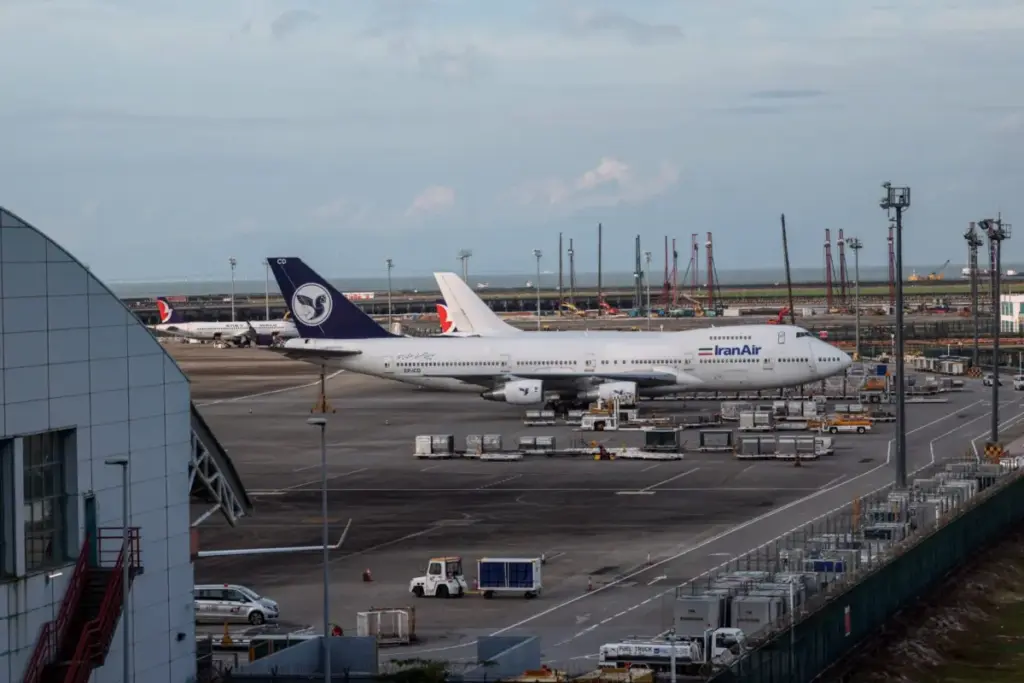
Iranian airlines will face insurmountable operational barriers worldwide in a matter of days under the crushing weight of renewed American sanctions, U.S. Treasury Secretary Scott Bessent warned Monday. The sweeping measures form a central pillar of the Trump administration’s ongoing campaign to maintain intense economic pressure on Tehran amid a rapidly escalating geopolitical crisis in the Middle East.
Speaking in a television interview with CNBC, Bessent delivered a stark warning regarding the immediate international outlook for Iran’s commercial aviation network. According to the Treasury Secretary, beginning Wednesday, September 23, all Iranian commercial carriers will effectively be shut down around the globe as international compliance with U.S. financial and trade restrictions takes full effect.
The enforcement mechanism behind the administration’s directive relies on the immense leverage of the global financial system. Bessent emphasized the severity of the secondary penalties awaiting any international entity that attempts to assist Iranian aircraft. If any Iranian plane lands abroad, foreign service providers are now strictly prohibited from engaging with the aircraft or its operators. Service providers cannot supply fuel, provide standard landing services, or sell passenger tickets. Entities that violate these restrictions face swift and severe retribution, running the risk of being completely knocked out of the U.S. dollar system, which would effectively paralyze their ability to conduct international commerce.
This latest escalation in aviation-focused economic warfare arrives against the backdrop of a widening military conflict in the region. The war involving Iran erupted after the United States and Israel launched coordinated joint military strikes in late February. The initial military action severely shook regional stability and triggered an immediate, aggressive response from Tehran. In retaliation for the strikes, Tehran took the dramatic step of blocking the Strait of Hormuz. The strait represents a vital maritime chokepoint and a critical global artery for energy transit, and its closure sent global oil prices surging as the conflict rapidly spread across the broader Middle East.
The impending global grounding of Iran’s carriers follows a series of targeted financial measures implemented by Washington. Earlier this month, the United States Treasury Department formally imposed economic penalties on all remaining Iranian airlines that had managed to evade or had yet to face such restrictive designations. Alongside airlines directly linked to the Iranian state, the Treasury Department also widened its net to target third-party entities accused of supporting Iran’s aviation sector, including various commercial firms and supply-chain facilitators based outside of Iran.
These actions align directly with previous commitments made by Treasury Secretary Bessent, who had vowed that the United States would declare what he termed an "economic D-Day" on Iran. At the time, Bessent pledged to systematically choke off Tehran financially, utilizing every available instrument of American economic power to isolate the regime and degrade its operational capabilities.
Bessent’s latest public warnings regarding Iran’s aviation infrastructure came just a day after he participated in high-level economic talks with Chinese Vice Premier He Lifeng. Those bilateral discussions were designed to lay the crucial groundwork for President Donald Trump’s diplomatic summit with Chinese leader Xi Jinping. The timing of the financial meetings highlights the complex geopolitical dynamics surrounding Tehran, given that China stands as one of Iran’s foremost economic partners and most influential diplomatic backers on the global stage.
For the Iranian regime and its citizens, the severe disruption to commercial aviation compounds decades of systemic challenges. Iran’s aviation sector has long grappled with punishing sanctions that have severely restricted the country’s ability to acquire new commercial aircraft, obtain essential spare parts for aging fleets, and access routine maintenance and engineering services necessary to maintain international safety standards. With the implementation of the latest U.S. Treasury directives and the threat of secondary sanctions shutting down global refueling and ground services, the remnants of Iran’s commercial air travel network face what appears to be an unprecedented and comprehensive international isolation.