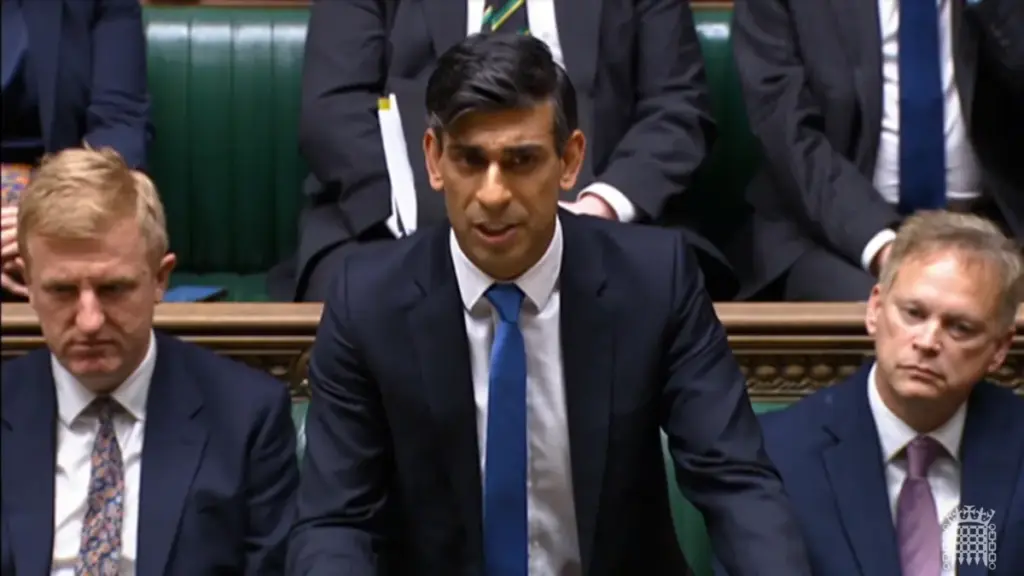
British Prime Minister Rishi Sunak has taken a hardline stance against domestic expressions of support for Yemen’s Houthi movement, declaring that anyone within the United Kingdom who glorifies the group’s ongoing attacks in the Red Sea is engaging in terrorism, "plain and simple." Speaking during a political address, the prime minister announced a sweeping "zero tolerance" approach toward individuals and groups endorsing the actions of the Yemeni militia, signaling a potential crackdown on domestic protests and public commentary related to the escalating maritime crisis.
The prime minister’s remarks come at a time of heightened international friction surrounding the Bab el-Mandeb Strait, a critical global shipping lane. In his statements, Mr. Sunak explicitly rejected any direct link between the Houthi maritime assaults and Israel’s ongoing military campaign in Gaza. This assertion puts the British leader at odds with the stated motivations of the Houthi movement, as well as various regional analysts and civil society groups who argue that the military escalations at sea are inextricably tied to the humanitarian catastrophe and military operations unfolding in the Gaza Strip.
The Houthi movement, officially known as Ansar Allah, has consistently maintained that its campaign targeting commercial vessels in the Red Sea is a direct response to the blockade and military actions in Gaza. The group has publicly demanded that Israel’s military operations cease and that adequate humanitarian aid—specifically food, medicines, and fuel—be allowed to reach the besieged civilian population of the Palestinian enclave before they agree to halt their maritime operations. Despite these explicit declarations from leadership in Sanaa, Western governments, including the UK and the United States, have rejected the narrative that the Houthi attacks are an act of solidarity, framing them instead as unlawful acts of piracy and terrorism that threaten global trade, supply chains, and international maritime security.

The UK government’s newly announced "zero tolerance" posture marks a significant escalation in how domestic dissent and political expression regarding Middle Eastern geopolitics will be handled by British authorities. By framing the glorification of Houthi actions as a matter of domestic security and terrorism rather than foreign policy debate or protest, the administration is drawing a sharp legal and political line. Security officials and law enforcement agencies are expected to closely monitor public demonstrations, social media activity, and political gatherings to identify individuals who express solidarity with the Yemeni group or justify their attacks on international shipping.
Civil liberties advocates and political commentators have already begun weighing the implications of Mr. Sunak’s announcement, noting the fine line between prosecuting genuine incitement to violence and restricting legitimate political speech surrounding foreign conflicts. However, the government remains steadfast in its position, emphasizing that the disruption of international commerce and the direct threat posed to commercial mariners by Houthi missiles and drones necessitates a robust and uncompromising response, both internationally through military coalitions and domestically through strict enforcement of counter-terrorism and public order legislation.
As naval forces from the UK, the US, and allied nations continue to patrol the Red Sea and conduct defensive operations against Houthi military capabilities in Yemen, the political fallout continues to reverberate domestically within Britain. With the Prime Minister vowing that support for the militant group will not be tolerated on home soil, the intersection of foreign military intervention and domestic free speech has emerged as a central flashpoint in British politics.