In Islamic discourse, the term Iman is frequently translated simply as "faith" or "belief." However, when examined in its comprehensive and traditional sense, scholars and spiritual educators explain that it encompasses a much broader reality. It is not merely an abstract concept residing quietly within the human consciousness; rather, it is a dynamic integration of conviction in the heart, verbal declarations by the tongue, and practical, righteous actions that follow. It weaves together formal acts of worship and ritual with moral character, interpersonal ethics, and daily conduct.
This holistic definition finds its foundation in the traditions of the Prophet Muhammad, peace and blessings be upon him, who famously described the vast scope of the concept. According to a well-known narration recorded in Sahih Muslim, the Prophet stated that faith consists of numerous branches—numbering over seventy or sixty—with the highest and most fundamental declaration being the testimony that there is no deity worthy of worship except Allah, and the most basic physical expression being the removal of a harmful obstacle from a public pathway. Significantly, the tradition also notes that modesty and noble character are integral branches of this overarching framework.
Because Iman encompasses both internal belief and external deeds, the people of faith, known as Al-Mu’minun, experience varying degrees of spiritual vitality. Individuals achieve different levels of conviction based on the depth of belief rooted in their hearts and the consistency of their righteous actions. Consequently, faith is understood to be fluid—it rises and falls over the course of a person’s life. Some individuals naturally attain higher spiritual stations than others, and a single person may find themselves spiritually invigorated at one moment in life while facing a period of laxity or decline at another.
To conceptualize this fluctuation, many educators use the analogy of a continuous spiritual score achieved by the believer. In this metaphorical framework, the maximum potential score is limitless, reflecting endless opportunities for spiritual elevation, while the baseline score is established by the foundational declaration of faith in the oneness of God. Believers actively increase their standing through obedience to Allah and His Messenger, while various acts of disobedience, moral lapses, or neglect cause the score to decrease. Within this traditional paradigm, positive spiritual units of reward are referred to as Hasanat, while negative spiritual repercussions of wrongdoing are termed Sayi’ah.
This spiritual score is fundamentally an individual responsibility. In the ultimate theological reality, every human being will stand before the Divine Creator alone to account for their earthly choices, as referenced in the Quranic verse emphasizing that each individual will approach Him unaccompanied. The spiritual standing of family members, friends, or neighbors neither increases nor decreases an individual’s personal accountability.
Nevertheless, while accountability remains strictly personal in the hereafter, the collective state of faith carries profound implications in earthly life. Islamic theology teaches that divine support, victory, and societal well-being are promised to communities of believers under specific conditions. As noted in the Quran, God has explicitly promised to support His messengers and those who believe. Therefore, the overall strength, resilience, and success of a community depend to a significant degree on the collective level of faith and righteous action upheld by its members.
About Measuring Iman
Assessing or measuring Iman objectively remains an inherent challenge because its core components reside within the unseen depths of the human heart. It is virtually impossible to quantify precisely how much absolute conviction an individual holds internally. Furthermore, even apparent physical actions cannot always be easily counted or judged from the outside, as their true value depends entirely on the sincerity of the intention—another deeply internal dimension that remains hidden from public view.
Even the angels tasked with recording human deeds occasionally encounter complexities in translating certain nuanced actions into definitive records of reward, requiring divine guidance to ensure justice. Despite these profound measurement challenges, Islamic tradition offers practical indicators that allow individuals to gauge their spiritual trajectory. The Prophet Muhammad observed that charitable giving serves as a clear proof and external manifestation of inner conviction.
While achieving absolute precision is impossible, observable good deeds function as a reliable barometer of an individual’s spiritual health. Righteous actions naturally lead to an elevated spiritual state, which in turn inspires further good deeds, creating a continuous cycle of personal growth and positive reinforcement. The inverse is also true, though it remains statistically and spiritually rare for an individual to consistently perform massive volumes of righteous deeds while harboring a genuinely depleted spiritual core, or vice versa, over an extended period.
An Experiment in Collective Growth
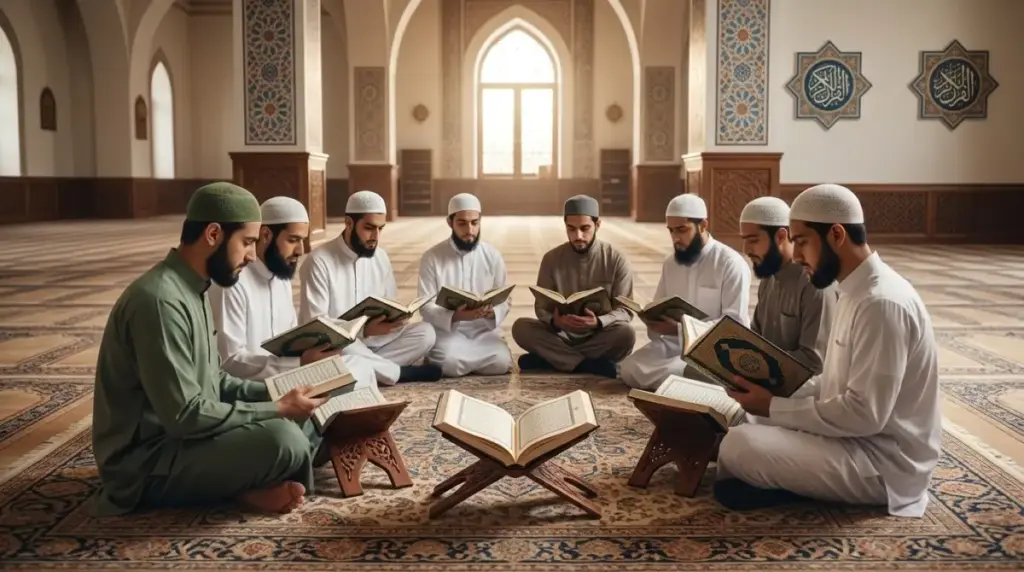
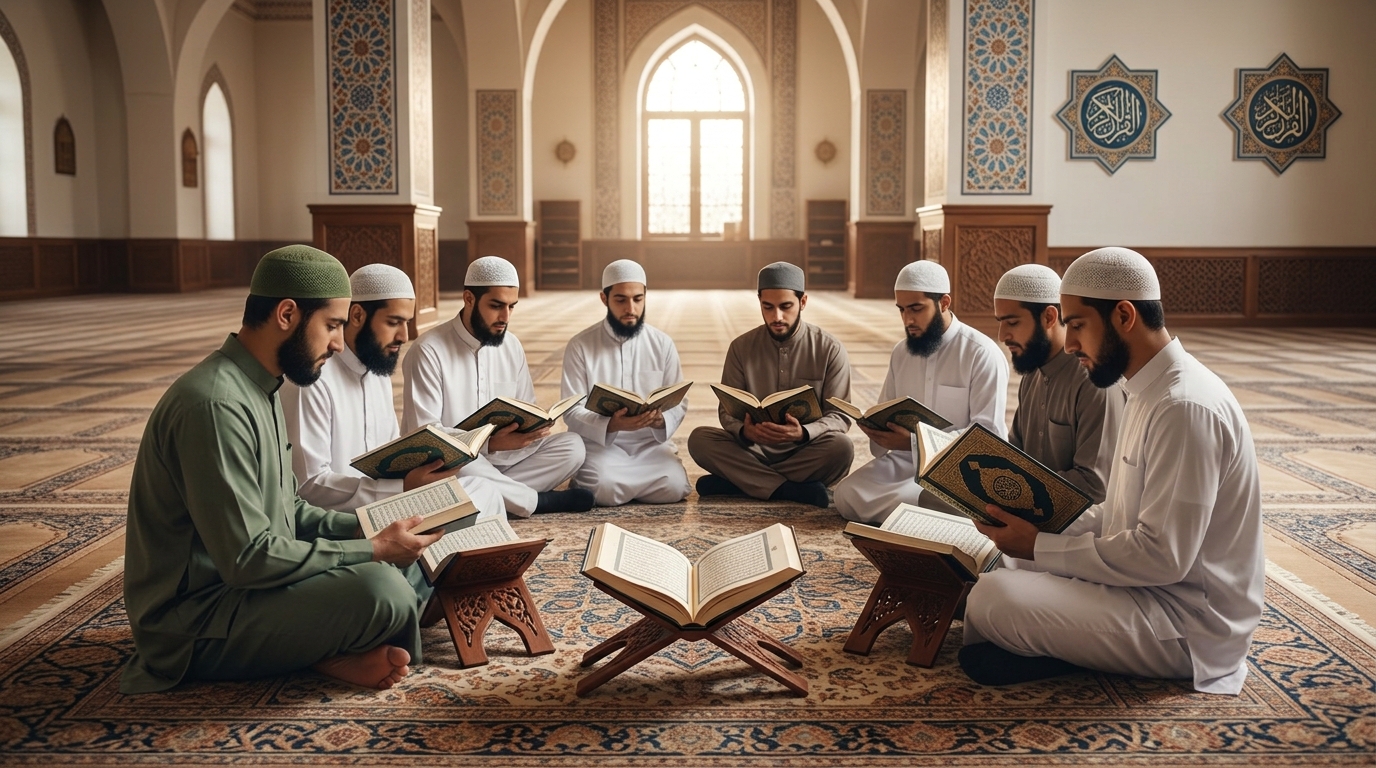
Exploring these dynamics in a practical setting, a weekly study circle, or halaqah, comprised of approximately ten diverse participants spanning various ages and backgrounds, recently embarked on a unique collective experiment. The group sought to establish personal spiritual targets while simultaneously leveraging community accountability to ensure follow-through.
The structure of the experiment required participants to report their personal achievements during weekly gatherings, establishing a rule that the group would not advance to a new objective until achieving an eighty percent success rate collectively. The most demanding aspect of the framework was its emphasis on collective achievement. Even if individual members managed perfect compliance, a low score by a single participant could pull the group average below the required threshold, necessitating continued effort rather than moving forward.
The initial target focused on a daily commitment: each participant was required to dedicate fifteen to twenty minutes every day to an activity directly connected to the Quran, encompassing reading, recitation, memorization, listening, or contemplative study. The strict rule of the exercise dictated that missed days could not be made up retroactively, emphasizing daily consistency above all else.
At the commencement of each weekly meeting, members reported the exact number of fulfilling days, and simple mathematical averaging determined the collective outcome. Initially, the group encountered low individual scores, resulting in disappointing collective averages. Through mutual encouragement, constructive feedback, occasional gentle reprimands, and tactical accountability measures such as accountability pairing and digital reminders, individual consistency began to rise.
Despite these interventions, reaching the eighty percent collective target proved remarkably difficult, as a single low-performing member could heavily impact the overall average. After struggling through eight consecutive weeks of falling short of the benchmark, the study circle finally surpassed the eighty percent threshold, only to experience a drop back to fifty percent the following week. The participants continue their efforts, committed to mastering the discipline through persistent cooperation and shared responsibility.
As the study circle continues its journey, organizers intend to document further reflections, particularly as additional spiritual targets are introduced alongside the initial Quranic commitment. The ongoing experiment highlights the intricate balance between individual spiritual accountability and the powerful influence of community support in the pursuit of sustained faith and personal development.