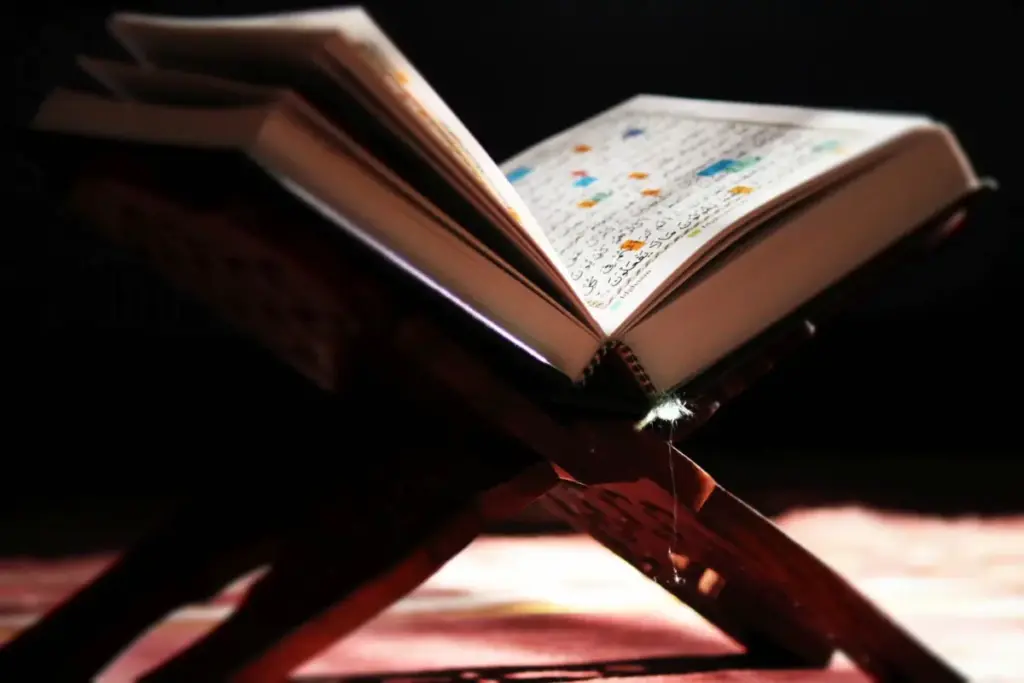
LONDON — The question of who taught Prophet Muhammad the Quran has remained a subject of theological study, historical inquiry, and interfaith discussion for centuries. In an illuminating installment of the popular "Eternal Challenge" video series, prominent Islamic scholar Sheikh Sohaib Saeed addresses this pivotal question directly, offering a comprehensive academic and theological refutation of long-standing allegations that the Prophet was tutored by human clergymen or that he merely compiled his teachings by quoting from earlier scriptures.

The episode, hosted and produced as part of an ongoing exploration into the miraculous nature of Islam’s holy book, dives deep into the historical context of seventh-century Arabia. Sheikh Saeed meticulously dismantles claims often raised by skeptics, pointing out the inherent contradictions and historical inaccuracies in the narrative that an unlettered man living in the Arabian Peninsula could have had access to advanced theological instruction or comprehensive libraries of prior Abrahamic texts.
For centuries, critics of Islam have attempted to attribute the profound theological, legal, and historical narratives found within the Quran to external human influences. Some historical polemics suggested that Prophet Muhammad learned from Christian monks, Jewish rabbis, or local scholars during his travels with trading caravans. However, Sheikh Saeed elaborates on why these allegations do not withstand rigorous historical scrutiny. The Prophet was famously known among his contemporaries as Ummi—unlettered and unable to read or write—a well-documented reality in a society that relied primarily on oral tradition, poetry, and genealogy rather than widespread literary scholarship.

Furthermore, the linguistic and structural superiority of the Quran presented a challenge that no contemporary poet or scholar could match. The text emerged in a society that prided itself on the mastery of the Arabic language, yet the Quran challenged the finest literary minds of the era to produce even a single chapter comparable to it—a challenge that remains unmatched to this day. Sheikh Saeed emphasizes that attributing the authorship or instruction of such a monumental work to human teachers trivializes the sheer scope, depth, and transformative impact of the scripture.
Beyond the question of human instruction, the discussion in the "Eternal Challenge" episode shifts toward one of the most compelling internal proofs for the authenticity of the Quran: its precise prophecies. Prophecy, as defined within the theological framework discussed by Sheikh Saeed, is distinct from an educated guess, a wise prediction, or a lucky projection based on current trends. True prophecy involves foretold news about specific future events that are entirely beyond human calculation or foresight.

In the context of sacred literature, fulfilled prophecies serve as a vital proof for the truthfulness of prophets and the divine origin of their messages. The Quran contains numerous instances where future events were explicitly foretold with remarkable accuracy. A prominent historical example highlighted in Islamic tradition is the Quranic commentary on the conflict between the Byzantine and Persian empires in the early seventh century. At a time when the Byzantine Empire suffered devastating defeats and was widely predicted by contemporaries to collapse entirely, the Quran explicitly foretold that the Byzantines would achieve victory within a few years—a prediction that was subsequently fulfilled precisely as stated.
These prophetic elements, alongside scientific allusions, historical accounts of ancient nations unknown to contemporary Arabs, and timeless moral legislation, form the bedrock of what scholars term the "eternal challenge" of the Quran. Rather than being a product of its environment or the synthesis of borrowed teachings, the text presents itself as a direct revelation from the Creator, designed to guide humanity through a universal message that transcends time, geography, and culture.
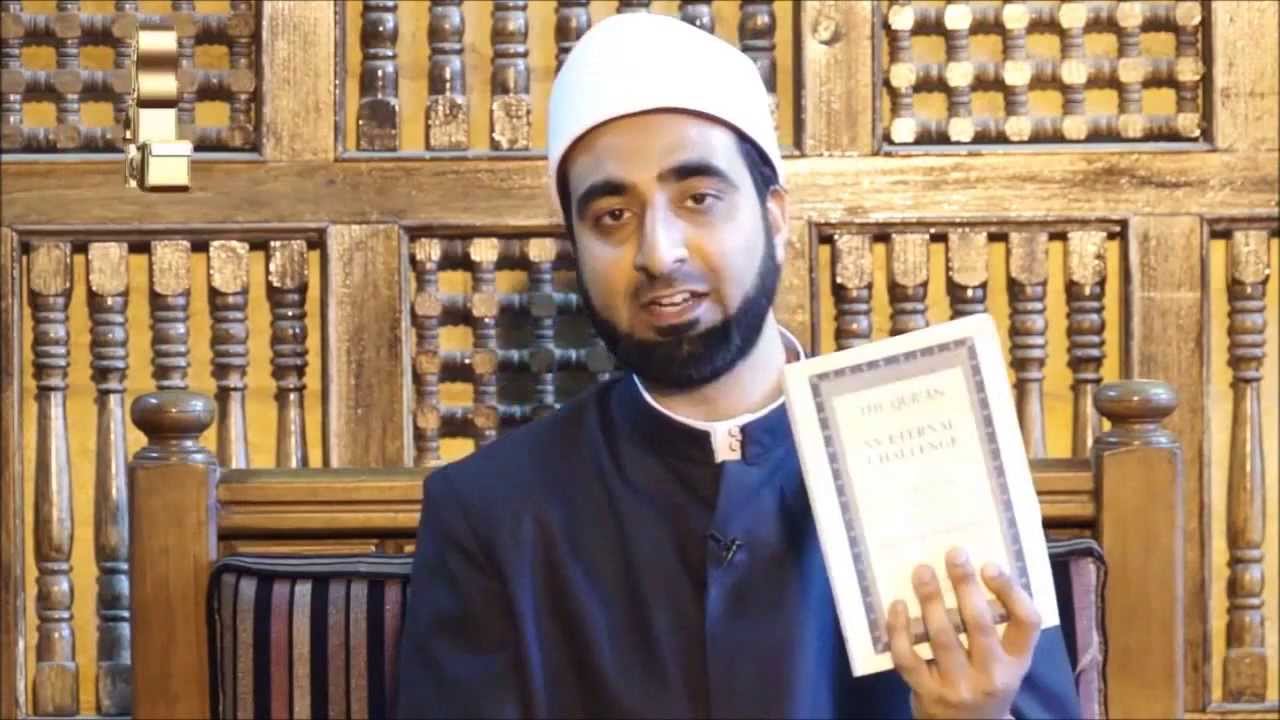
The ongoing "Eternal Challenge" series, featuring Sheikh Sohaib Saeed, continues to draw widespread attention from viewers seeking deep, intellectual, and faith-affirming discussions on Islamic theology. Previous episodes in the series have explored foundational topics, including the precise definition of the Quran, the unique relationship between the Prophet and the Book of Allah, and the broader intellectual frameworks used to understand how the scripture shaped the very character and mission of Prophet Muhammad. By addressing complex historical and theological objections with clarity and scholarly rigor, the series serves as an important resource for contemporary audiences navigating questions of faith, history, and scripture in the modern digital age.