LONDON — In the latest installment of his widely followed educational series, scholar Sheikh Sohaib Saeed has turned his academic focus toward one of the most enduring historical and theological inquiries regarding Islam: Who actually taught Prophet Muhammad the Quran?
Addressing viewers in the newest episode of the "Eternal Challenge" series, Sheikh Sohaib systematically examines and refutes long-standing historical allegations and modern skepticism suggesting that the Prophet of Islam was tutored by contemporary religious clergymen or that he merely compiled and quoted material from earlier Abrahamic scriptures. Through rigorous analysis, the series continues to unpack the intellectual, spiritual, and literary dimensions of the Holy Quran, presenting it as a text fundamentally distinct from human authorship or external instruction.

Addressing Historical Allegations of Human Tutorship
The question of the origins of the Quranic text has been a subject of discussion among theologians, historians, and critics for centuries. Detractors of early Islam have occasionally claimed that Prophet Muhammad gathered teachings from various Christian monks, Jewish rabbis, or other religious figures of the Arabian Peninsula and surrounding regions during his travels or interactions.
In this episode, Sheikh Sohaib confronts these assertions directly, drawing upon historical context, linguistic analysis, and theological arguments to demonstrate why such claims fail under academic and logical scrutiny. The scholar highlights the unique socio-cultural landscape of 7th-century Arabia—a predominantly oral society where the Prophet was known as Ummi, or unlettered, unable to read or write conventional texts. By analyzing the structural, thematic, and narrative differences between the Quran and prior religious scriptures, the discussion emphasizes that the text introduces theological perspectives, historical corrections, and legal frameworks that diverge significantly from the prevailing Judeo-Christian literature available in the region at the time.

The Significance of Prophecies in the Quran
Beyond addressing the allegations of human instruction, the video delves into a crucial pillar of Islamic apologetics and scriptural analysis: the presence of verified prophecies within the Quran.
Prophecy, as defined within the theological framework discussed by Sheikh Sohaib, refers to explicit, foretold news regarding future events that are entirely beyond human calculation, foresight, or probability. The scholar draws a sharp distinction between a genuine prophecy and an educated guess, shrewd political forecast, or wise observation made by a visionary leader.

Within academic and theological studies of prophethood, accurate and undeniable prophecies serve as one of the most vital evidentiary proofs for establishing the truthfulness of a messenger. The episode explores specific instances where the Quran predicted future outcomes—such as the eventual victory of the Byzantines over the Persians after a devastating defeat—at a time when external circumstances made such an outcome seem highly improbable. By examining these predictive elements, the series invites audiences to reflect on the divine origin of a text that successfully anticipated geopolitical shifts and historical developments centuries before they materialized.
Continuing the ‘Eternal Challenge’ Exploration
The ongoing "Eternal Challenge" series, hosted by Sheikh Sohaib Saeed, has built a substantial following for its academic yet accessible approach to Islamic studies and Quranic sciences. Previous episodes in the educational project have tackled fundamental questions surrounding the nature of the scripture, the relationship between the Prophet and the divine revelation, and the intellectual challenges the Quran presents to humanity.
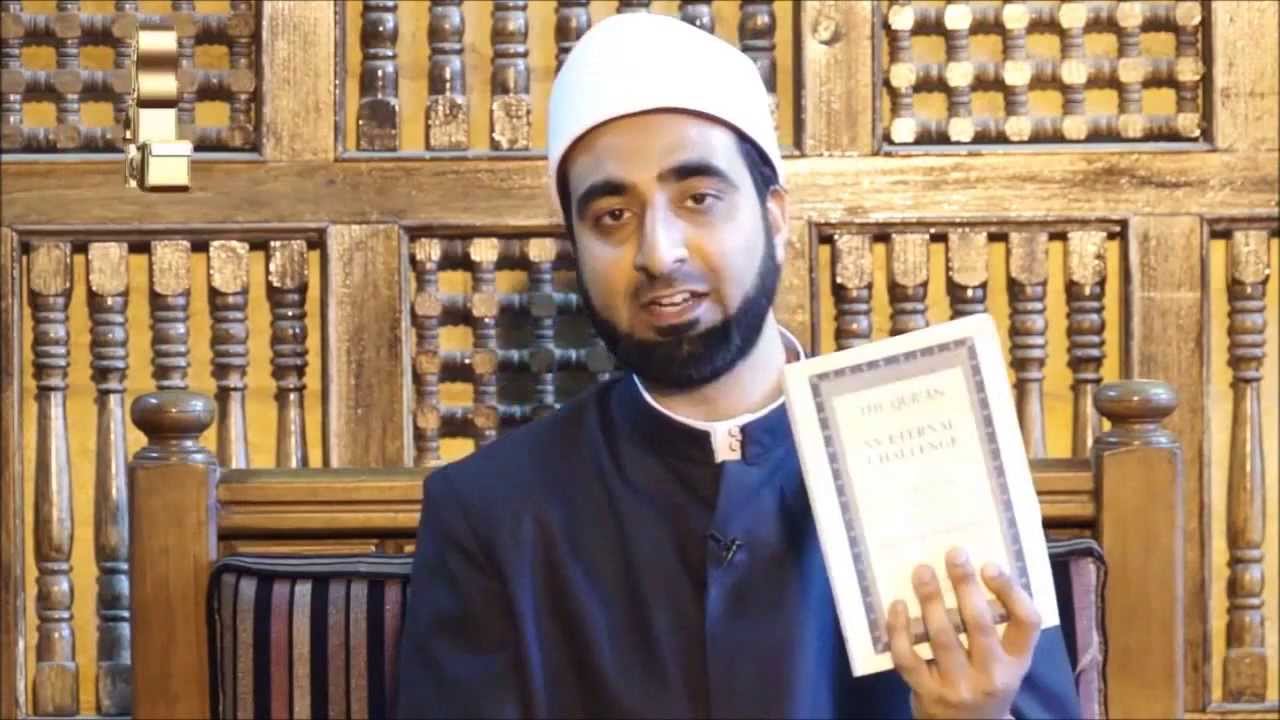
As the series progresses, it continues to provide viewers with structured, well-researched insights designed to address complex theological questions in a contemporary format. Through platforms like social media and dedicated educational networks, scholars like Sheikh Sohaib aim to bridge traditional Islamic scholarship with modern discourse, offering clear answers to longstanding inquiries about the faith and its foundational texts.