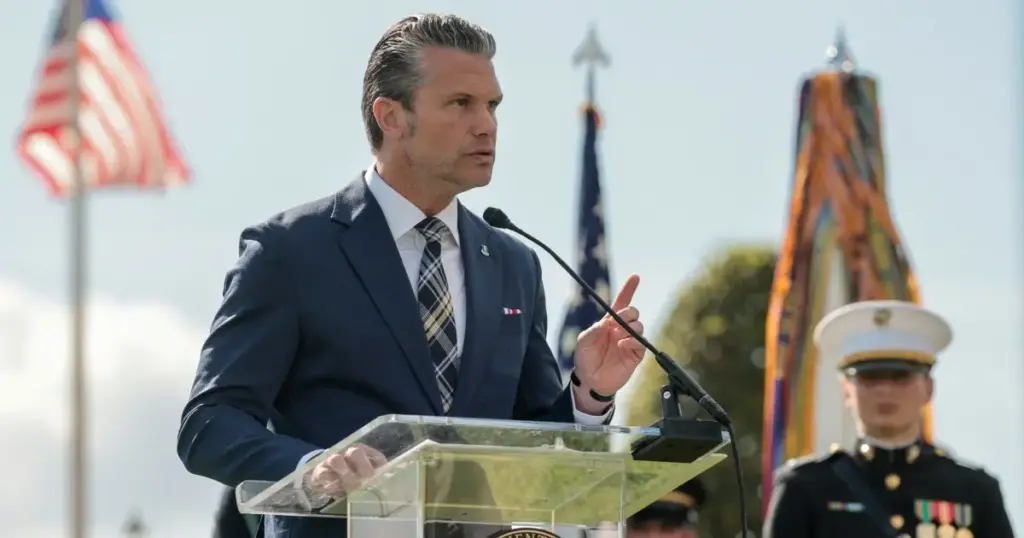
WASHINGTON — United States Defense Secretary Pete Hegseth is set to dramatically reduce the number of positions reserved for high-ranking generals and admirals across the United States armed forces, ordering a total 20 percent cut to leadership ranks within the Army, Navy, and Air Force. According to a senior Pentagon official who spoke to Al Jazeera on the condition of anonymity, the sweeping structural change will impact top-tier military leadership and affect the career trajectories of hundreds of current and rising officers.
Hegseth is scheduled to formally announce the decision during a high-profile visit to the Marine Corps Base Quantico in Virginia. There, he will deliver his highly anticipated "State of the Force" address before an audience of junior officers and enlisted personnel. Major media outlets across the United States have also reported on the impending directive, which marks another aggressive step by the administration to reshape the upper echelons of the American military establishment.
According to reports from The Associated Press, which cited multiple Pentagon officials, Hegseth will direct all military service branches to double a previous reduction that he ordered last year. That initial directive had called for a 10 percent reduction in the roughly 800 flag and general officer positions spread across the defense apparatus. By doubling the mandate to a 20 percent total decrease, the administration aims to complete the drawdown by January 1, 2027.
Fox News reported that the new wave of reductions could target any officer holding the rank of one-star general or above, or equivalent ranks within the United States Navy. Meanwhile, The Washington Post noted that the sweeping cuts threaten to upend the careers of hundreds of current and rising military leaders, coming on the heels of numerous high-profile firings and denied promotions that have already rattled the defense establishment.
Since taking office in January 2025, President Donald Trump and Defense Secretary Hegseth have systematically purged or pushed into early retirement more than two dozen senior military leaders. The high-level dismissals have targeted some of the most visible commanders in the armed forces, including the Army’s top uniformed officer, General Randy George, who was relieved of his duties in April as part of a broader string of dismissals.
The administration’s personnel decisions have also drawn intense scrutiny over demographic shifts in the upper ranks. Officials confirmed that the administration fired the only two women serving as four-star officers in the United States military, alongside several other senior female officers.
Other key figures have departed through high-profile retirements and voluntary resignations amid ideological and operational friction with the defense leadership. Notably, Army Secretary Dan Driscoll resigned earlier this month following a series of repeated clashes with Hegseth over the direction and management of the service branch.
When Defense Secretary Hegseth first introduced his initiative to trim the highest levels of the military command structure, he defended the move by arguing that it was necessary to eliminate a redundant force structure, optimize operations, and streamline leadership. In an official policy memo released in May 2025, he further elaborated that his primary objective was to free the United States military from unnecessary bureaucratic layers that he claimed hinder tactical agility and strategic decision-making.
The restructuring efforts coincide with broader cultural and operational changes pushed by the defense secretary over the past year. At this time last year, Hegseth formally declared an end to what he termed "woke" culture within the armed forces. He subsequently introduced a series of new directives for troops that mandated gender-neutral or male-level physical fitness standards across all military occupations, sparking fierce debates among lawmakers, veterans, and military analysts regarding readiness and inclusivity.
The latest announcement to slash flag and general officer positions has immediately ignited sharp criticism and deep concern from congressional leaders, particularly within the Democratic caucus. Senator Jack Reed of Rhode Island, the ranking member of the Senate Armed Services Committee, issued a stern statement condemning the move and warning that the administration was bypassing necessary legislative oversight.
Senator Reed argued that any major effort to eliminate senior military leadership positions must be conducted in close consultation with Congress. He warned that the planned cuts should alarm every American citizen who relies on a stable, experienced, and well-led national defense system.
"Congress has been clear with the Secretary that he must consult this body and explain his reasoning for senior officer removals and promotion holds. To date, we have not received satisfactory answers," Reed said in his statement.
"Our military is conducting major operations around the world, and the force is already under strain," he added, highlighting the operational risks of thinning leadership while American forces maintain active global deployments and commitments.
Under United States law, the total number of authorized general and flag officer positions is established by statute. However, the executive branch retains the administrative authority to leave specific positions vacant simply by choosing not to submit nominees to the United States Senate for confirmation. By utilizing this mechanism, the administration can effectively shrink the footprint of the senior officer corps without requiring formal legislative amendments, though the strategy is all but certain to face continued resistance and aggressive questioning from Capitol Hill committees tasked with oversight of the Department of Defense.