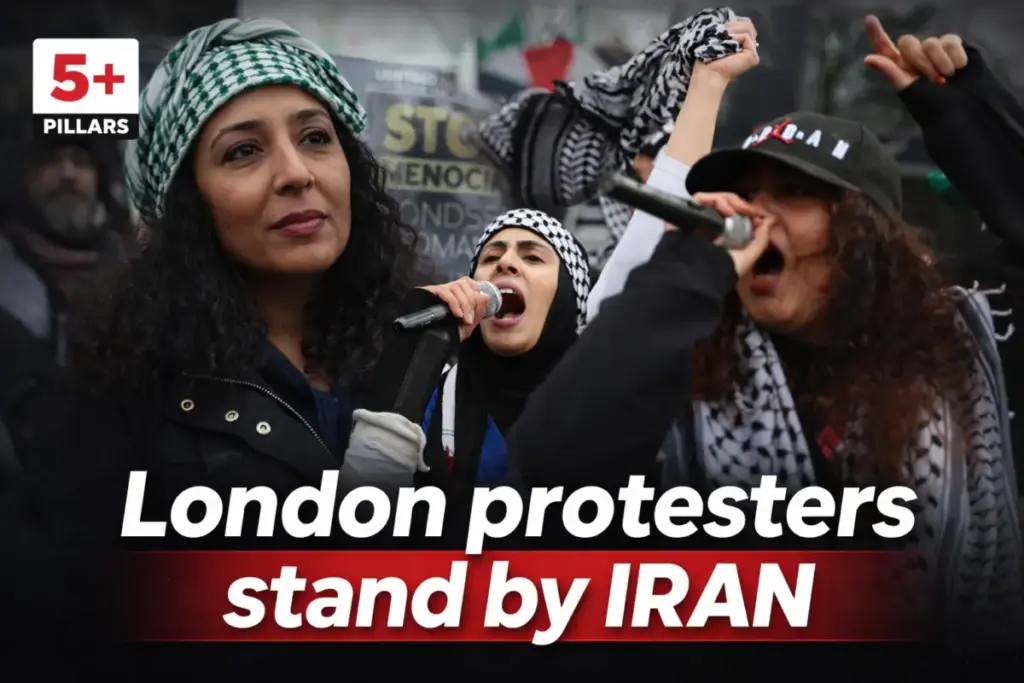
Waving an array of banners, placards, and national flags, the crowd transformed major thoroughfares into a sea of dissent. Prominent among the visual messaging were vivid Iranian and Palestinian flags, symbolizing what many participants described as an interconnected struggle against foreign intervention, military occupation, and asymmetrical warfare across the region. The atmosphere was charged with urgency as speakers took to temporary stages and megaphones to articulate a singular message: that the British government must distance itself entirely from any offensive military postures adopted by Washington and Tel Aviv.
Activists carried specific, hard-hitting slogans targeting both international and domestic political figures. Placards reading "Stop Trump’s wars," "Tell Starmer: stop arming Israel," "End nuclear hypocrisy," and "Stop bombing Iran" captured the multifaceted grievances of the demonstrators. Many participants directed their political ire toward Prime Minister Keir Starmer and his administration, demanding an immediate halt to British military exports and logistical support that they argue facilitates ongoing conflicts and civilian suffering in the Middle East.

The demonstration in the British capital reflects a mounting wave of anxiety regarding the deteriorating security situation involving Iran, the United States, and Israel. In recent months, tensions have intensified significantly following a series of direct escalations, retaliatory strikes, and heightened rhetoric among the adversarial states. For the thousands who marched through London, the threat of a full-scale war is not a distant theoretical concept but an imminent danger with catastrophic humanitarian, economic, and global security consequences.
Throughout the march, speakers and organizers repeatedly criticized Western foreign policy for double standards, particularly regarding nuclear capabilities and international law in the Middle East. They argued that decades of military interventions, economic sanctions, and covert operations by Western powers have failed to bring stability, instead plunging nations into chronic instability and devastation. The crowd echoed these sentiments with chants calling for peace, diplomacy, and an absolute rejection of foreign-imposed regime change or military aggression against sovereign nations.
The presence of diverse activist groups highlighted a growing convergence within the British anti-war movement. Organizations campaigning for Palestinian rights joined forces with anti-nuclear proliferation campaigners and traditional peace movements to stage the coordinated demonstration. This solidarity network contends that the plight of Palestinians under occupation and the mounting threats against Iran stem from the same overarching framework of imperialist intervention and unchecked militarism.

As the procession made its way past iconic London landmarks toward its designated rally point, police maintained a visible but largely observational presence, facilitating traffic management and ensuring the safety of the large crowd. Despite the charged atmosphere and the passionate rhetoric, the demonstration remained largely peaceful, characterized by sustained chanting, drumming, and speeches emphasizing international solidarity and collective resistance against war.
The protest concluded with renewed calls for ongoing mobilization, local community organizing, and increased pressure on members of parliament to debate and oppose any British involvement in hostilities against Iran. Organizers vowed that this weekend’s march would be part of a sustained campaign to keep the pressure on Downing Street, ensuring that the voices of anti-war citizens are heard loud and clear in the corridors of power as the international crisis unfolds.