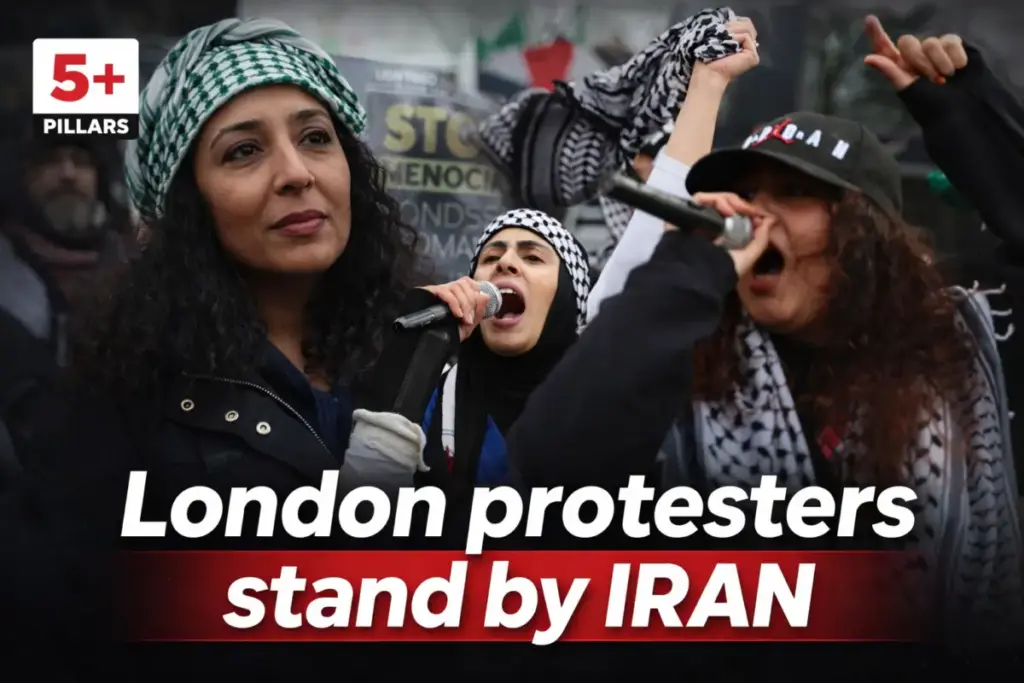
The demonstration drew a diverse crowd of anti-war campaigners, human rights advocates, community organizers, and concerned citizens who converged to express solidarity with the Iranian people. Waving a sea of placards and banners, protesters targeted the foreign policies of both Washington and London. Prominent slogans carried by the marchers included "Stop Trump’s wars," "Tell Starmer: stop arming Israel," "End nuclear hypocrisy," and "Stop bombing Iran." Alongside the political messages, a strong visual presence of Iranian and Palestinian flags fluttered above the dense crowds, drawing explicit connections between ongoing military actions across the Middle East and calling for a unified international anti-war resistance.

Speakers at the rally addressed the gathering, warning that the current trajectory of Western foreign policy in the Middle East risks plunging an already volatile region into unprecedented catastrophe. Activists criticized the British government under Prime Minister Keir Starmer for failing to take a decisive stand against military escalations, urging Downing Street to immediately halt arms exports and intelligence sharing that could facilitate strikes against sovereign nations. The atmosphere throughout the demonstration remained impassioned yet orderly, with chants echoing down major thoroughfares as police monitored the procession.
The London mobilization reflects a broader, mounting wave of international anxiety regarding the military posture of the United States and Israel toward Tehran. Anti-war networks across Europe and North America have increasingly mobilized in recent weeks, demanding immediate de-escalation, diplomatic engagement, and an end to foreign military interventions. Organizers of the London march emphasized that public opposition to the conflict is vital in pressuring Western governments to step back from military confrontation and prioritize diplomatic resolutions to long-standing geopolitical tensions.

As the geopolitical crisis continues to unfold, domestic pressure on Western leaders is expected to mount. The turnout in London highlights a significant disconnect between official government foreign policy alignments and segments of the British public who remain deeply skeptical of foreign military interventions, particularly in light of the protracted conflicts and humanitarian crises that have previously destabilized the Middle East over the past several decades. Campaigners have vowed to continue their mobilization efforts through public demonstrations, community organizing, and political lobbying until the British government commits to a definitive policy of neutrality and peace.