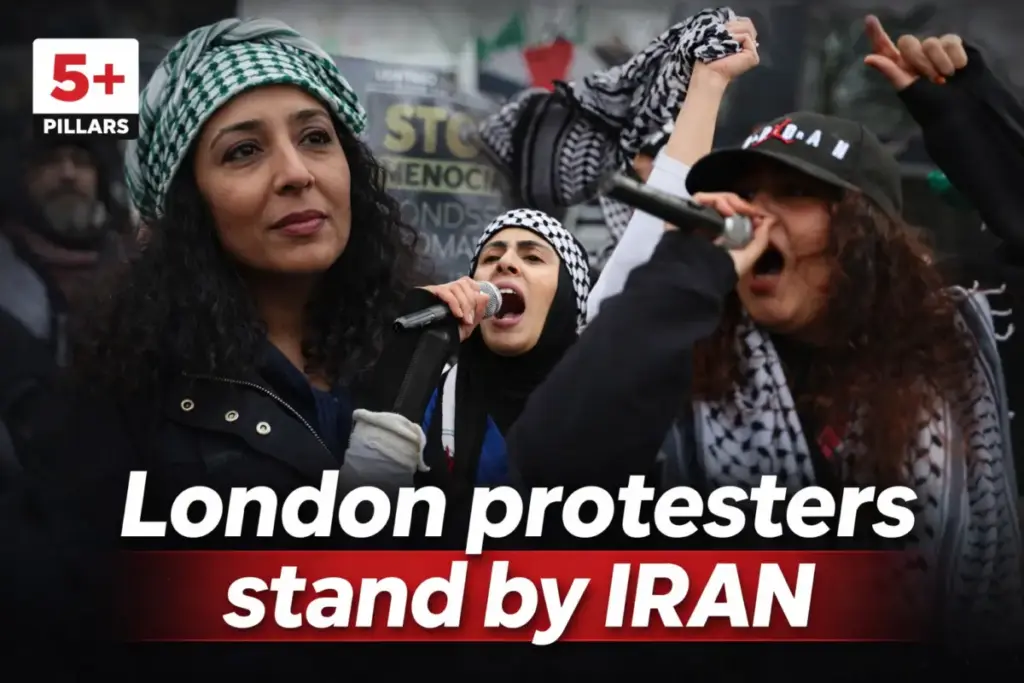
Carrying a sea of banners, placards, and national flags, the massive crowd made its way along designated protest routes while chanting slogans that called for an immediate halt to hostilities. The demonstration served as a focal point for public anger regarding the broader geopolitical tensions gripping the region, with particular emphasis placed on the direct military actions and threats directed against Tehran. Protesters expressed deep alarm over the trajectory of the ongoing conflicts, warning that continued military escalations risk igniting a catastrophic wider war with global repercussions.

A central theme of the London demonstration was the explicit demand for the United Kingdom to distance itself entirely from any involvement in the military campaigns led by Washington and Tel Aviv. Activists directed a significant portion of their political messaging toward British Prime Minister Keir Starmer and his administration, urging Westminster to adopt an independent foreign policy centered on diplomacy rather than military alignment. Demonstrators argued that British complicity, whether through logistical support, intelligence sharing, or diplomatic backing, makes the UK an active participant in what they described as an illegal and destructive assault on regional stability.
The visual display of the march was dominated by a wide array of homemade and professionally printed placards reflecting various facets of the anti-war movement. Prominent among them were signs reading "Stop Trump’s wars," highlighting ongoing anxieties regarding American foreign policy interventions, alongside direct appeals to the current British government with messages such as "Tell Starmer: stop arming Israel." Other banners addressed broader disarmament and security concerns, calling to "End nuclear hypocrisy" and demanding an immediate cessation of aerial bombardments and military strikes targeting Iran. Alongside these political statements, marchers waved numerous Palestinian and Iranian flags, symbolizing solidarity with populations affected by the broader web of regional conflicts involving Western powers and their allies.

The atmosphere during the march was described by organizers as resolute and passionate, featuring speeches from prominent anti-war figures, trade unionists, and civil rights advocates who addressed the assembled crowds at key rallying points. Speakers criticized Western double standards regarding international law and human rights, arguing that decades of military interventions, economic sanctions, and covert operations against sovereign nations in the Middle East have only produced unending human suffering, displacement, and political instability. The rallies emphasized that peace can never be achieved through military dominance or regime-change strategies, but rather through mutual respect for national sovereignty and adherence to international legal frameworks.
The London demonstration is part of an ongoing wave of public mobilization across the United Kingdom and other parts of Europe, where citizens have increasingly taken to the streets to protest Western involvement in Middle Eastern conflicts. As tensions surrounding Iran’s nuclear program and its regional alliances continue to dominate international headlines, grassroots organizations have pledged to maintain public pressure on political leaders. Activists at Saturday’s march vowed to continue organizing demonstrations, public forums, and lobbying campaigns until the British government commits to halting arms exports used in regional conflicts and actively pursues diplomatic solutions to de-escalate the crisis before it spirals further out of control.