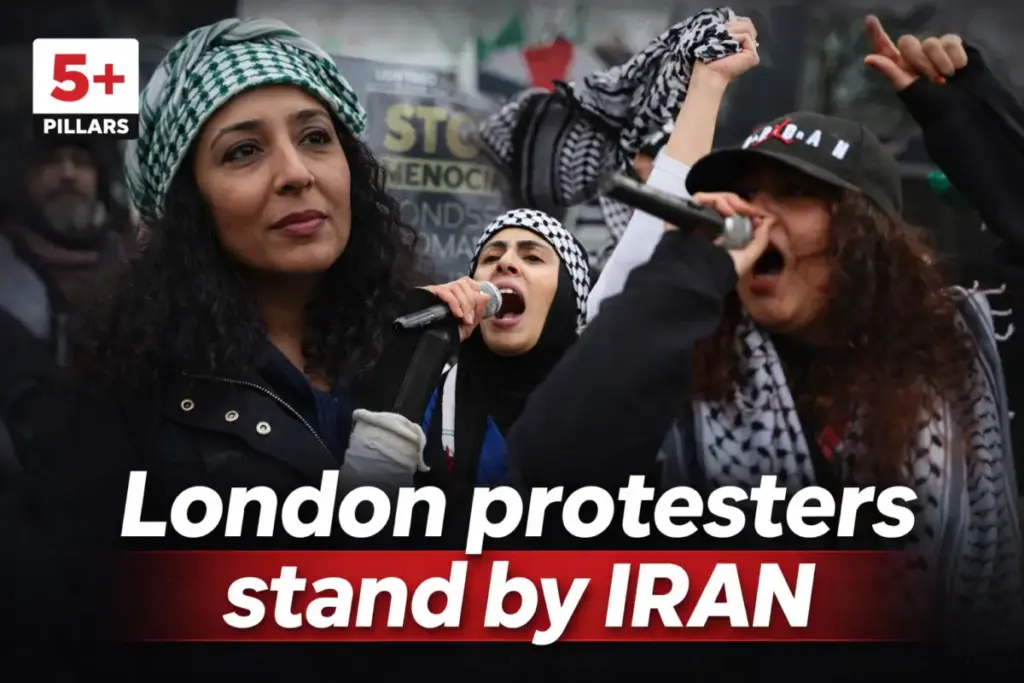
The mass mobilization, which brought together a diverse coalition of peace activists, community organizers, and concerned citizens, served as a resounding condemnation of what participants described as a reckless and dangerous escalation of hostilities in the Middle East. Carrying a sea of banners, placards, and international flags, the massive crowd marched through the British capital to express solidarity with the people of Iran and to challenge the foreign policies of Western governments that they argue are dragging the globe toward wider conflict.
The atmosphere in central London was charged with urgency as protesters chanted slogans and listened to speakers address the crowd from mobile stages. Activists waved prominent Iranian and Palestinian flags, drawing a visual parallel between ongoing regional conflicts and the shared suffering caused by Western-backed military actions. Prominent among the sea of signs were messages directly targeting key political figures and international policies. Placards reading "Stop Trump’s wars," "Tell Starmer: stop arming Israel," "End nuclear hypocrisy," and "Stop bombing Iran" captured the core grievances of the demonstration.

Organizers and speakers at the rally focused heavily on the immediate danger of a broader war, characterizing the joint military actions and aggressive postures of the United States and Israel against Iran as a catastrophic miscalculation. Activists repeatedly emphasized that working-class people in the West and across the Middle East bear the brunt of geopolitical conflicts driven by ambition, militarism, and arms manufacturing. The crowd directed sharp criticism toward the administration of U.S. leadership as well as the current British government under Prime Minister Keir Starmer, urging Westminster to immediately break away from its traditional role as a junior partner in foreign military interventions.
The demand for the United Kingdom to maintain strict neutrality and avoid any logistical, political, or military involvement in what demonstrators termed a "crazy and reckless war" formed the centerpiece of the London protest. Speakers argued that British complicity—whether through diplomatic backing, intelligence sharing, or the continued supply of weaponry used in regional conflicts—makes the UK an active participant in violations of international law. The call to "stop arming Israel" resonated strongly throughout the demonstration, linking the crisis in Iran directly to the ongoing humanitarian catastrophe and military operations in Gaza and Lebanon, which protesters view as part of an interconnected campaign of imperialist aggression.
The protest also highlighted the issue of double standards in global diplomacy, particularly concerning nuclear capabilities in the Middle East. Placards and speeches condemning "nuclear hypocrisy" pointed directly to the double standards applied by Western powers, who routinely target Iran’s civilian nuclear program while ignoring or actively shielding the undeclared nuclear arsenal possessed by regional actors such as Israel. Demonstrators argued that true peace and security in the region can only be achieved through universal disarmament, respect for national sovereignty, and an end to foreign interference.

The march through London is part of a growing wave of international resistance against the threat of a wider regional war. As tensions in the Middle East continue to reach boiling point, grassroots movements in major European capitals and cities across the globe are mobilizing to pressure their leaders into pursuing diplomatic solutions rather than military escalation. Saturday’s demonstration in the British capital underscored a deep public disconnect from official government foreign policies, proving that a significant portion of the population is actively rejecting the march toward military conflict and demanding an immediate cessation of hostilities against Iran.