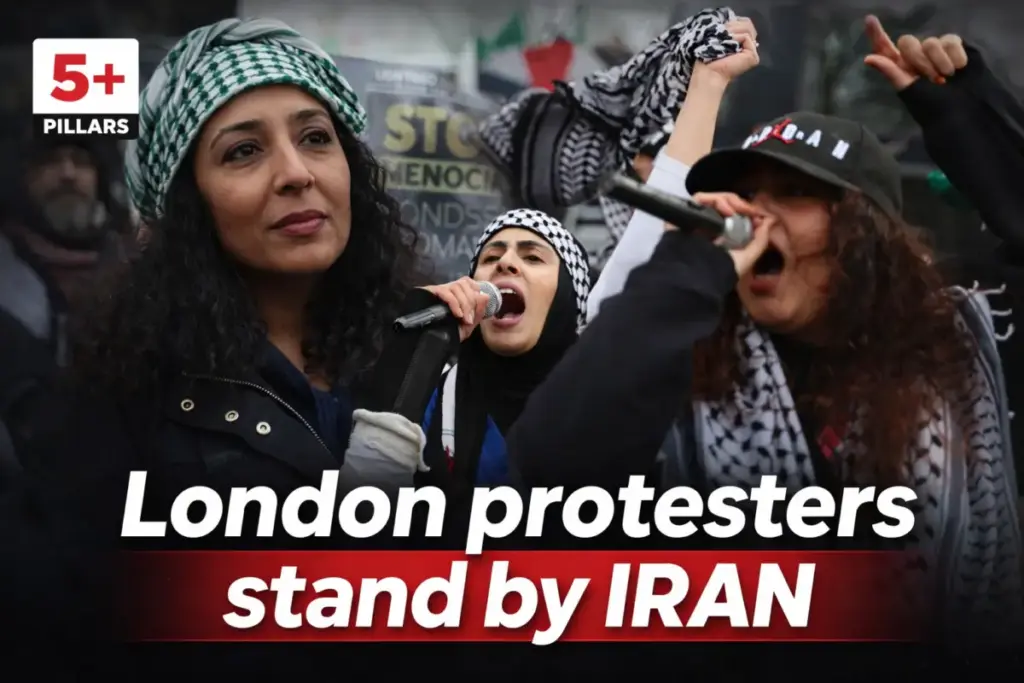
The high-turnout demonstration drew crowds carrying a vast array of banners, placards, and national flags, transforming major thoroughfares into a sea of solidarity with the Iranian people. Protesters chanted slogans demanding an immediate halt to foreign military intervention and urging British Prime Minister Keir Starmer to sever military ties and arms supplies to Israel, which demonstrators held complicit in widening regional instability.
Among the prominent messages displayed on placards throughout the march were sharp demands directed at Western leaders. Banners reading "Stop Trump’s wars," "Tell Starmer: Stop arming Israel," "End nuclear hypocrisy," and "Stop bombing Iran" captured the core grievances of the assembled masses. Alongside these political declarations, demonstrators proudly waved Palestinian and Iranian flags, underscoring a broader intersectional alignment among anti-war and anti-imperialist groups operating within the United Kingdom.

The mood among the protesters was one of urgent defiance. Speakers and organizers took to mobile sound systems to address the immense crowd, warning that ongoing Western aggression against Iran risks sparking a catastrophic global conflict that could engulf the entire region and beyond. Activists emphasized that ordinary citizens across the globe have no interest in participating in or condoning foreign wars driven by geopolitical ambitions rather than the welfare of human populations.
A central theme of the London protest was direct scrutiny of the United Kingdom’s diplomatic and military posture. Demonstrators argued that successive British administrations have consistently enabled illegal military campaigns and human rights abuses in the Middle East through unconditional diplomatic backing and the continued licensing of arms sales to key belligerents. Particular focus was placed on Prime Minister Keir Starmer’s administration, with protesters demanding a fundamental shift in UK foreign policy to prioritize international law, human rights, and peaceful diplomacy over military alignment with Washington and Tel Aviv.
The mobilization in London is part of a growing wave of international dissent opposing the military trajectory pursued by the United States and Israel regarding Iran’s sovereignty and nuclear program. Activists at the march stressed the hypocrisy of Western states possessing and modernizing their own nuclear arsenals while launching aggressive campaigns against regional actors under the guise of non-proliferation. They argued that true security in the Middle East can only be achieved through mutual disarmament, respect for national sovereignty, and an immediate cessation of foreign bombings and economic warfare.

As the march proceeded smoothly under the watchful eye of local law enforcement, organizers vowed to continue their grassroots campaign until the British government heeds public demand and distances itself from any military adventurism targeting Iran. The demonstration concluded with a series of speeches calling for sustained local organizing, educational outreach, and continued public pressure on lawmakers to ensure the United Kingdom remains entirely clear of involvement in what participants repeatedly characterized as an unjust and perilous war.