The question of the origins of the Quran and the source of Prophet Muhammad’s teachings has long been a subject of theological discussion, academic inquiry, and interfaith dialogue. In an episode of the Eternal Challenge series, prominent scholar Sheikh Sohaib Saeed directly tackles this profound inquiry, addressing historical and contemporary allegations that suggest the Prophet was instructed by human teachers or that he merely compiled and quoted from previous religious scriptures.
Through a careful examination of historical context, internal textual evidence, and the nature of prophetic revelation, Sheikh Saeed unpacks the arguments surrounding the authorship and origin of the Islamic holy book. The discussion forms part of a broader multimedia educational initiative designed to explore the miraculous and literary nature of the Quran, presenting arguments that challenge external attribution theories and highlight the unique characteristics of the scripture.

Addressing Allegations of Human Instruction
A central focus of Sheikh Saeed’s presentation is the refutation of claims suggesting that Prophet Muhammad learned the contents of the Quran from contemporary clergymen, scholars of previous traditions, or human mentors. Throughout history, various critics of Islam have posited that the Prophet must have acquired his knowledge of biblical narratives, theological concepts, and moral laws from external human sources during his travels or interactions with people of other faiths in the Arabian Peninsula.
Sheikh Saeed addresses these assertions by examining the historical reality of seventh-century Arabia and the personal background of Prophet Muhammad. Known historically as an unlettered man—one who could neither read nor write—the Prophet lived in a society predominantly characterized by oral poetry and tribal traditions rather than extensive theological scholarship or widespread literacy in scriptural languages. The argument presented in the series emphasizes that introducing a text of such profound theological depth, linguistic brilliance, and legal comprehensiveness would have been historically and humanly implausible for an individual without formal education or access to extensive libraries of previous scriptures.
Furthermore, the scholarly discussion highlights that the Quran itself addresses these very allegations made by its contemporary critics. The text challenges skeptics to produce a single chapter like it and points to the Prophet’s unlettered status as a sign of divine authorship, arguing that such a comprehensive and transformative message could only originate from a transcendent source rather than human instruction.

The Significance of Prophecy in the Quran
Beyond addressing the origins of the text, Sheikh Saeed’s discussion delves into the critical role of prophecies within the Quran. In theological and historical frameworks, a prophecy is defined as foretold news regarding future events that are entirely beyond human calculation, foresight, or educated guessing.
Unlike wise predictions or strategic forecasts based on current political or social trends, true prophecies operate outside the realm of human probability. The presentation notes that prophecies serve as one of the vital, objective proofs for evaluating the truthfulness of a prophetic mission. When a text details specific future occurrences with absolute accuracy—such as historical victories, geopolitical shifts, or unfolding societal developments—it provides verifiable markers that invite intellectual scrutiny from both believers and skeptics alike.
The Quran contains numerous instances where future events were explicitly predicted long before they transpired. Islamic scholarship has traditionally viewed these passages not merely as literary devices, but as substantive evidence supporting the divine origin of the message. By examining how these predictions unfolded in historical reality, the series encourages viewers to reflect on the epistemological foundation of faith and the rational proofs associated with prophethood.

The Eternal Challenge Series
The video featuring Sheikh Sohaib Saeed is part of the ongoing Eternal Challenge series, a comprehensive educational project exploring various dimensions of the Quranic text, its preservation, its literary inimitable nature, and its impact on human history. The series aims to provide viewers with structured, academically grounded responses to common questions and criticisms regarding Islam’s foundational scripture.
Previous and concurrent episodes in the series cover a wide range of foundational topics, beginning with an exploration of the fundamental definition and nature of the Quran itself in "The Eternal Challenge: What is the Quran?" This introductory segment establishes the framework for understanding the text as an uncreated speech of God delivered to humanity through the final messenger.
Subsequent installments delve deeper into the dynamic relationship between the Prophet and the scripture. In episodes such as "Eternal Challenge: Prophet and Book of Allah," the series examines how the lives of the prophets and the revelation of the scriptures are intertwined, emphasizing that the prophetic office is defined by the transmission of divine guidance rather than personal authorship.
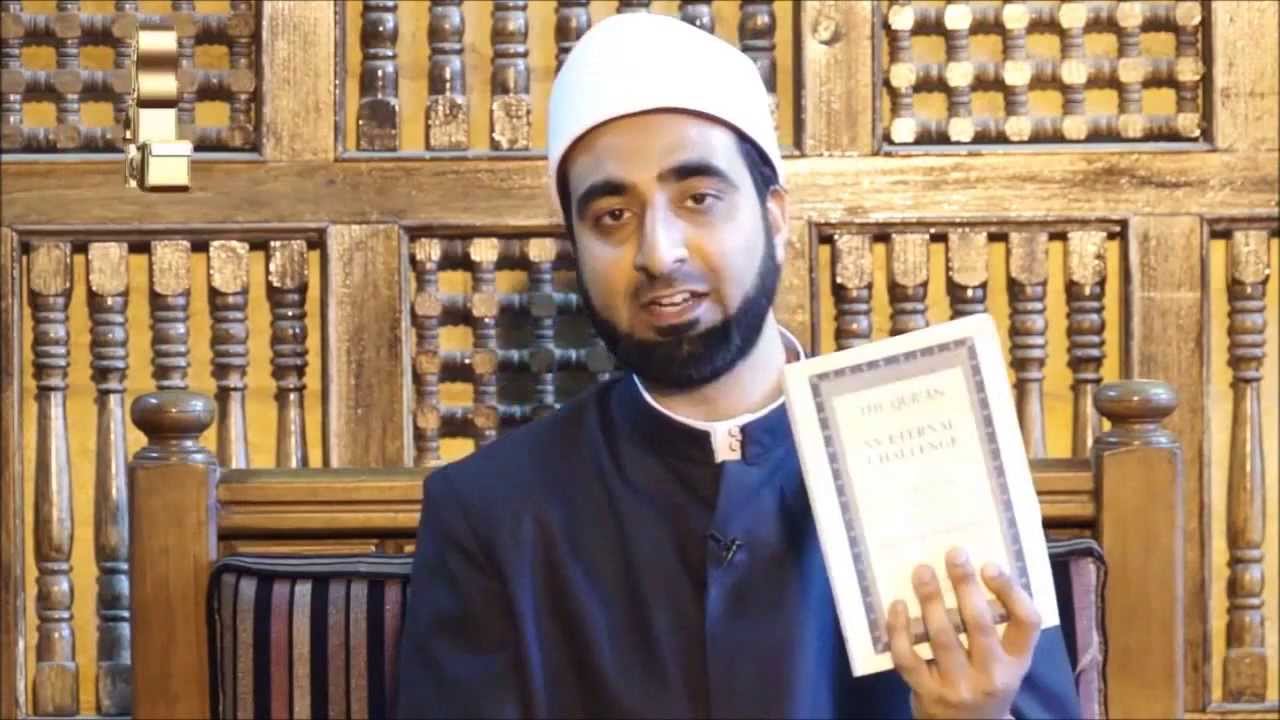
Addressing the core premise of human creativity versus divine revelation, another key installment in the series—titled "The Prophet Didn’t Make Quran… Rather, Quran Made Him"—shifts the perspective from external allegations to the transformative internal impact of the revelation. This segment argues that the Quran fundamentally shaped the character, worldview, and mission of Prophet Muhammad, serving as an active, guiding force that elevated his community and established a lasting civilizational legacy.
Through these detailed explorations, scholars like Sheikh Sohaib Saeed continue to engage contemporary audiences, bridging traditional Islamic scholarship with modern forms of media outreach to address complex theological questions in an accessible and structured manner.