In the latest installment of the widely followed educational and spiritual video series The Eternal Challenge, prominent scholar Sheikh Sohaib Saeed tackles one of the most foundational and recurring inquiries regarding the origins of Islam: Who taught Prophet Muhammad the Quran? The episode offers a rigorous academic and theological examination into the historical allegations and counter-arguments surrounding the revelation, directly addressing claims that the Prophet of Islam was tutored by contemporary religious figures or that he simply borrowed and compiled narratives from earlier sacred scriptures.

The ongoing series, hosted and produced to engage contemporary audiences with deep theological concepts, focuses heavily on the divine nature of the Quran. By breaking down historical contexts and textual analysis, Sheikh Sohaib presents a compelling case for the independent and miraculous origin of the Islamic scripture, maintaining a professional and informative journalistic tone throughout the presentation.
Examining Historical Allegations and the Source of Revelation
Throughout history, critics and skeptics of Islam have attempted to attribute the composition of the Quran to external human influences. Among the most common assertions addressed by scholars over the centuries—and revisited in this episode—are claims that Prophet Muhammad learned the stories, laws, and theological frameworks of the Quran from Christian monks, Jewish rabbis, or other religious scholars residing in or passing through the Arabian Peninsula during the 7th century.

In the video, Sheikh Sohaib systematically refutes these allegations. He highlights the profound cultural, linguistic, and historical barriers that existed in pre-Islamic Arabia, noting that an unlettered man living in a predominantly oral society could not simply manufacture a text possessing unmatched literary excellence, complex legislative frameworks, and precise historical accounts without prior formal education or access to extensive libraries—resources that were entirely absent in his immediate environment. Furthermore, the scholar emphasizes that the character, integrity, and lifelong reputation of Prophet Muhammad, even among his fiercest opponents who famously referred to him as Al-Amin (The Trustworthy), render such accusations entirely unfounded.
Another frequent claim addressed in the discourse is the notion that the Prophet merely quoted or paraphrased previous scriptures, such as the Torah and the Gospel. Sheikh Sohaib explains that while the Quran confirms the divine origins of earlier revelations and shares overarching thematic narratives with them, it presents these stories with distinct theological corrections, unique rhetorical styles, and specific moral focal points that diverged sharply from the corrupted or altered traditions circulating in the region at that time.

The Role of Prophecies as a Proof of Truthfulness
Moving beyond the origins of the text, the episode shifts its focus toward an intrinsic characteristic of the Quranic text: its inclusion of verified prophecies. Within the framework of Islamic theology and comparative religion, prophecy—defined as foretold news concerning future events that are completely beyond the realm of human deduction, probability, or educated guessing—serves as one of the most vital empirical proofs for the truthfulness of a prophet.
Sheikh Sohaib elaborates on how the Quran contains numerous predictions regarding future geopolitical developments, historical outcomes, and human behaviors that subsequently unfolded precisely as foretold. Unlike vague astrological predictions or generalized wise guesses based on current political climates, these prophecies carried specific details that defied contemporary expectations. For instance, the Quran’s commentary on the impending victory of the Byzantines over the Persians after a devastating defeat was a forecast that caught observers by surprise, given the weak and fractured state of the Byzantine Empire at the moment the verse was revealed.
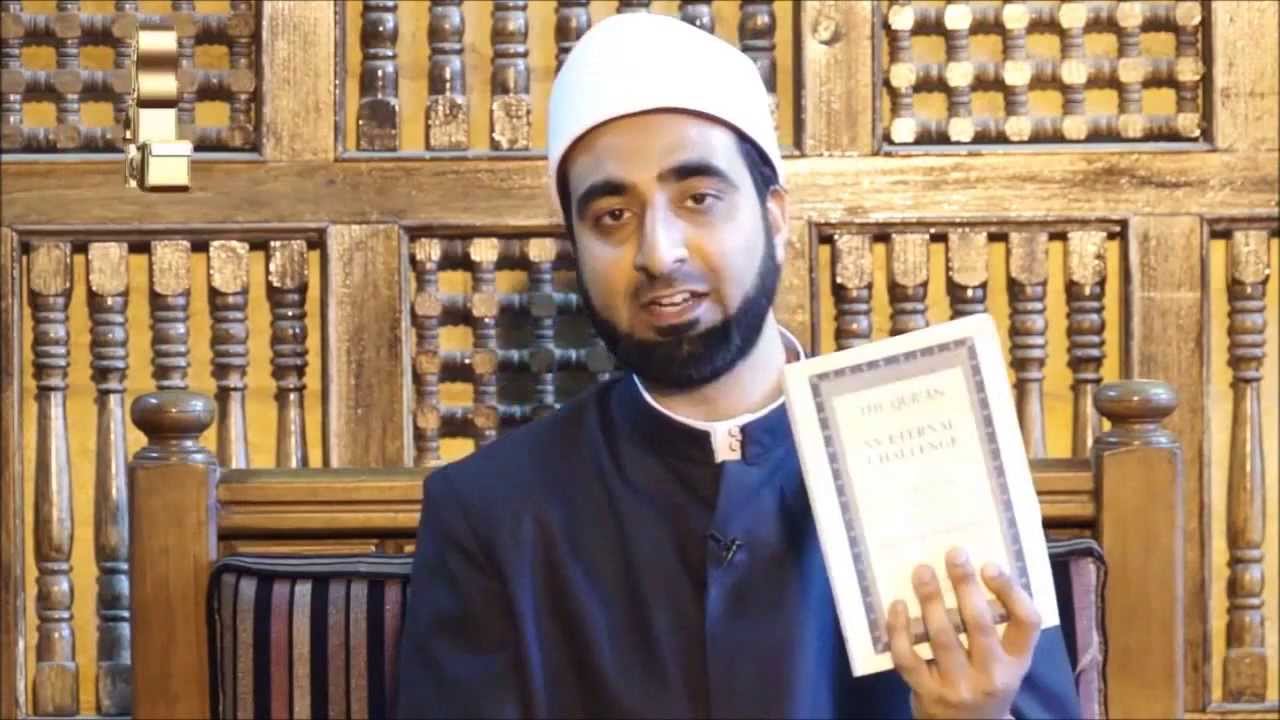
By analyzing these predictive elements, the series argues that the ability to accurately foretell unseen future events reinforces the assertion that the source of the Quran transcends human intellect and temporal limitations, pointing directly to divine authorship.
Continuing The Eternal Challenge Series
This latest episode builds upon a broader framework established by Sheikh Sohaib Saeed in The Eternal Challenge, a comprehensive video series designed to explore the miraculous nature of the Quran from multiple analytical angles. Previous episodes in the curriculum have tackled foundational questions such as defining the exact nature of the Quran, examining the dynamic relationship between the Prophet and the Book of Allah, and investigating whether it was possible for Muhammad to have authored the text himself.
In earlier discussions, the series has advanced the perspective that rather than the Prophet shaping and creating the Quran to suit personal or societal agendas, it was the continuous, transformative experience of the Quranic revelation that shaped the character, resilience, and mission of the Prophet himself. Through structured visual media, social media outreach via platforms like Facebook, and partnerships with educational web portals such as About Islam, the series continues to reach a diverse global audience seeking deep, scholarly insights into Islamic theology and Quranic studies.