The origins of the Quran and the manner in which it was conveyed to Prophet Muhammad have long been subjects of academic study, theological discussion, and historical inquiry. In a recent installment of the popular educational series The Eternal Challenge, prominent scholar Sheikh Sohaib Saeed addresses one of the most frequently raised historical questions regarding Islam’s holy book: Who actually taught Prophet Muhammad the Quran?

Throughout the episode, Sheikh Saeed examines and systematically refutes various long-standing allegations and external claims suggesting that the Prophet was tutored by contemporary religious figures, clergymen, or scholars of preceding faiths. Furthermore, the discussion tackles the hypothesis that the foundational texts of Islam were merely derivative works compiled by quoting or adapting earlier scriptures. By analyzing the linguistic, historical, and structural nature of the Quran, the series seeks to provide viewers with a comprehensive understanding of the text’s divine origin and the unique circumstances surrounding its revelation.
Addressing Historical Allegations and External Influences
The debate surrounding the human versus divine authorship of the Quran is not a modern phenomenon; rather, it traces back to the very era of Prophet Muhammad in seventh-century Arabia. Detractors and skeptics of the time occasionally propagated the narrative that the Prophet received instruction from foreign individuals, Christian monks, Jewish scholars, or local practitioners of various traditions residing in or passing through the Arabian Peninsula.

In this episode of The Eternal Challenge, Sheikh Saeed unpacks these historical claims, evaluating the feasibility and internal consistency of such theories. He highlights the stark contrast between the socio-cultural realities of pre-Islamic Arabia—a predominantly oral society with limited widespread literacy—and the sophisticated theological, legal, and narrative frameworks presented within the Quran. The lecture emphasizes that attributing the authorship or instruction of the Quran to mortal teachers fails to account for the profound linguistic miracle and the unique historical context in which the text emerged. Rather than reflecting contemporary teachings or borrowed doctrines, the Quran presents a distinct worldview that challenged both the polytheistic beliefs of the Quraysh and the sectarian divisions of neighboring empires.
The Significance of Prophecies Within the Quran
Moving beyond the question of human instruction, the discussion also delves into the critical role of prophecies contained within the Quran. Prophecy—defined as definitively foretold news regarding future events—holds a unique and vital position in the verification of prophetic missions. Sheikh Saeed distinguishes genuine prophecy from ordinary human prediction, which is typically based on educated guesses, statistical probability, or political foresight.

In theological discourse, verified prophecies serve as one of the primary evidentiary proofs for the truthfulness of a messenger. The Quran contains numerous references to future events that were seemingly improbable or impossible at the time of their revelation. The subsequent realization and historical fulfillment of these foretold events became a central pillar for early believers and a subject of enduring scholarly examination. By exploring how the Quran engages with future occurrences, the series underscores the internal coherence and divine claims set forth by the text itself.
Continuing the Exploration of The Eternal Challenge
The episode featuring Sheikh Sohaib Saeed is part of a broader multimedia initiative designed to make complex theological and historical concepts accessible to contemporary audiences. The Eternal Challenge series has consistently explored various facets of the Quranic text, its transmission, and its lasting impact on world history and civilization.
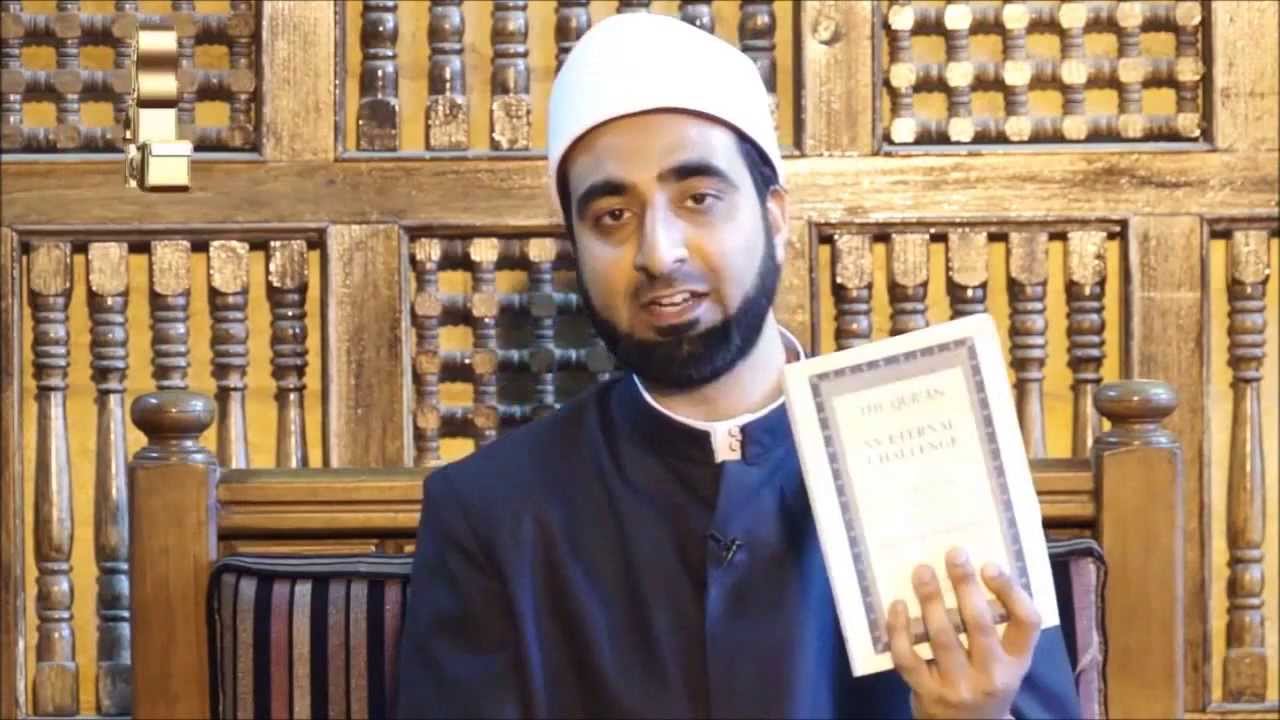
Previous installments in the series have laid foundational groundwork for viewers, examining core questions about the nature of the Quran, the relationship between the Prophet and the divine message, and the structural integrity of the scripture. For instance, earlier discussions have addressed fundamental themes such as the definition of the Quran as an eternal text, the dynamic between the Prophet and the Book of Allah, and the intellectual arguments surrounding whether the text could have been authored by a human mind. Through these structured explorations, scholars aim to provide nuanced, well-reasoned responses to common skepticism while offering deeper educational resources for those seeking to understand Islamic theology and history.