The alarming developments unfolded as European military leaders and defense officials gathered in the region for high-level strategic exercises. These drills were designed to prepare allied forces for potential post-war stabilization missions in Ukraine, adding profound geopolitical weight to the timing of the airspace breaches.
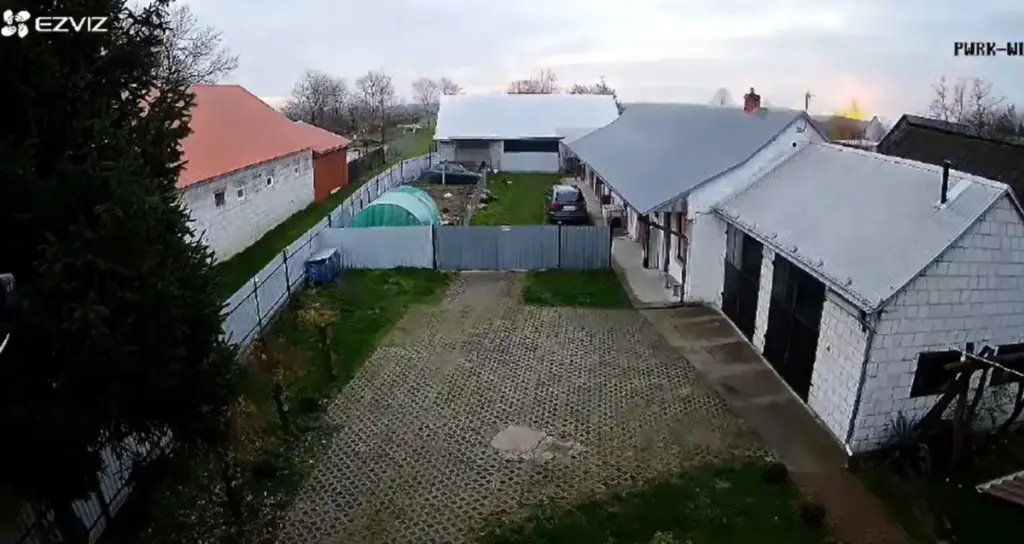
Speaking at an emergency news conference on Friday, Polish Defence Minister Wladyslaw Kosiniak-Kamysz confirmed that active investigations were currently under way at three distinct impact and debris sites across eastern Poland. The locations include Nowy Lipowiec, situated roughly 60 kilometers (37 miles) from the Poland-Ukraine border; Molodycz, located about 50 kilometers (31 miles) to the south; and Rudnik nad Sanem, approximately 50 kilometers to the west.
Kosiniak-Kamysz stated that preliminary findings indicate the three airborne objects that penetrated Polish airspace likely comprised two missiles and one unmanned drone. The potential crash site near Nowy Lipowiec lies approximately 76 kilometers (47 miles) from where European troops were actively participating in military exercises. These drills are part of broader preparations for a future post-war mission inside Ukraine, which is intended to help stabilize the war-torn nation and rebuild its military capabilities once active hostilities finally conclude.
The defense minister underscored that the simultaneous occurrence of these incurs
ions alongside major international military exercises could not be written off as a mere coincidence. He noted that the exercises coincided with the presence of defense ministers from France, the United Kingdom, and the Baltic states, as well as eight chiefs of staff representing key regional allies.
"These exercises, combined with the presence of defense ministers from France, the United Kingdom, and the Baltic states — along with eight chiefs of staff, including those from our key allies — suggest that the convergence of these events is no accident," Kosiniak-Kamysz told reporters. In response to the escalating security threat, the defense minister confirmed that Warsaw would formally request additional support from NATO to bolster the defense and security architecture along the military alliance’s vulnerable eastern flank.
The overnight airspace violations occurred against a broader backdrop of intense regional violence. Hours before the Polish announcement, Russian forces unleashed a massive retaliatory barrage of missile and drone strikes across Ukraine, targeting Kyiv and surrounding regions. The devastating attacks resulted in the deaths of at least eight people, left dozens more injured, and caused significant structural damage to vital bridges, transport infrastructure, and civilian facilities.

Reaction to incursion
International condemnation was swift as leaders across Europe and within NATO headquarters reacted to the overnight violations. NATO Secretary-General Mark Rutte took to social media platform X to describe the incident as "clearly dangerous," emphasizing that the transatlantic alliance stood in absolute solidarity with Poland.
Prime Minister Tusk announced that Secretary-General Rutte is scheduled to travel to Warsaw on Saturday for high-level consultations. Tusk reiterated that Polish authorities harbor no doubts regarding the origin of the hardware that breached their borders, asserting that the evidence points squarely to Russia.
"It seems we are dealing with an intentional provocation," Tusk said during his address. "Today, it is clearer than ever before that Poland must participate in decisions and discussions regarding the future of Ukraine and security in Europe."
British Prime Minister Andy Burnham also added his voice to the chorus of condemnation, speaking at an EU-UK summit news conference held in Brussels. Burnham labeled Russia’s violation of Polish airspace as "utterly unacceptable" and reaffirmed London’s steadfast commitment to supporting Kyiv.
"Europe will not be deterred from our support for Ukraine," Burnham stated. "We will not allow [Russian President Vladimir] Putin to divide our continent, and we recognise that the front line in Ukraine is the front line for freedom and democracy everywhere."
The incursions in Poland highlight a persistent and growing danger along NATO’s eastern perimeter. Throughout the protracted war in Ukraine, stray drones, missile fragments, and errant projectiles have repeatedly drifted across international borders into the airspace of neighboring NATO member states. These recurring incidents have continuously fueled regional tensions, strained diplomatic channels, and stoked widespread fears that the devastating conflict could eventually spill over its borders and draw the wider Western military alliance into direct confrontation.
As investigations at Nowy Lipowiec, Molodycz, and Rudnik nad Sanem proceed, Polish authorities and their international partners remain on high alert, assessing the full scope of the overnight breach as diplomatic fallout continues to mount across Europe.