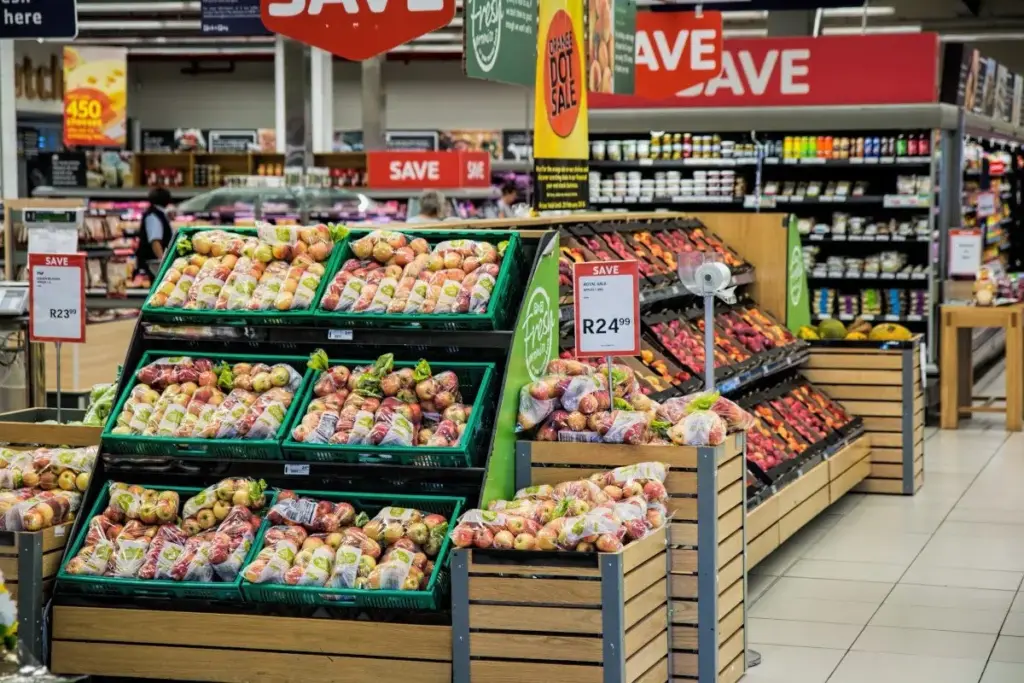
For millions of non-Muslim shoppers across the globe, buying halal food is not a conscious religious choice. More often than not, it is simply a matter of convenience: the product is already there on the supermarket shelf, neatly arranged at the butcher counter, or sitting in the meat case—frequently with no prominent religious label at all. Yet when non-Muslim consumers do choose halal products on purpose, academic research points to a familiar set of motivators. Peer-reviewed studies highlight perceived food quality and cleanliness, a growing familiarity with Muslim neighbors and diverse international cuisines, and a strong overlap with ethical, organic, or clean-label dietary preferences. At the same time, animal welfare remains a deeply polarizing factor that cuts both ways, drawing some consumers toward halal options while pushing others away.
This dynamic matters immensely because the modern halal food market has expanded far beyond its traditional religious base. According to the State of the Global Islamic Economy Report 2025/26 by DinarStandard, Muslim consumers spent an estimated $1.53 trillion on food and beverages in 2024, a figure projected to surge to $2.06 trillion by 2029. This economic footprint is built upon a vast global demographic foundation, with the Pew Research Center noting that Muslims numbered approximately two billion people in 2020, accounting for roughly 26 percent of the world’s population. Crucially, neither of these figures accounts for the millions of non-Muslim consumers who routinely purchase the very same products.
It is this second group of shoppers that ultimately determines whether a food brand seeking halal certification remains a niche product or breaks successfully into the mainstream. For food manufacturers, major meat packers, and retail giants operating in the United States, Europe, and Australia, this reality shapes three critical business decisions: whether to invest in formal certification, whether to print a recognizable halal logo on the package, and how to respond if a customer advocacy campaign unexpectedly turns hostile against the brand.
Measuring the precise volume of non-Muslim halal purchases remains a challenge, as no official government statistics track this spending directly in any country. Instead, analysts must rely on indirect evidence, including national slaughter data, corporate estimates, and academic consumer surveys, each of which comes with distinct limitations.
The strongest indirect measure originates from the United Kingdom. According to the Food Standards Agency’s 2022 slaughter sector survey, an overwhelming 72.3 percent of the sheep slaughtered in England and Wales during the survey week in March 2022 were killed using the halal method. By comparison, data from the Office for National Statistics reveals that Muslims made up just 6.5 percent of the population of England and Wales in the 2021 census. While a portion of that lamb is ultimately exported, the stark statistical gap strongly implies that many non-Muslim households in Britain regularly consume halal-slaughtered lamb, frequently without realizing it.
Brand-level estimates point toward a similar conclusion. Adnan Durrani, founder of the American frozen-food brand Saffron Road, estimated in a 2020 interview with Food Dive that roughly 85 percent of his consumers are not halal consumers or American Muslims. At the time, Food Dive reported that the brand was distributed across approximately 25,000 grocery stores, including major footprints in roughly 4,300 Walmart locations. While such figures represent corporate estimates rather than independently audited data, they underscore a broader commercial trend.
Academic literature consistently demonstrates that non-Muslim consumers who possess even a basic awareness of halal food are remarkably open to purchasing it. Furthermore, individual attitudes and social circles tend to predict purchase intentions far more reliably than theological knowledge. The vast majority of these peer-reviewed studies originate from Malaysia and Singapore, where non-Muslim populations live in close proximity to a Muslim majority or a large minority.
For instance, a 2010 study by Golnaz and colleagues published in the International Food Research Journal surveyed 400 non-Muslim shoppers in Malaysia’s Klang Valley, finding that respondents frequently linked halal concepts to food safety and environmental friendliness. A subsequent 2015 study by Haque and researchers in the Journal of Islamic Marketing, involving 500 non-Muslim consumers in Malaysia, determined that personal attitudes, subjective norms regarding what friends and family think, and perceived behavioral control all shaped perceptions toward buying halal food. Similar conclusions were reached by Noor and co-authors in Singapore in 2016, and by Adirestuty and other researchers in Indonesia in 2021.
Expanding the geographic scope, a 2019 study by Stephen Wilkins published in the Journal of Islamic Marketing examined 1,100 consumers across Canada, Spain, and the U.K. Wilkins found that cosmopolitan consumers tended to judge halal products much more favorably, whereas ethnocentric consumers and those with a strong sense of national identification viewed them less favorably. Nonetheless, researchers acknowledge important caveats: most study samples are relatively small or rely on convenience groups like university students, and almost all measure stated intentions rather than actual purchase receipts. Comprehensive published research on non-Muslim halal buyers in the United States remains comparatively sparse.
Examining the primary drivers behind non-Muslim purchases, academic and market evidence strongly supports product availability and perceived quality, while price ranks as the least influential factor.
The first major driver is availability, as halal is frequently established as the default option by suppliers, restaurants, or retailers. The U.K. lamb statistics illustrate this phenomenon clearly. A similar commercial test occurred in France in 2010, when the fast-food burger chain Quick converted 14 additional locations to all-halal menus, bringing its total number of halal-serving French restaurants to 22. Valerie Raynal, Quick’s head of communications at the time, described the trial branches as a notable success, noting that every customer walking through the door—Muslim or otherwise—consumed halal meat. In the United States, a similar pattern unfolds when major national retailers stock halal product lines. Reporting on American retail practices shows giants like Walmart and Costco carrying halal lamb, chicken, and ready meals that sit alongside conventional products in standard aisles, readily picked up by any shopper.
The second driver involves perceived quality, cleanliness, and regulatory oversight. Non-Muslim shoppers frequently interpret a halal certification logo as an indicator of enhanced inspection and hygienic standards. In the Malaysian study by Golnaz, local non-Muslims associated halal with food safety, although that correlation was only weakly significant in the authors’ statistical model. Experts emphasize that consumer perception is not synonymous with food safety proof. No peer-reviewed study demonstrates that halal-certified food is inherently safer than comparable conventional food. Halal certification strictly audits compliance with Islamic dietary laws, such as the exclusion of pork and alcohol and adherence to specific slaughter methodologies. In the United States, comprehensive government food safety inspections apply regardless of religious certification, as the Federal Meat Inspection Act mandates that all commercially sold meat be inspected and passed by the U.S. Department of Agriculture’s Food Safety and Inspection Service. What certification does provide is a documented, verifiable chain of custody, wherein a certified authority audits ingredients, suppliers, and production lines.
The third driver is the strong overlap between halal products and other ethical or clean-label claims, such as antibiotic-free meat, organic certification, or non-GMO status. When Saffron Road entered Whole Foods stores roughly a decade prior to 2020, the chain carried few other frozen entrees made with antibiotic-free meat. In such instances, a mainstream shopper may be drawn primarily to the antibiotic-free claim while inadvertently purchasing a halal product. This frequent overlap makes isolating consumer motives difficult, as studies rarely control for secondary labels on the same packaging.
The fourth driver is taste, cuisine, and cultural familiarity. Much of the non-Muslim spending on halal food is, in practice, spending on distinct ethnic cuisines, including Middle Eastern, South Asian, Turkish, Malaysian, and North African dishes. Halal food carts in New York City, kebab shops in London and Berlin, and street food stalls in Singapore cater to diverse demographics. Academic research supports this familiarity effect, noting that cosmopolitan consumers who enjoy international products judge halal food more favorably.
The fifth and final driver is price, which proves to be the weakest factor influencing purchase decisions. An extensive inquiry by Australia’s Senate Economics References Committee, published in its December 2015 report on third-party food certification schemes, concluded that evidence overwhelmingly suggested halal certification does not drive up retail food prices, given that certification costs for large manufacturers are minimal. This finding indicates that halal status is generally price-neutral for packaged goods, though fresh specialty meats may command varied pricing.
Animal welfare remains the most contentious issue, acting simultaneously as a reason some non-Muslims buy halal and a primary reason others actively avoid it. Certain consumers choose halal believing the slaughter rules are inherently more humane, while others object because a portion of halal meat originates from animals that were not stunned prior to the cut.
Official data illustrates the nuance surrounding stunning practices. The U.K. Food Standards Agency’s 2022 survey found that approximately 97 percent of halal-slaughtered cattle in England and Wales were stunned before slaughter. However, about 31 percent of halal-slaughtered sheep were not stunned. For poultry, roughly 85 percent of halal-slaughtered meat chickens were stunned. Scholars and certifiers remain divided on whether reversible stunning is compatible with strict interpretations of halal slaughter, while regulatory bodies across Europe continue to debate the welfare implications of slaughter without stunning. Notably, the Court of Justice of the European Union ruled in December 2020 that member states may legally require reversible stunning prior to religious slaughter, upholding a ban enacted in Belgium’s Flemish region.
Beyond consumer preferences, some non-Muslim groups have organized active opposition campaigns against halal products, proving that a religious certification logo can alienate certain shoppers just as easily as it attracts others. The most visible campaigns occurred in Australia and France. In Australia, dairy producer Fleurieu Milk & Yoghurt temporarily canceled its halal certification in November 2014 following a coordinated social media push, putting an export deal with Emirates at risk before reinstating certification in May 2015. Other Australian food companies faced similar pressure, though the 2015 Senate committee report ultimately found no direct link between halal certification and terrorism funding, a conspiracy theory frequently pushed by anti-halal activists. In France, political figures vocally criticized fast-food conversions to halal menus, reflecting underlying cultural tensions. Academic research by Stephen Wilkins supports these observations, confirming that consumer ethnocentrism and intense national identification correlate negatively with the acceptance of halal products.
For food brands navigating these complex consumer landscapes, market evidence suggests that halal certification generally broadens market reach with minimal operational cost, though the decision to display an on-pack logo requires careful strategic evaluation. The appropriate labeling strategy depends heavily on the product category, the target market, and the brand’s visibility to activist campaigns.
Industry experts recommend that businesses carefully select a certifier whose seal enjoys recognized authority within target export and domestic markets. Furthermore, brands are advised to transparently communicate the meaning of their certification and their specific policies regarding stunning on corporate websites, as animal welfare inquiries remain the most frequent source of pushback from non-Muslim consumers. Finally, food manufacturers are encouraged to accurately measure their consumer base rather than relying on assumptions, ensuring that commercial strategies align with the actual demographics driving sales.