Long before concert halls became glowing seas of raised smartphones and instantaneous cloud uploads, gig photography was an exercise in deliberate patience. In the 1990s and 2000s, capturing a live performance was never an automatic reflex or an endless roll of digital frames; every surviving image exists simply because a photographer made a conscious, calculated decision to press the mechanical shutter at one exact, unrepeatable split second.
This profound shift in how we record and experience live music sits at the heart of Lost Music Venues, a major display curated by Harriet Reed within the Theatre and Performance Galleries, running from May 30, 2026, to October 30, 2027. Featuring around 50 "lost" performance spaces that operated from the 1980s through the 2010s, the exhibition celebrates these cultural incubators as vital centres of grassroots creativity, while simultaneously shining a stark light on the immense economic and social challenges currently threatening the grassroots music sector.
As part of an ongoing academic collaboration, students on the "Curation and Heritage" module at the University of Liverpool, led by Dr Marion Leonard, have contributed written responses examining the objects and archives featured in the exhibition. In one such response, student Zanna Shah turns her lens toward the evocative gig photography of Gregory Nolan, whose work immortalized the gritty, vibrant indie music scene in London during the early 2000s.
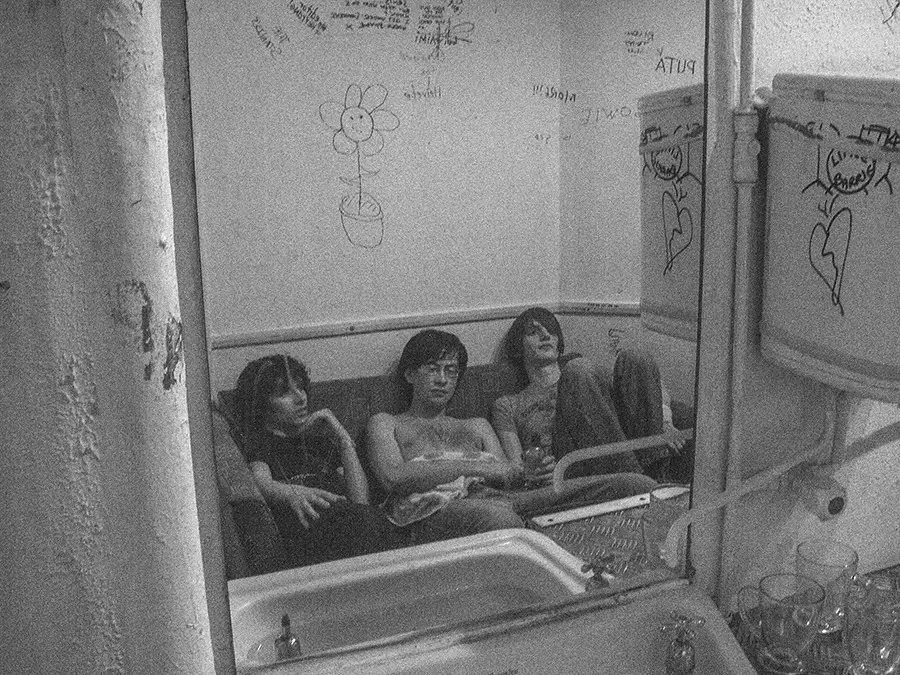
Nolan’s archival work provides a rare window into an era that has largely vanished from the physical landscape of modern cities. Among the standout pieces in the display are two backstage photographs by Nolan capturing members of Maximo Park and Bloc Party in the quiet moments before stepping out to perform. Stripped of the polished artifice common in modern promotional campaigns, these backstage spaces are revealed in all their unglamorous reality: cramped, unpolished, and illuminated only by harsh available light. The makeshift environments and the visibly unguarded expressions of the musicians offer viewers a rare glimpse of what it genuinely looked and felt like behind the stage door of a modest British music venue during that era.
The live performance shots captured by Nolan are equally striking, though for entirely different reasons. One powerful crowd photograph from a gig by The Paddingtons documents a sea of bodies pressing forward, dozens of faces turned in unison toward the stage, capturing the palpable, shared intensity of a room entirely lost in the present moment. A complementary image of Kid Harpoon performing to a small, packed audience reflects that exact same emotional intensity, viewed this time from the vantage point of the stage looking back out.
These images highlight a fundamental chasm separating the concert documentation of the 2000s from the digital hyper-documentation of 2026. A gig captured through the deliberate eye of a single professional photographer in 2004 bears almost no resemblance to the same event recorded simultaneously by hundreds of audience members wielding smartphones, capturing every conceivable angle. The gig photographers whose work populates the Lost Music Venues display operated with professional intention, using heavy, specialized equipment designed explicitly for the job. Consequently, their photographs transcended mere objective record-keeping, functioning instead as creative interpretations of ephemeral cultural moments.
This interpretive power scales dramatically when applied to artists who later achieved global prominence. An image of Florence Welch performing passionately in an intimate venue long before her career broke through to the mainstream, or a young Laura Marling playing at The Flowerpot, now carry an immense historical weight that was entirely unforeseeable at the time the shutter clicked. The same holds true for a photograph of a youthful Chris Martin performing at a Radio 1 showcase at The Square—a famously small grassroots music venue in Harlow, Essex—in May 2000.
At the time those frames were exposed, nobody in those cramped, sweaty rooms had any inkling of what those performers were destined to become. Viewed decades later, these photographs are revisited as undeniable pieces of documentary evidence marking "where it all began," reinforcing a potent cultural narrative of authenticity that continues to dictate how the music industry and its fans understand success. The small, independent venue is thereby elevated into a powerful symbol of origin, credibility, and artistic struggle. Through the lens of the photographer, these routine local gigs are transformed into grand origin stories—defining moments that seem to shape an artist’s enduring identity long after they have moved on to stadium tours.
This dynamic naturally invites deep waves of nostalgia, extending far beyond those who were fortunate enough to witness the original performances firsthand. Intriguingly, younger audiences today are forming genuine emotional connections with vintage gig imagery, displaying a distinct fascination with scenes and subcultures that thrived long before they were even born. This raises a compelling question: why does a grainy, low-resolution photograph of a crowded, dimly lit venue often feel more immediate, authentic, and emotionally desirable than a pristine, high-definition video captured on a modern phone? Perhaps the answer lies in the photograph’s inherent imperfections, or in the subtle way a still image suggests an atmosphere just slightly out of reach, preserving a fleeting secret rather than broadcasting every single detail.
Yet, this profound sense of longing is inextricably linked to the harsh reality that the venues themselves have been erased from the map. Cultural institutions like Madame Jojo’s—a legendary Soho nightclub that served as a vital home for queer nightlife and a launching pad for emerging alternative music—and the Buffalo Bar, which steadfastly supported independent artists through thick and thin, were photographed extensively long before their untimely closures. They were highly specific cultural addresses, shaped entirely by the eclectic communities that filled their rooms, and the photographs taken within their walls reflect that deep sense of communal belonging.
Today, these photographs function as essential visual evidence that those transformative nights in those specific rooms actually happened. They provoke a collective longing not just for the music itself, but for the physical spaces, the tight-knit communities, and the slower, more immersive way of experiencing live performance that the images have managed to preserve against the odds.
The photographs gathered within Lost Music Venues belong resolutely to a historical threshold—a moment situated just before the world became endlessly and obsessively documented. They stand as enduring products of an era when photographic images were far fewer in number, vastly more deliberate in their execution, and perhaps inherently more powerful as a result. In the decades since those shows took place, gig photography has transformed beyond all recognition. While professional photographers still ply their trade in the photo pit using specialized equipment and refined techniques, they now work surrounded by a room full of people simultaneously documenting the exact same event, ensuring that virtually every angle and every second is meticulously recorded.
As visitors navigate the exhibition and reflect on these pre-digital artifacts, a lingering question remains regarding the true value of scarcity in the creative arts. If the unique power of these historical images lies partly in their scarcity, what happens to our collective memory and engagement when scarcity disappears entirely and everyone is perpetually capturing moments rather than simply living through them? Standing before these captivating archives, it is difficult not to wonder whether the technological and financial constraints of that bygone era were also its greatest gifts—and whether something vital was quietly lost not only when the venue doors finally closed, but when the cameras in the crowd multiplied.