
Throughout human history, celestial phenomena such as solar and lunar eclipses have captivated the imagination of observers across the globe. Long before modern astronomy shed light on the mechanics of planetary orbits and shadow alignment, these rare cosmic occurrences frequently gave rise to deeply rooted superstitious beliefs. Ancient societies often viewed the sudden darkening of the sun or moon not as a predictable natural event, but as an ominous portent, a divine warning, or a supernatural reaction to major earthly milestones.
Among the most common pre-Islamic beliefs in the Arabian Peninsula was the notion that an eclipse directly correlated with the life or death of prominent historical figures or tribal leaders. This cultural backdrop set the stage for a significant moment during the lifetime of the Prophet Muhammad (peace and blessings be upon him). A solar eclipse occurred precisely around the time of a deeply personal tragedy for the Prophet: the death of his young son, Ibrahim.
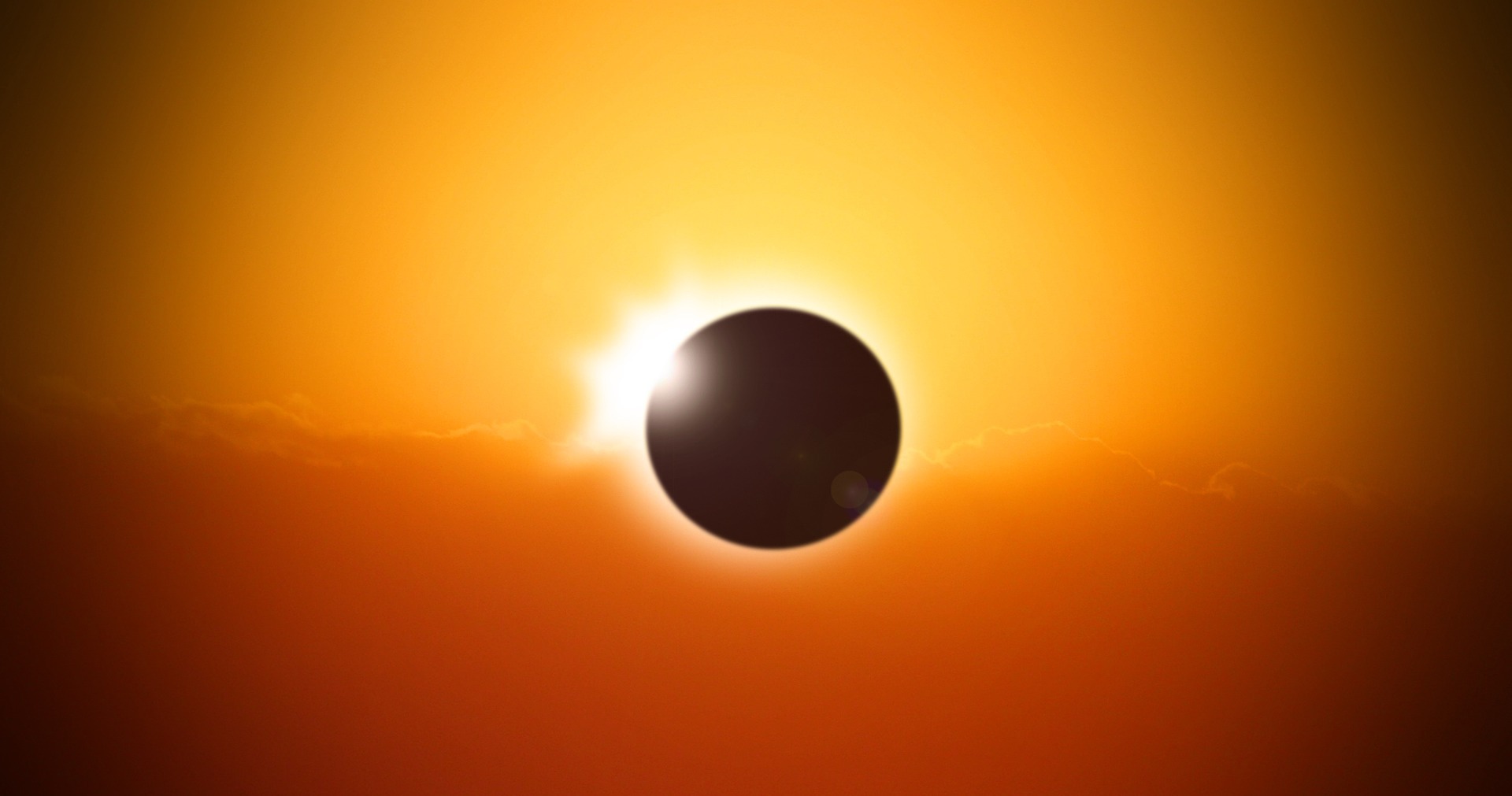
For the grieving community, the timing seemed to validate the ancient superstition. Observers immediately assumed that the sun had hidden its light out of grief for the loss of Ibrahim. Rather than allowing this myth to take root or utilizing the coincidence for personal reverence, the Prophet seized the opportunity to correct widespread misconceptions, demystify the natural world, and redirect the community’s focus toward spiritual remembrance and communal prayer.
Historical accounts preserved in authoritative Islamic literature document how the Prophet vehemently dismantled the superstitious association between celestial movements and human mortality. The definitive records of these events have been meticulously preserved in Al-Jami` al-Saheeh, the famous hadith collection compiled by Imam Al-Bukhari. Within the Book on Eclipse, numerous narrations from prominent companions paint a vivid picture of how the Prophet responded to the phenomenon and instructed his followers on how to act.
According to a narration by Abu Bakra, companions were sitting with Allah’s Apostle when the sun suddenly eclipsed. Reacting with urgency, the Prophet stood up immediately, dragging his cloak behind him in his haste until he entered the mosque. He led the congregation in a prolonged two-rakat prayer until the solar eclipse had completely cleared. Following the prayer, the Prophet addressed the gathered crowd directly to correct their understanding. He stated clearly that the sun and the moon do not eclipse because of someone’s death, instructing that whenever people witness these celestial events, they should occupy themselves with prayer and invocation until the sky returns to normal.

This core message is reinforced across multiple chains of narration within Al-Bukhari’s collection. Abu Masud reported the Prophet’s emphasis that the sun and the moon are simply two signs among the signs of Allah, independent of human life or death, and that witnessing them should prompt believers to stand and pray. A similar narration from Ibn ‘Umar broadens the clarification to explicitly include birth as well as death, reiterating that heavenly bodies move according to divine laws rather than reacting to human existence. Al-Mughira bin Shu‘ba similarly recalled the specific context of Ibrahim’s passing, noting that even when people directly linked the solar darkening to the child’s death, the Prophet firmly corrected them, stating that heavenly bodies do not eclipse for the life or death of any individual.
The most detailed procedural description of the eclipse prayer comes from the accounts narrated by ‘Aisha, the wife of the Prophet. She detailed the unique format of the prayer performed during the solar eclipse, which differed significantly from standard daily prayers. When the sun eclipsed, the Prophet went to the mosque, had the people align behind him, and initiated the prayer with the Takbir. He prolonged his recitation from the Quran significantly, followed by a remarkably long bowing position. Instead of proceeding directly to prostration, he lifted his head, praised Allah, and then stood up for a second recitation that was slightly shorter than the first. He then performed a second prolonged bowing, which was likewise shorter than the initial one, before finally moving into prostration and repeating a similar structure in the second rakat. By the time he concluded the prayer, the solar eclipse had cleared.
Following the prayer, the Prophet delivered a comprehensive sermon (Khutba). After praising and glorifying Allah, he reiterated the fundamental theological principle that the sun and the moon are signs of Allah that do not respond to human events. He instructed the community that upon witnessing an eclipse, they should remember Allah, recite the Takbir, offer prayers, and give charity (Sadaqa). During this address, he also admonished the congregation regarding moral integrity and divine accountability, urging awareness of the realities of the hereafter and the importance of righteous conduct.

Other companions, such as Abdullah bin ‘Amr, noted that public announcements were made to gather the community for congregational prayer whenever an eclipse occurred, ensuring that the entire township participated in collective worship rather than falling prey to fear or panic.
The significance of adhering strictly to the prophetic tradition regarding this event is highlighted in a concluding observation recorded by the scholar Az-Zuhri. When discussing an instance where a solar eclipse occurred in Medina and ‘Abdullah bin Az-Zubair offered only a standard two-rakat prayer resembling the morning prayer, ‘Urwa explained that his brother had simply missed the established tradition and specific methodology taught by the Prophet. Through these preserved accounts, early Islamic scholarship firmly established the eclipse prayer as an institutionalized act of worship rooted in spiritual reflection rather than fear-mongering superstition.