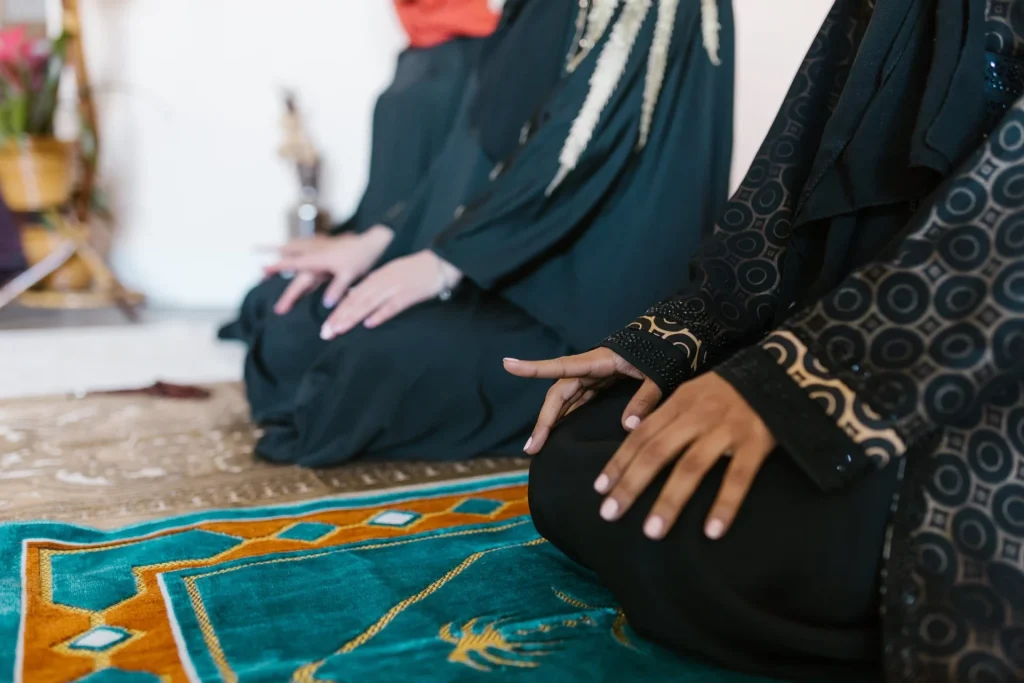
The Muslim Mamas community has long championed the creation of safe spaces designed to bring people together for shared learning, mutual growth, and meaningful connection with like-minded individuals. Through ongoing outreach initiatives and collaborative efforts alongside larger community agencies, organizations, and charitable groups, the network seeks to extend that spirit of hospitality far beyond the boundaries of the Muslim faith. Organizers and community advocates firmly believe that society derives a profound richness from widening its perspectives through genuine efforts to understand those from different backgrounds. By developing cross-community understanding, these initiatives strive to foster deeper human connections and bridge divides between diverse segments of the public.
Stepping into a house of worship from an unfamiliar religious tradition can occasionally feel daunting or cause hesitation for a first-time visitor. However, community leaders emphasize that those who choose to cross the threshold will be met with warmth and hospitality. Far from being exclusive enclaves, mosques function primarily as centers for worship, spiritual reflection, education, and community life for Muslims, while remaining fundamentally open to people of all faiths, beliefs, and cultural backgrounds.
Understanding the role and architecture of these institutions begins with recognizing their sheer variety, particularly across the United Kingdom. Mosques occupy a broad spectrum of physical structures, ranging from purpose-built architectural landmarks featuring traditional domes and minarets that mirror structures found in predominantly Muslim nations, to converted Christian churches, repurposed community centers, and even ordinary residential houses that offer fewer specialized facilities. While the Arabic term for a mosque is masjid, these locations serve as the heartbeat of local religious and social engagement.
As a baseline, the vast majority of mosques maintain doors open for the five daily prayers mandated by the faith. Smaller neighborhood facilities, constrained by operational resources, may occasionally restrict their opening hours primarily to morning or evening prayer times. Muslims turn toward Mecca five times daily to fulfill their prayers, and while individuals can pray virtually anywhere, communal prayer at the mosque is strongly encouraged. This is especially true for the midday prayer, and carries even greater emphasis for the weekly Friday congregational gathering.
Prayer spaces within mosques are traditionally segregated by gender to maintain modesty and focus during worship. Nevertheless, certain smaller facilities may lack dedicated spaces for women due to structural limitations. Islamic jurisprudence places a mandatory obligation on men to perform their prayers in congregation whenever possible, whereas women are welcomed to join congregational prayers while retaining the flexibility to pray at home or in other suitable locations.

Fridays hold particular significance, drawing large numbers of the community to the mosque for midday prayers accompanied by a religious sermon, a service known as Jum’ah. Beyond strictly religious observances, mosques function dynamically as vital community hubs. They frequently host educational programs, offering Islamic and Qur’anic classes for children, adults, and individuals who are newly discovering Islam. Additionally, these spaces serve as venues for social events, celebrations during Ramadan and Eid festivals, and solemn life-cycle observances including weddings and funerals.
Leadership and Administration Within the Mosque
Leadership within a mosque is typically centered around the Imam, who leads the prayers and delivers sermons. However, not every mosque employs a permanent, full-time Imam. Some institutions rely on visiting religious scholars or draw upon knowledgeable members of the local congregation to lead daily prayers and teach from the Qur’an, the Muslim holy book. Operational management, building maintenance, and the coordination of community services are frequently overseen by a dedicated board of trustees and volunteer maintenance staff who ensure the institution runs smoothly.
Attire and Presentation for Visitors
Visitors preparing to enter a mosque are encouraged to observe general standards of modest dress, ensuring that both men and women wear loose-fitting clothing that adequately covers the arms and legs. Shorts and sleeveless garments are generally discouraged for all visitors. Female visitors are advised to bring a scarf, as it serves as a sign of respect, particularly when entering designated prayer halls. While not every mosque strictly enforces head coverings for non-Muslim visitors outside of prayer areas, having one prepared is considered good etiquette. For those who inadvertently forget a scarf, most mosques keep a supply of spare garments available at the entrance. Makeup and personal cosmetics are entirely acceptable, and children are generally permitted to wear comfortable, casual clothing.
Footwear policy represents one of the most consistent traditions observed upon entering a sacred prayer space. Visitors are asked to remove their shoes prior to stepping onto the carpeted prayer area, making it practical to wear clean socks or tights. Most mosques provide a dedicated shoe rack or an entryway storage room where visitors can safely place their footwear and personal belongings.

Greeting Traditions and Interpersonal Etiquette
Entering a mosque as a newcomer requires no hesitation, as local communities pride themselves on hospitality and are typically eager to answer questions and share cultural and religious insights. Visitors can initiate conversations using the traditional Islamic greeting, Assalamu ’alaykum, which translates to "peace be upon you." While newcomers should not worry about minor mispronunciations, as the effort is invariably appreciated, a standard polite greeting such as a simple hello and inquiry about someone’s wellbeing is always well-received.
Interpersonal physical contact follows specific cultural and religious protocols regarding gender. Handshakes are common and welcomed when greeting someone of the same gender. When greeting someone of the opposite gender, however, visitors are encouraged to follow the other person’s cue. While some individuals readily shake hands across genders, others prefer to avoid physical contact. In instances where a handshake is not initiated, a widely accepted alternative is to place one’s hand over the heart accompanied by a polite nod—a universal gesture of respect that bridges cultural divides.
Navigating the Prayer Space
Upon arrival, a host or congregant will typically guide visitors toward the shoe storage area and explain the layout of the building. Inside the prayer hall, maintaining a quiet demeanor is essential. Visitors are asked to silence or turn off mobile phones and refrain from holding conversations while inside the hall, particularly while congregational prayers are underway.
Before entering the prayer space, practicing Muslims perform an ablution, or ritual washing, to cleanse their faces, arms, and feet. Specially equipped washing facilities are often located near the restrooms. First-time visitors are naturally exempt from this requirement.

The interior of a prayer hall distinctively lacks pews, benches, or traditional church seating. Instead, worshippers sit directly upon expansive, wall-to-wall carpets or rugs, though a limited number of chairs may be provided for elderly or disabled individuals. Separate entrances often lead men and women to distinct sections of the hall, which may be separated by partitions, partial barriers, or located on separate levels depending on the architectural layout of the building. Families visiting with young children generally keep them close by regardless of gender.
During communal prayers, congregants move in precise unison, transitioning fluidly between standing, bowing, prostrating, and sitting. Non-Muslim visitors are not expected to participate in the physical movements of prayer but are welcome to observe quietly from the rear of the hall. This positioning prevents a visitor from inadvertently walking directly in front of someone actively engaged in prayer, an action considered highly disrespectful in Islamic tradition. Because individuals deep in prayer cannot break their concentration to converse, questions are best addressed to hosts either before or after the formal service concludes.
Ultimately, stepping inside a mosque offers an opportunity to engage directly with a different cultural and religious tradition. Organizers emphasize that approaching the experience with curiosity and an open heart allows visitors to move past anxieties about making etiquette mistakes, revealing instead the commonalities that connect diverse communities.