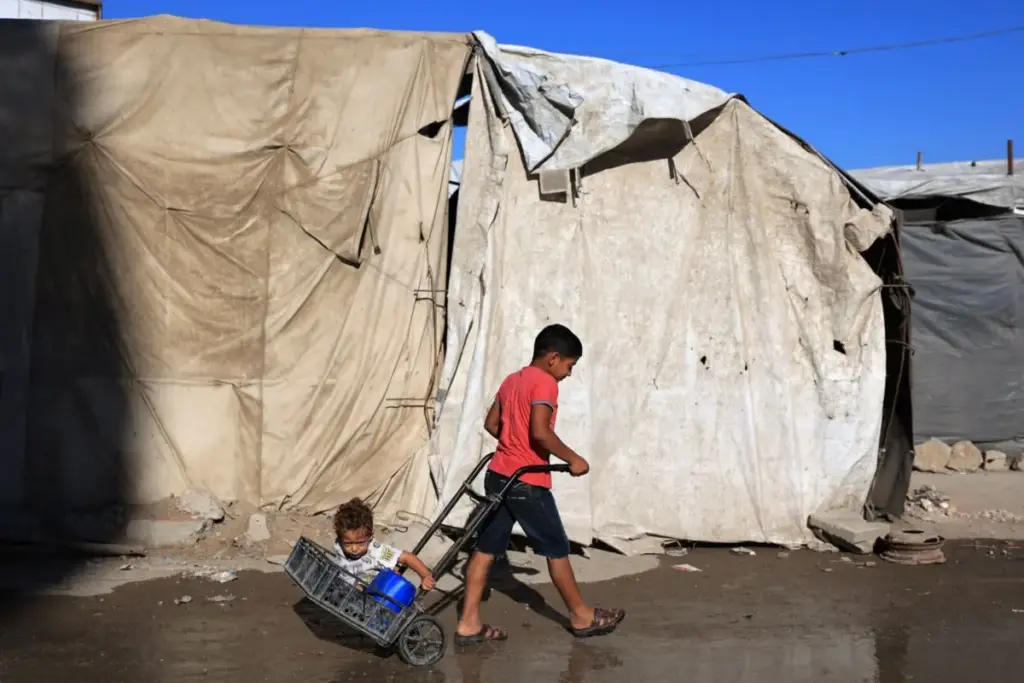
GENEVA — After three grueling years of intense conflict, repeated waves of displacement across the Gaza Strip have left makeshift shelters and tents severely degraded, compounding an already catastrophic humanitarian crisis. With winter weather fast approaching, strict border restrictions and critical funding shortages are severely undermining international efforts to adequately prepare the enclave for freezing temperatures and heavy rains, a senior United Nations migration official said late Friday.
Karl Baker, the International Organization for Migration’s (IOM) regional crisis coordinator for the Gaza response, painted a grim picture of the situation on the ground during an interview with U.N. News. According to Baker, some Palestinian civilians have been forced to flee their homes and makeshift encampments as many as eight times since the outbreak of hostilities. Each forced relocation deals another devastating blow to their remaining belongings, systematically destroying the tents and fragile materials they rely on for overhead protection.
"When they move, all those goods that they currently have or did have either get destroyed, or they have to seek new shelter," Baker told U.N. News, detailing the relentless cycle of displacement that defines daily life for millions in the enclave.
Under normal humanitarian circumstances, basic shelter materials such as heavy-duty tarpaulins undergo rapid wear and tear and need to be replaced roughly every six months. However, humanitarian agencies operating in the region have been utterly unable to bring replacement supplies into the Gaza Strip at the scale required to meet the overwhelming demand.
As the crisis persists, Baker emphasized that humanitarian operations must now look beyond short-term fixes and immediate relief items, shifting toward more durable, transitional shelter solutions. However, transitioning to sturdier infrastructure remains an uphill battle due to extensive logistical and regulatory barriers.
Materials that are fundamentally necessary for constructing stronger roofing systems, pouring concrete floors, and building more substantial, weather-resistant walls remain heavily restricted. These vital construction supplies are routinely subjected to Israel’s stringent "dual-use" restrictions, which are officially imposed and maintained over ongoing security concerns.
"After three years of war, we do need to improve the level of shelter which is inside, and move further away from temporary and more toward transitional type of shelter," Baker explained, highlighting the urgent necessity for structural improvements before winter weather fully sets in.
While noting that the IOM remains in constant contact and ongoing dialogue with Israeli authorities regarding humanitarian access, Baker acknowledged that certain durable construction materials continue to be systematically denied entry into the enclave on security grounds. This regulatory bottleneck leaves humanitarian organizations scrambling to protect vulnerable populations with inadequate tools.
Compounding the restrictions on physical goods are severe financial constraints and logistical nightmares affecting global supply chains. The IOM regional crisis coordinator pointed out that international shipping disruptions have further slowed down operations. To bypass some of these bottlenecks, the migration agency relies heavily on a network of international suppliers located in countries including China, India, and Pakistan.
Although vital funding has begun to trickle in from international donors in recent weeks, Baker stressed that the incoming financial resources remain entirely insufficient to meet the staggering scale of need. Current estimates indicate that between 1.8 million and 1.9 million people across the Gaza Strip are in urgent need of comprehensive shelter assistance to survive the coming months.
Compounding the housing crisis is a massive contraction of habitable space. Baker noted that only approximately 30 percent of the entire Gaza Strip is currently accessible to the vast majority of the civilian population. This severe confinement has forced displaced Palestinians to compress into increasingly crowded, densely populated pockets of land that are frequently prone to severe flooding when heavy seasonal rains arrive.
Describing the grim reality of this confinement, Baker said, "The 30 percent in which they currently live is a very large displacement camp."
With winter rains already beginning to fall across the coastal enclave, humanitarian organizations are racing against the clock to address flood-prone areas, dig drainage channels, and deploy essential water pumps to mitigate the risk of inundation. Despite these frantic preparations, Baker issued a stark warning, stating that getting displaced Palestinians safely through the winter months will prove to be the single biggest operational challenge humanitarian workers have faced.
Earlier this month, the IOM released alarming data indicating that all available and incoming shelter supplies covered a mere 17 percent of Gaza’s total winter needs. At the same time, internal assessments revealed that more than half of all existing tents and makeshift shelters across the strip were already in poor or unusable condition, offering virtually no protection against the elements.
The compounding shelter crisis unfolds against a fragile backdrop. A cease-fire has formally been in effect since Oct. 10, 2025, but continuous security challenges remain. Despite the cessation of major active hostilities under the agreement, sporadic Israeli attacks alongside lingering bureaucratic restrictions on the entry of critical humanitarian aid and shelter supplies have continued to hamper recovery efforts on the ground.