Efforts to raise hundreds of billions of dollars to preserve the world’s oceans, forests, rivers, lakes, and other vital components of the natural world have fallen short, setting a challenging tone ahead of a key United Nations summit on biodiversity.
The yawning gap between the stated ambitions of nations to protect global biodiversity and the actual financial resources raised will serve as the central topic of discussion in Yerevan, Armenia, when the upcoming biodiversity conference, known as COP17, commences on Monday. The nearly two-week international gathering, scheduled to conclude on October 30, provides a crucial window for nearly 200 countries participating in the treaty to take stock of their progress on 23 sweeping global targets. These targets were established following a historic framework agreement crafted in Montreal in December 2022. Notably, the United States is not a party to the treaty, operating outside the formal multilateral agreement while still managing domestic conservation priorities.
During the landmark Montreal summit, participating countries made a solemn commitment to protect 30% of the planet’s land and water areas considered ecologically important for biodiversity by the year 2030, a guiding objective widely recognized within the conservation community as the "30×30" goal.
Alongside this ambitious spatial target, governments promised to mobilize $200 billion annually by 2030 dedicated specifically to biodiversity financing. They also pledged to begin the complex process of phasing out or fundamentally reforming government subsidies that inadvertently incentivize environmental destruction, a move projected to free up another $500 billion for nature-positive initiatives. Furthermore, developed nations made concrete commitments to increase international financial flows to poorer countries, scaling up support to $20 billion annually by 2025, with that figure slated to climb to $30 billion each year by the end of the decade.
However, as delegates prepare to gather in Yerevan, the financial reality falls drastically short of those promises. "We’re not moving fast enough," Astrid Schomaker, executive secretary of the convention, told The Associated Press. Her warning preceded a stark U.N. progress report released Thursday, which revealed that fewer than half of the parties’ biodiversity targets are currently on track. Furthermore, the report projected that existing national commitments would only protect 26% of land and a meager 12% of the world’s seas by the fast-approaching 2030 deadline.
Fresh data compiled by the Organisation for Economic Co-operation and Development (OECD) underscores the severity of the financial shortfall. The figures show that countries were collectively raising between $75 billion and $92 billion each year from 2023 through 2025—representing less than half of the targeted $200 billion annual goal for 2030. Simultaneously, efforts to fulfill commitments to reduce $500 billion in harmful subsidies have gained virtually no political traction. Governments across the globe have been slow to even identify, let alone dismantle, the extensive state support and funding mechanisms that continue to prop up environmentally destructive sectors such as industrial fisheries and intensive agriculture.
There is a singular bright spot in international aid metrics, as countries remain roughly on track to hit the interim milestone of providing $20 billion to developing nations by 2025, with the latest available data showing that $19 billion was successfully raised in 2024. Even so, a noticeable broader downturn in foreign development aid raises serious questions about whether this positive upward trend can be sustained through the remainder of the decade.
"Do we have enough money actually to finance the commitments that countries have made? And how do we get more finance to flow toward biodiversity positive outcomes?" Schomaker asked rhetorically, highlighting the core dilemma facing the upcoming summit. "That is the crucial question for the COP."
The global campaign to safeguard biodiversity, which first captured widespread international attention during the landmark Rio Earth Summit in 1992, has frequently felt like an uphill battle against overwhelming economic pressures. In their relentless pursuit of rapid economic growth and the need to support expanding human populations, nations have historically converted ancient forests into commercial farmland, heavily overfished marine ecosystems, and systematically degraded the natural habitats of countless plant and animal species through unchecked, sprawling development. Compounding these anthropogenic pressures, accelerating climate change has simultaneously engineered the precise environmental conditions required for catastrophic, widespread wildfires and prolonged, severe droughts that have devastated fragile ecosystems across every continent.
Consequently, an alarming three-quarters of the Earth’s total land surface has been "severely altered" by human activity, and roughly one million of the world’s plant and animal species now face the imminent threat of extinction, according to a comprehensive 2019 report by the United Nations. Wildlife populations have experienced an equally catastrophic collapse, as documented by the World Wide Fund for Nature’s (WWF) 2026 Living Planet Report, which was released earlier this month. According to the report, monitored wildlife populations plummeted by an average of 73% globally between 1970 and 2022.
"We are losing everything that matters for us as humans on this planet," Schomaker emphasized, framing the ecological crisis not merely as an environmental issue, but as a fundamental threat to human survival and well-being.
Amidst these grim statistics, there are encouraging signs that individual countries are genuinely striving to protect more of the natural world, with governments collectively announcing over 5,000 distinct conservation initiatives formally tied to the international treaty.
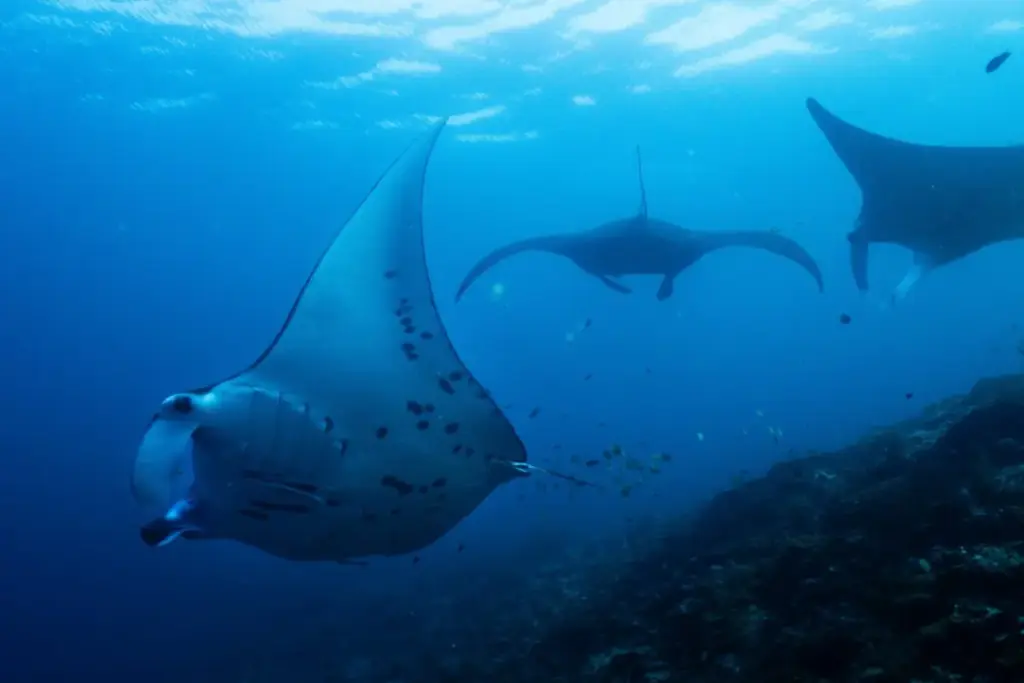
A recent report published by the Campaign for Nature—a prominent global initiative that has aggressively spearheaded the worldwide 30×30 effort—revealed that nations located in Latin America have already made formal commitments to protect 29% of their terrestrial land. Meanwhile, countries in the Oceania region have pledged to preserve 41% of their surrounding seas. Concrete actions are following these pledges: last year, the Philippines established a major marine protected area where catching rays and sharks is strictly prohibited, according to data from the Wildlife Conservation Society. In 2023, Cambodia set aside nearly 100,000 acres, equivalent to 40,000 hectares, of vital flooded grassland habitat for permanent protection, while Argentina successfully established a new national park in 2024.
Brian O’Donnell, director of the Campaign for Nature, noted that the international community possesses a clear understanding of what areas need protection and the scientific methodologies required to achieve those targets.
"What is now needed is an upswing in political ambition and determination," O’Donnell said. He added that a major international agreement reached last year to protect marine biodiversity on the high seas—known formally as the High Seas Treaty—will undoubtedly provide a helpful legal framework, though far more comprehensive action remains urgently necessary.
Many conference attendees are arriving in Yerevan with high expectations, hoping that attending nations, the private sector, and private philanthropic organizations will utilize the high-profile meeting to announce major new biodiversity funding initiatives.
Susan Lieberman, vice president for international policy at the Wildlife Conservation Society (WCS), stressed that protecting crucial biodiversity requires far more than political declarations; it demands sustained financial investment and specialized expertise.
"You can’t just say, OK, there’s a line on the map. You need to do the science," Lieberman explained. "You need to know if it’s in the right place. If you’re going to establish a park, you better have management of the park, governance, infrastructure."
That operational challenge is particularly acute in poorer nations, according to Dorothy Maseke, head of the African Natural Capital Alliance Secretariat, an influential African-led initiative focused on integrating nature into corporate and governmental financial decision-making. Many developing nations that harbor exceptional levels of global biodiversity simply lack the domestic financial capacity to fund the protection and conservation of those resources, as their governments are simultaneously struggling to finance essential public services, including healthcare, education, and basic infrastructure.
Daniel Mukubi, the official biodiversity negotiator for the Democratic Republic of Congo, echoed these financial concerns, stating firmly that it is "not possible to scale up protected and conserved areas" without receiving substantial international financial assistance. He lamented that overseas development assistance, including vital support historically provided by the United States, has dropped significantly in recent years. This funding retreat has directly resulted in "weakened law enforcement and eco-guards patrolling critical habitat," including several of the nation’s most irreplaceable UNESCO World Heritage sites.
"If these valuable ecosystems collapse because international funding fails to secure them, the resulting economic damages will cost the global market tens of trillions of dollars," Mukubi warned. "So, investing in the Congo basin is not an expenditure. It is the most cost-effective insurance policy the West can buy."
Another major topic expected to dominate discussions in Yerevan is the persistent challenge of compelling governments to scale back an estimated $7.3 trillion in annual global subsidies that actively harm the environment, and successfully redirecting those vast financial streams toward nature-based solutions. That figure stands at roughly 30 times more than the total capital invested globally in nature-based solutions throughout 2023, according to data compiled by the Campaign for Nature.
"Every year, trillions of dollars go into subsidies that harm nature, even as funding to protect it falls far short of what’s needed," Patricia Zurita, executive director of Conservation International, said in a formal statement ahead of the summit. "We can’t reverse biodiversity loss while continuing to finance the activities that drive deforestation, overfishing, pollution and more."