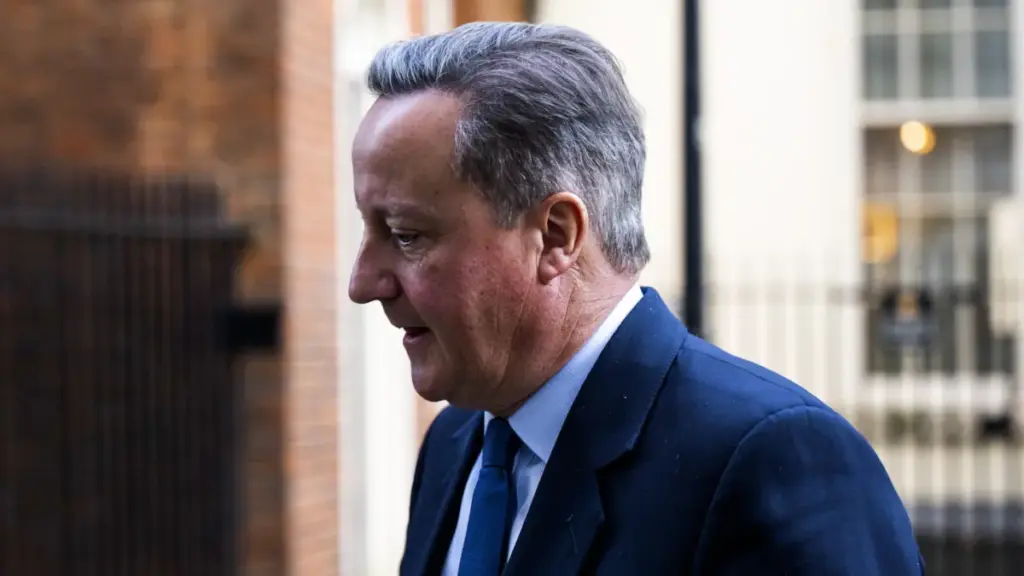
The exchange took place during a session where parliamentarians sought clarity on the British government’s official assessment of the humanitarian crisis unfolding in the besieged Palestinian territory. As mounting casualties, widespread displacement, and severe restrictions on essential supplies sparked international alarm, members of the committee pressed Lord Cameron to state explicitly whether the threshold for violations of international humanitarian law had been crossed. Rather than providing a definitive assessment, the Foreign Secretary visibly stumbled over his words and hesitated, reflecting the complex diplomatic tightrope Whitehall has attempted to walk since the outbreak of hostilities.

The difficulty encountered by the Foreign Secretary underscores a broader dilemma facing international allies of Israel, particularly the United Kingdom and the United States. While public pressure from human rights organizations, international legal experts, and domestic constituents has intensified demanding an immediate halt to arms exports and a clear condemnation of potential war crimes, official government bodies have frequently demurred. Policymakers have routinely emphasized Israel’s right to self-defense following the events of October 2023, while simultaneously calling for adherence to international law and increased humanitarian access, creating a policy approach characterized by caution and ambiguity.
International humanitarian law, enshrined in conventions such as the Geneva Conventions, governs the conduct of armed conflict and seeks to protect civilians, non-combatants, and civilian infrastructure. Key principles include distinction, proportionality, and precaution, which require military forces to distinguish between combatants and civilians and to refrain from launching attacks that cause excessive incidental loss of civilian life or injury. Throughout the conflict in Gaza, numerous United Nations agencies, human rights monitors, and legal scholars have raised serious concerns regarding the widespread destruction of residential areas, hospitals, schools, and water facilities, alongside severe blockades on food, medicine, and fuel.

Despite these compounding reports and the growing chorus of concern from the global community, British officials have consistently maintained that formal determinations regarding breaches of international law must be made through independent judicial mechanisms rather than political pronouncements. Critics, however, argue that this position serves as a diplomatic shield, allowing governments to continue providing strategic and material support without facing immediate legal or political accountability. The hesitation displayed by Lord Cameron during the parliamentary session has thus been seized upon by critics as evidence of a double standard in the application of international law, wherein the actions of allied nations are subjected to a different standard of scrutiny compared to adversaries.
The intense scrutiny faced by the Foreign Secretary also highlights the deep domestic divisions within the United Kingdom regarding the government’s foreign policy positions. Mass demonstrations have taken place across British cities on a regular basis, with hundreds of thousands of citizens marching to demand a permanent ceasefire, an end to military cooperation with Israel, and decisive action to address the catastrophic humanitarian situation in Gaza. Parliament has also witnessed heated debates, with various backbench lawmakers challenging ministers over the adequacy of the government’s diplomatic efforts and the transparency of its arms licensing regime.

As the parliamentary committee pressed further, Lord Cameron’s inability to provide a straightforward answer illuminated the fraught nature of diplomatic relations and legal obligations during armed conflicts of this magnitude. The exchange serves as a significant marker in the ongoing domestic and international debate surrounding accountability, state responsibility, and the enforcement of international legal standards in contemporary warfare. With the situation in Gaza continuing to evolve and legal challenges mounting in international courts, pressure on British leadership to clarify its stance and ensure compliance with international legal frameworks remains higher than ever.