China contributed $132 billion in clean technology and foreign investments to developing nations last year, emerging as the single largest financial and industrial contributor among all nations working to reduce global carbon dioxide emissions.
This massive green-manufacturing juggernaut—built in large part through heavy, sustained subsidies from Beijing—now nearly matches the total current amount of grants, loans, and private finance that all wealthy industrialized countries combined sent to poorer nations in 2024 to help them fight climate change, according to a comprehensive Reuters analysis.
The climate-finance programs established by the world’s wealthiest nations originated from an agreement made at a 2009 United Nations climate conference. That framework was built on the premise that industrialized economies bore an outsized historical responsibility for the global climate crisis and possessed the vast economic means required to help poorer countries pay to clean up the resulting environmental damage.
However, a Reuters investigation published in 2024 revealed that the majority of global climate finance from wealthy nations is delivered in the form of loans, sometimes carrying market-rate interest that ultimately funnels billions of dollars back into the coffers of rich countries.
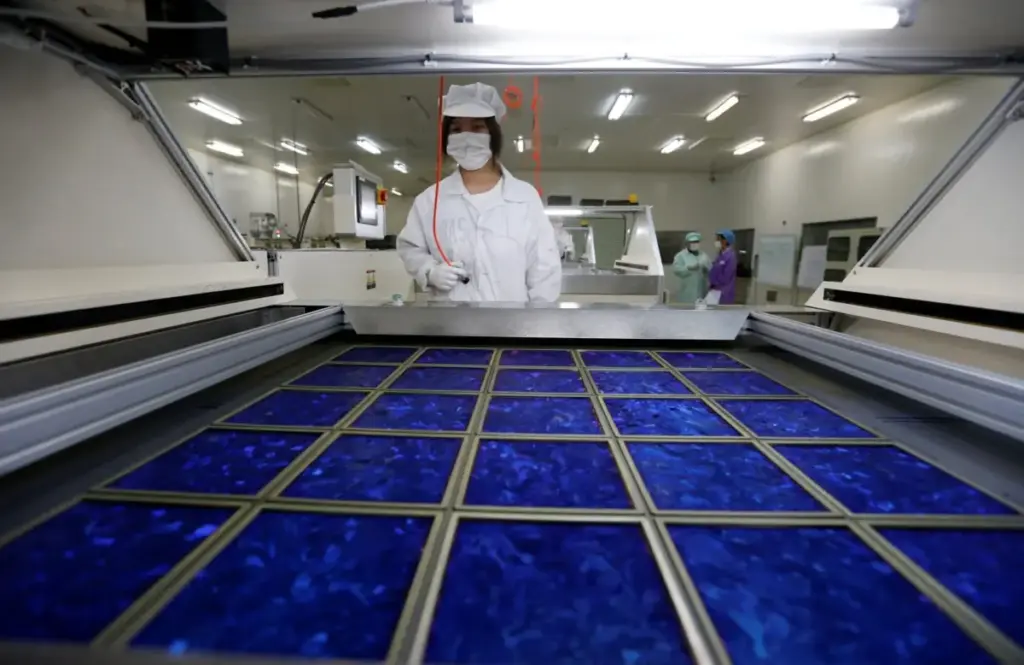
China adopted a fundamentally different economic strategy, channeling billions of dollars in state subsidies into domestic green-energy industries. This approach served the nation’s own strategic national interest to dominate next-generation manufacturing both domestically and on the global stage. The result has been massive and rapid market-share gains across vital green sectors, including solar panels, advanced batteries, battery minerals, electric vehicles, and wind turbines.
Even though China remains by far the world’s largest absolute emitter of greenhouse gases—driven by its massive population, heavy concentration of heavy industry, and heavy reliance on domestic coal power—its immense clean-tech export capacity means it has simultaneously become one of the most powerful global forces in actively reducing climate-damaging emissions.
The Reuters analysis utilized international customs data to calculate the exact financial value of Chinese exports of clean technologies to countries classified by the Organisation for Economic Cooperation and Development (OECD) as developing nations.
Those clean-tech exports alone will help the Global South avoid an estimated 257 million metric tons of carbon dioxide emissions per year once fully deployed. According to independent analysis by Lauri Myllyvirta, co-founder of the Helsinki-based Centre for Research on Energy and Clean Air, that avoided emissions volume is roughly equivalent to the total annual carbon dioxide emissions of an entire major European economy like France. Furthermore, data shows that China’s exports this year are currently on track to help avoid 337 million metric tons of carbon dioxide emissions across the Global South.
By contrast, Reuters found it difficult to locate a reliable, unified single estimate demonstrating the exact volume of greenhouse gas emissions avoided strictly as a result of traditional global climate finance flowing from rich nations to poor countries. Meanwhile, the OECD estimates that approximately one-fifth of all climate-related financial contributions from the wealthy world in 2024 originated from the private sector.
The $132 billion figure calculated by Reuters for China’s total global climate contribution also incorporates an estimated $40 billion in Chinese foreign direct investment directed into clean-technology projects across developing nations. This investment data was meticulously compiled by researchers Mathias Larsen and Xiaokang Xue at the London School of Economics.
When combined, these figures bring China’s overall financial and industrial footprint close to parity with the $137 billion in formal climate finance that wealthy nations provided to poorer countries in 2024 under their existing U.N. climate pledges, according to the most recent official figures published by the OECD.
To be sure, these figures are not directly comparable in every aspect. China’s total largely reflects commercial transactions focused strictly on clean energy development and manufacturing deployment. By contrast, traditional international climate finance can also support a wider array of programs, such as developing climate-resilient agricultural techniques, reinforcing infrastructure, or cleaning up catastrophic damage caused by major storms and severe flooding.
Nevertheless, the direct comparison clearly illustrates the extraordinary, unprecedented scale at which China’s manufacturing economy is now actively shaping the global energy transition in developing nations.
These findings point toward a potential structural shift in the mechanics of the global energy transition, according to Li Shuo, a veteran observer of China at U.N. climate talks who heads the China Climate Hub at the Asia Society Policy Institute.
For many years, international climate negotiations focused almost exclusively on how much direct money and technology wealthy countries would provide to poorer nations to help them decarbonize. China’s manufacturing boom, however, is creating an entirely different pathway: driving down the price of critical clean technologies through self-interested domestic innovation and massive economies of scale, until developing countries choose to adopt them purely for compelling economic reasons.
"You can align it to your economic agenda," Li noted regarding the shifting motivations.
Diplomacy and Engagement
Despite its massive economic footprint, Beijing has so far shown little inclination to translate its commercial might into overt diplomatic leadership at global climate talks, particularly since U.S. President Donald Trump withdrew the United States from international climate cooperation in 2025.
China’s diplomatic role is expected to take center stage as nations gather for the upcoming U.N. COP31 climate conference in Antalya, Türkiye. Historically, bilateral agreements between global heavyweights Washington and Beijing paved the way for landmark international climate accords, including the pivotal 2015 Paris agreement to limit global warming. However, former climate negotiators suggest that Beijing may be reluctant to step into a solitary leadership role without its primary geopolitical counterweight actively participating at the negotiating table.
Observers also suggest that Beijing may harbor concerns that taking a bold, unyielding stance on global carbon reduction could invite unwanted international pressure for China to dramatically increase its foreign climate aid or accelerate cuts to its own domestic fossil-fuel emissions. China currently accounts for roughly one-third of global carbon dioxide emissions and still relies on coal to generate more than half of its total electricity.
"How China engages on different levels in the coming years is the most fundamental thing that is going to happen on climate because of both their role in clean-tech deployment … but also because of their emissions profile," said Jennifer Morgan, Germany’s former climate minister.
China’s Ministry of Commerce responded by stating that the country remains an essential contributor to the global green transformation. The ministry emphasized that its cumulative wind and solar exports have reduced global emissions by roughly 4.1 billion tons of carbon dioxide over the past five years—an amount equivalent to approximately 80% of the total annual carbon emissions of the United States.
"Against the backdrop of a global climate governance ‘action deficit,’ China will continue to uphold a responsible attitude, working with other countries to address challenges, overcome difficulties and jointly promote global green and low-carbon transformation and sustainable development," the ministry stated.
Forcing Out Fossil Fuels
Meanwhile, China’s aggressive manufacturing expansion has fundamentally altered the economic calculus of renewable energy, making green technologies far more affordable and accessible across the developing world.
When Ethiopia implemented a ban on the import of internal combustion engine vehicles in 2024, it marked a historic first for a nation taking such a dramatic regulatory step toward electric vehicles. Notably, the policy was driven less by sweeping environmental rhetoric and more by an urgent domestic need to slash the country’s soaring fuel import bill, according to statements made at the time by Ethiopia’s deputy minister of transport to Reuters.
"No one in Ethiopia is asking COP to pay for any of this; the economics have just switched. It is just the cheapest and best solution," explained Mathias Larsen, a senior policy fellow at the London School of Economics who built the database of Chinese green investment utilized in the Reuters analysis.
China has stood out as the world’s dominant supplier of electric vehicles over the past several years, a position reinforced as dozens of heavily subsidized domestic automakers engaged in a fierce price war within China before dramatically expanding their export volumes abroad.
A similarly pragmatic approach to the green transition has unfolded in Pakistan, which imported 17 gigawatts worth of solar panels from China last year, according to trade data compiled by the energy research organization Ember. That import volume roughly matched Germany’s total domestic solar installations for that same year. Those panels are designed not only to curb carbon emissions but, more urgently, to provide cheap and reliable electricity to a population and economy that frequently suffer from power shortages.
Nearly two-thirds of all Chinese exports of solar panels, along with the foundational photovoltaic cells required to manufacture them, were shipped to developing nations last year, according to the Reuters customs data analysis.
The situation stands in stark contrast to wealthy industrialized economies like the United States and parts of Europe, which in recent years have enacted steep tariffs, trade barriers, and other regulatory restrictions against Chinese clean technologies to protect their own domestic manufacturing sectors from the overwhelming surge of foreign shipments.
The United States, for instance, maintains tariffs exceeding 100% on imported Chinese electric vehicles, alongside other restrictive measures designed to effectively block them from entering the domestic market.
"What is striking is that policies originally designed to address climate change are now facing opposition not because of their climate impacts, but because of concerns about trade and competitiveness," observed André Corrêa do Lago, a veteran climate negotiator for Brazil, which hosted the previous year’s global climate summit.